In hygienic liquid processing systems, sanitary filters and strainers are both used to remove unwanted particles from a process stream. However, they are designed for different filtration requirements.
A strainer is commonly used for coarse particle removal, pipeline protection, and pre-filtration, while a sanitary filter is often selected when a more controlled or finer level of filtration is required.
Choosing between a sanitary filter and strainer depends on several factors, including particle size, required filtration level, flow rate, pressure drop, cleaning requirements, and the application.
This guide explains the practical differences between sanitary filters and strainers and provides a simple way to select the appropriate filtration method for your process.
What Is a Sanitary Strainer?
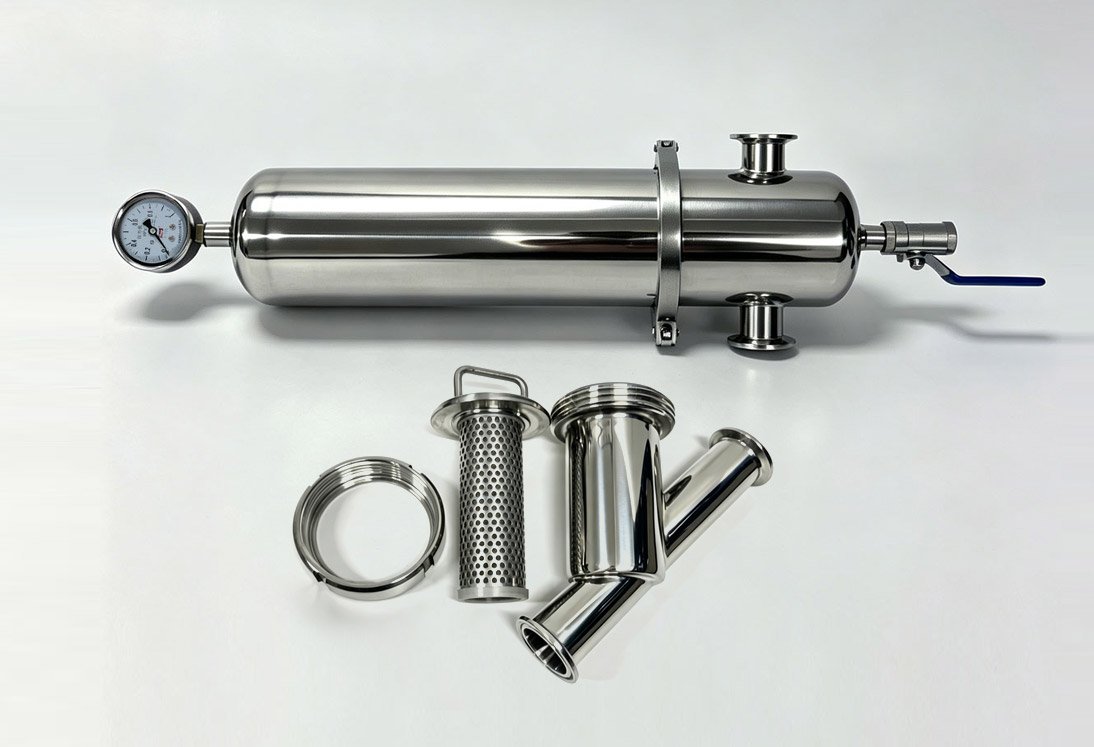
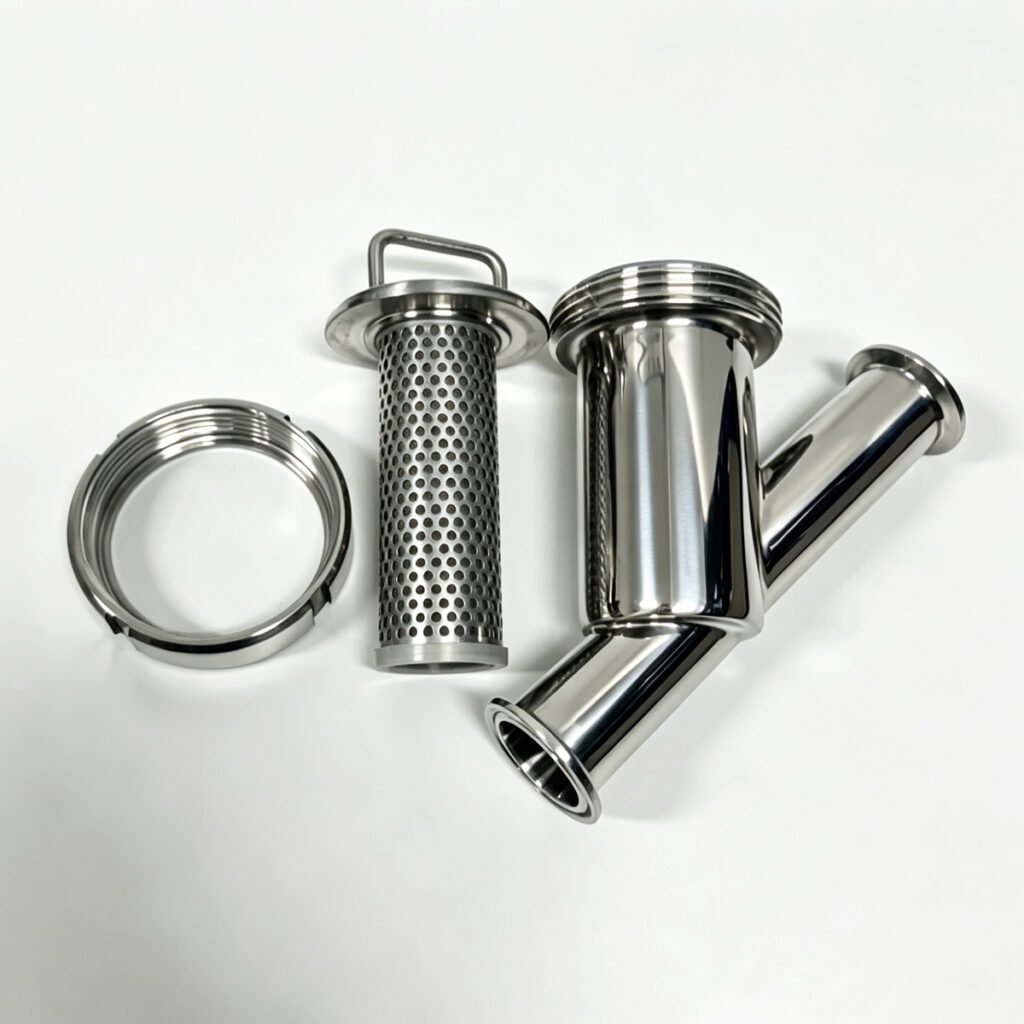
A sanitary strainer is a reusable filtration device that uses a perforated screen or woven mesh to remove larger particles from a liquid stream.
Strainers are commonly installed in process pipelines to protect pumps, valves, heat exchangers, filling equipment, and other downstream components from unwanted particles.
Typical applications include:
- Pump and equipment protection
- Coarse particle removal
- Pipeline pre-filtration
- Protection of downstream filtration equipment
- Reusable filtration in hygienic process systems
Common sanitary strainer designs include Y-strainers and inline strainers.
Because the filtration element is usually a stainless steel screen or mesh, many sanitary strainers can be removed, cleaned, and reused. This makes them useful where larger particles need to be removed without frequently replacing filter media.
For applications requiring a defined fine filtration level, however, a cartridge-based sanitary filter may be more appropriate.
What Is a Sanitary Filter?
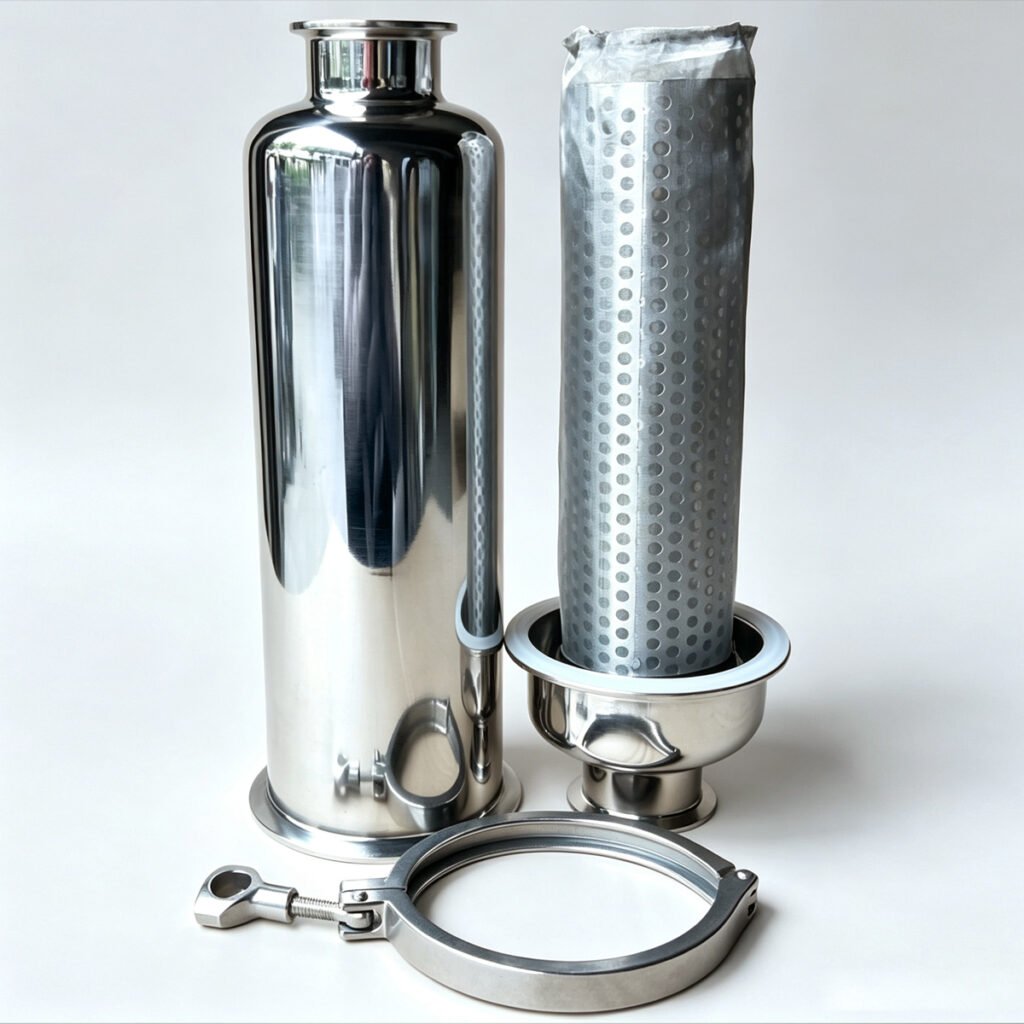
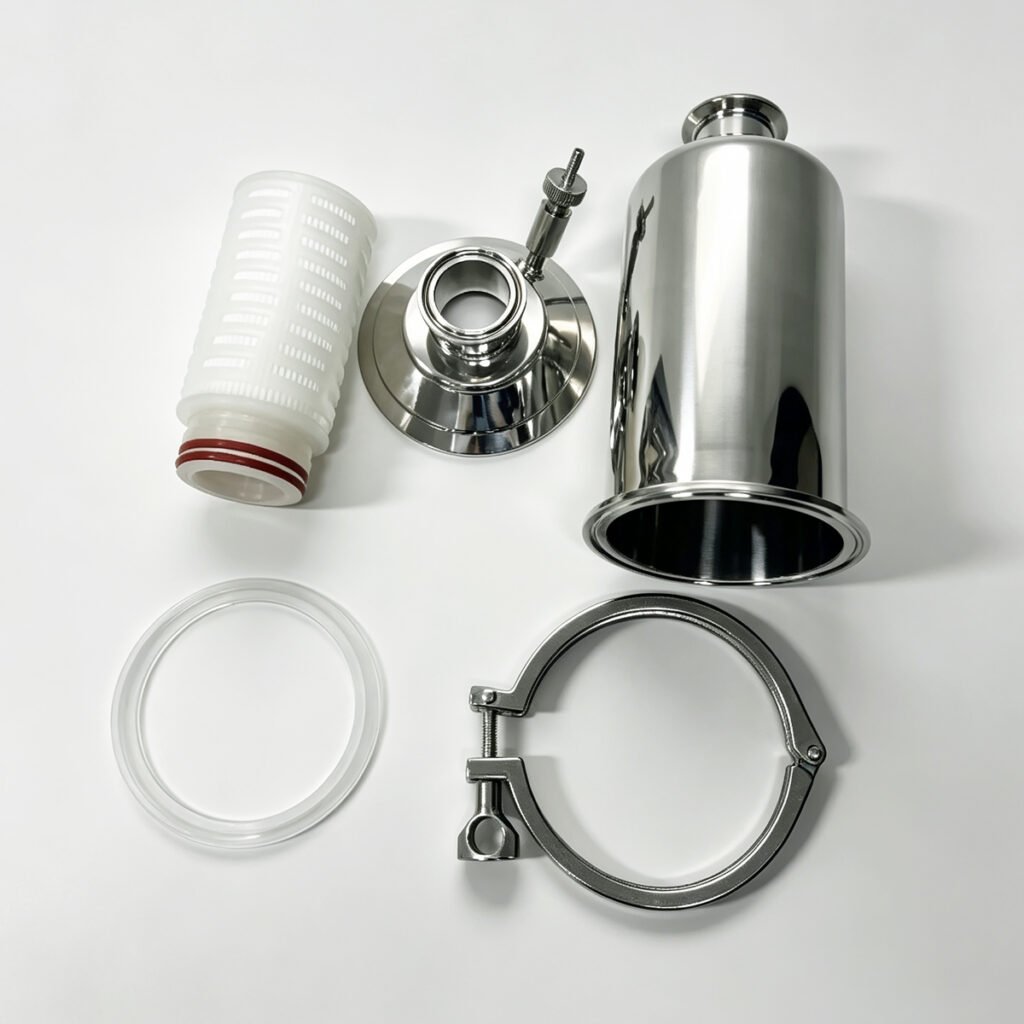
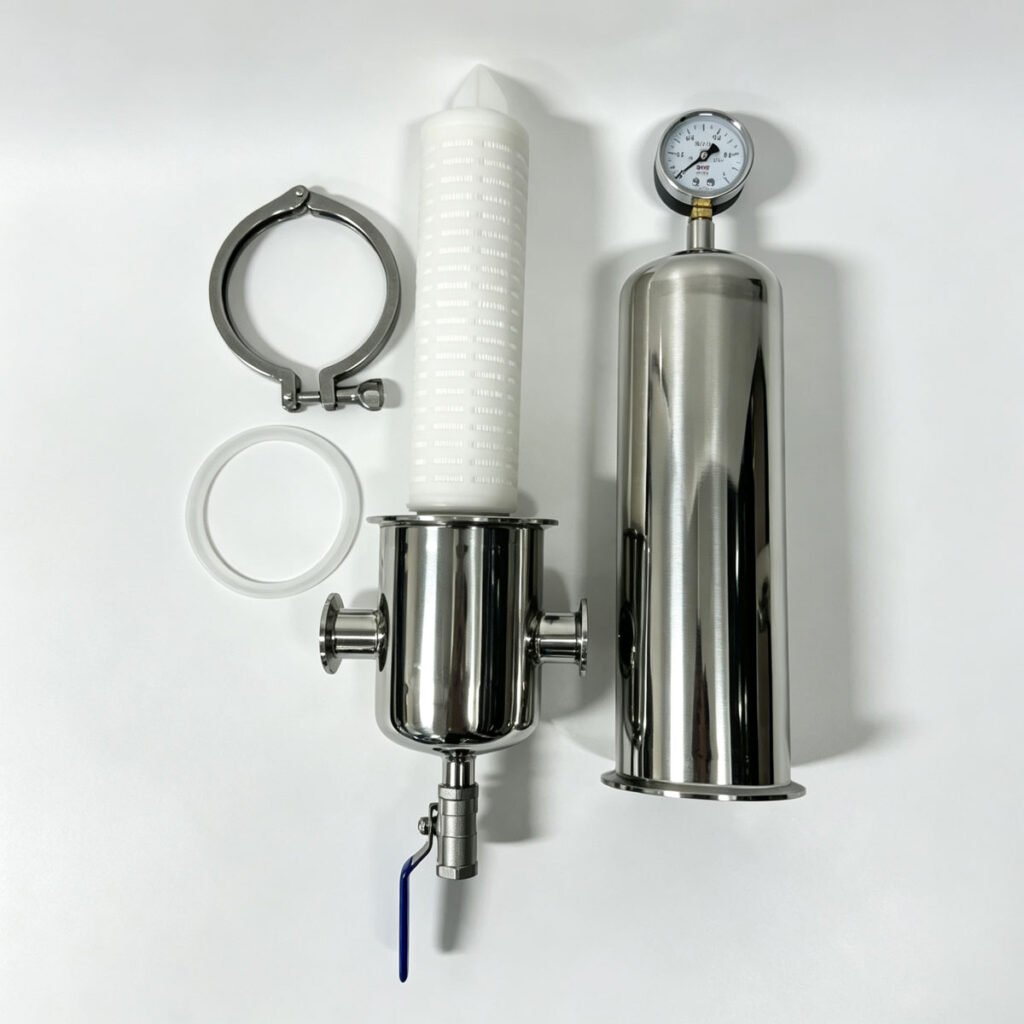
A sanitary filter is designed to provide a more controlled level of filtration and may use filter cartridges, membrane media, or other specialized filtration media.
Cartridge filters are commonly selected when the process requires a defined filtration rating, such as a specified micron level.
Typical applications include:
- Fine particulate removal
- Product polishing
- Liquid processing
- Pre-filtration before a finer filtration stage
- Pharmaceutical and biotechnology processing
- Food and beverage processing
A sanitary cartridge filter system normally consists of a filter housing and one or more replaceable filter cartridges.
Unlike a mesh strainer, the filtration performance of a cartridge filter is often specified using a micron rating.
This makes cartridge filtration useful when the process requires more controlled particle removal.
Sanitary Filter vs. Strainer: What Is the Difference?
The main difference is not simply the physical design. It is the filtration task the equipment is expected to perform.
| Factor | Sanitary Strainer | Sanitary Filter |
|---|---|---|
| Main purpose | Coarse particle removal and equipment protection | Fine or controlled filtration |
| Typical media | Mesh or screen | Cartridge or specialized filter media |
| Filtration rating | Commonly mesh-based | Commonly micron-rated |
| Typical particle size | Larger particles | Smaller particles |
| Reusability | Mesh can often be cleaned and reused | Cartridge is normally replaced or cleaned according to media type |
| Typical position | Pre-filtration or equipment protection | Fine filtration or downstream processing |
| Pressure drop | Depends on mesh size, flow, and loading | Depends on cartridge type, micron rating, flow, and loading |
| Common products | Y-strainer, inline strainer | Cartridge filter housing |
| Typical role | Protect the process system | Control the filtration level |
These are general engineering distinctions rather than absolute rules. The appropriate equipment depends on the actual process conditions and filtration objective.
How Particle Size Affects Filter and Strainer Selection
Particle size is one of the first factors to consider when selecting filtration equipment.
If the process contains relatively large particles that could damage or block downstream equipment, a sanitary strainer may be sufficient.
For smaller suspended particles, a finer mesh strainer or cartridge filter may be considered depending on the required filtration level.
A simplified selection path is:
Large particles → Strainer
Smaller particles → Fine mesh strainer or filter
Fine particulate removal → Cartridge filter
Specialized microbial or sterile filtration → Dedicated sterile filtration system
The required filtration level should always be determined by the process rather than by the equipment name alone.
Mesh vs. Micron: Which Rating Should You Use?
Sanitary strainers commonly use woven wire mesh or screen elements, while cartridge filters are commonly specified using micron ratings.
Mesh and micron describe filtration in different ways and should not be treated as a universal one-to-one conversion.
For a detailed explanation of mesh size, micron rating, and their relationship, see:
Mesh Size vs. Micron Rating: Filter Selection Guide
When selecting a filtration element, consider the actual particle size you need to remove rather than choosing a mesh or micron number simply because it appears smaller or larger.
How Flow Rate and Pressure Drop Affect Filtration Selection
Filtration level is only one part of the selection process.
A filter or strainer must also provide sufficient flow for the process without creating an unacceptable pressure drop.
Important factors include:
- Required flow rate
- Liquid viscosity
- Particle loading
- Filter surface area
- Mesh opening or micron rating
- Available process pressure
- Allowable pressure drop
A finer filtration level generally creates greater resistance to flow, particularly when the filtration element becomes loaded with particles.
For cartridge filtration, selecting an appropriately sized housing and sufficient filter area is important for maintaining the required flow rate.
For strainers, a larger screen area can help reduce pressure drop and extend the operating time between cleaning intervals.
For more information about sizing filtration equipment according to flow requirements, see:
How to Choose the Right Sanitary Filter Size for Your Flow Rate
When Should You Choose a Sanitary Strainer?
A sanitary strainer is often appropriate when the primary objective is to remove larger particles and protect downstream equipment.
Typical situations include:
Pump Protection
A strainer can be installed upstream of a pump to prevent larger particles from entering the pump.
Pipeline Protection
A sanitary strainer can help protect valves, instruments, heat exchangers, and other components from unwanted solids.
Pre-Filtration
A strainer can be used as the first filtration stage before a finer cartridge filter.
This can reduce the particle load placed on the downstream filter and may help extend cartridge service life.
Reusable Filtration
When the process contains relatively large particles and the filtration element needs to be cleaned and reused, a stainless steel mesh strainer can be practical.
For these applications, sanitary Y-strainers and inline strainers are commonly considered.
When Should You Choose a Sanitary Cartridge Filter?
A sanitary cartridge filter is generally considered when the process requires finer or more controlled filtration.
Typical situations include:
Defined Filtration Rating
When the process specifies a target filtration level such as 100 μm, 20 μm, 10 μm, or 5 μm, a cartridge filter can provide a defined filter-media specification.
Fine Particulate Removal
Cartridge filters can be used when the process needs to remove smaller suspended particles than would normally be handled by a coarse strainer.
Product Polishing
Fine filtration may be used as a downstream polishing stage to improve the cleanliness of a liquid product.
Multi-Stage Filtration
A sanitary process may use a strainer or pre-filter upstream followed by a cartridge filter for finer filtration.
This staged approach can distribute the particle load between different filtration elements.
Cleaning and Maintenance: Strainer or Filter?
Cleaning and maintenance requirements should also be considered before selecting filtration equipment.
A stainless steel mesh strainer can often be removed, cleaned, and returned to service.
This can be useful in applications where the process produces relatively large amounts of particulate matter.
Cartridge filters work differently.
The cartridge is normally removed for cleaning or replacement according to the cartridge material, process requirements, and manufacturer’s recommendations.
The choice therefore depends on the balance between:
- Reusable filtration
- Filtration consistency
- Cleaning frequency
- Cartridge replacement
- Particle loading
- Operating cost
- Process hygiene requirements
Neither approach is universally better. The correct choice depends on the process and maintenance strategy.
Choosing Between a Strainer and Filter by Application
Food and Beverage Processing
Food and beverage systems often require hygienic construction, cleanable components, and reliable particle control.
A sanitary strainer may be used for coarse particle removal or equipment protection, while a cartridge filter may be used when finer filtration is required.
Dairy Processing
Dairy applications may require filtration equipment that can be integrated into hygienic piping systems and cleaned effectively.
Flow rate, product viscosity, cleaning procedures, and required filtration level should all be considered when selecting between a strainer and filter.
Pharmaceutical Processing
Pharmaceutical processes may require more controlled filtration levels and clearly defined filtration media.
Cartridge filtration is commonly considered where the process requires a specified micron rating, while sanitary strainers may still be used for upstream particle protection.
Material selection, surface finish, connection type, cleaning requirements, and process validation requirements should also be evaluated according to the application.
Fermentation and Liquid Culture
Fermentation and liquid culture systems may use different filtration stages for different purposes.
A sanitary strainer can be used for larger particle removal and protection of pumps or process piping.
Cartridge filtration can be used when finer liquid filtration is required.
In a complete fermentation system, filtration should be considered together with tanks, pumps, piping, valves, sterile air systems, and other process components rather than as an isolated component.
A Practical Filter vs. Strainer Selection Process
A simple selection process can help narrow down the appropriate equipment.
Step 1: Identify the Particle Size
Determine what type of particles need to be removed and their approximate size.
Large particles generally point toward a strainer or coarse pre-filter.
Smaller particles may require finer mesh or cartridge filtration.
Step 2: Define the Required Filtration Level
Determine whether the process requires:
- Coarse particle removal
- Fine particle removal
- A defined micron rating
- Specialized sterile filtration
Step 3: Check the Required Flow Rate
Determine the normal and maximum process flow rate.
The filtration equipment should be sized to provide the required flow without creating excessive pressure drop.
Step 4: Consider Pressure Drop
Check the allowable pressure drop across the filtration element.
A filtration element that is too fine or too small may create unnecessary resistance to flow.
Step 5: Consider Cleaning and Maintenance
Determine whether the filtration element should be:
- Cleaned and reused
- Replaced periodically
- Used as a pre-filter
- Integrated into a multi-stage filtration system
Step 6: Select the Filtration Equipment
Based on these factors, the process may require:
Sanitary Y-Strainer
for coarse particle removal and equipment protection.
Sanitary Inline Strainer
for inline mesh filtration and reusable screening.
Sanitary Filter Housing
for cartridge-based filtration.
Multi-Cartridge Filter Housing
when higher flow rates or larger filtration capacity are required.
Related Sanitary Filtration Equipment
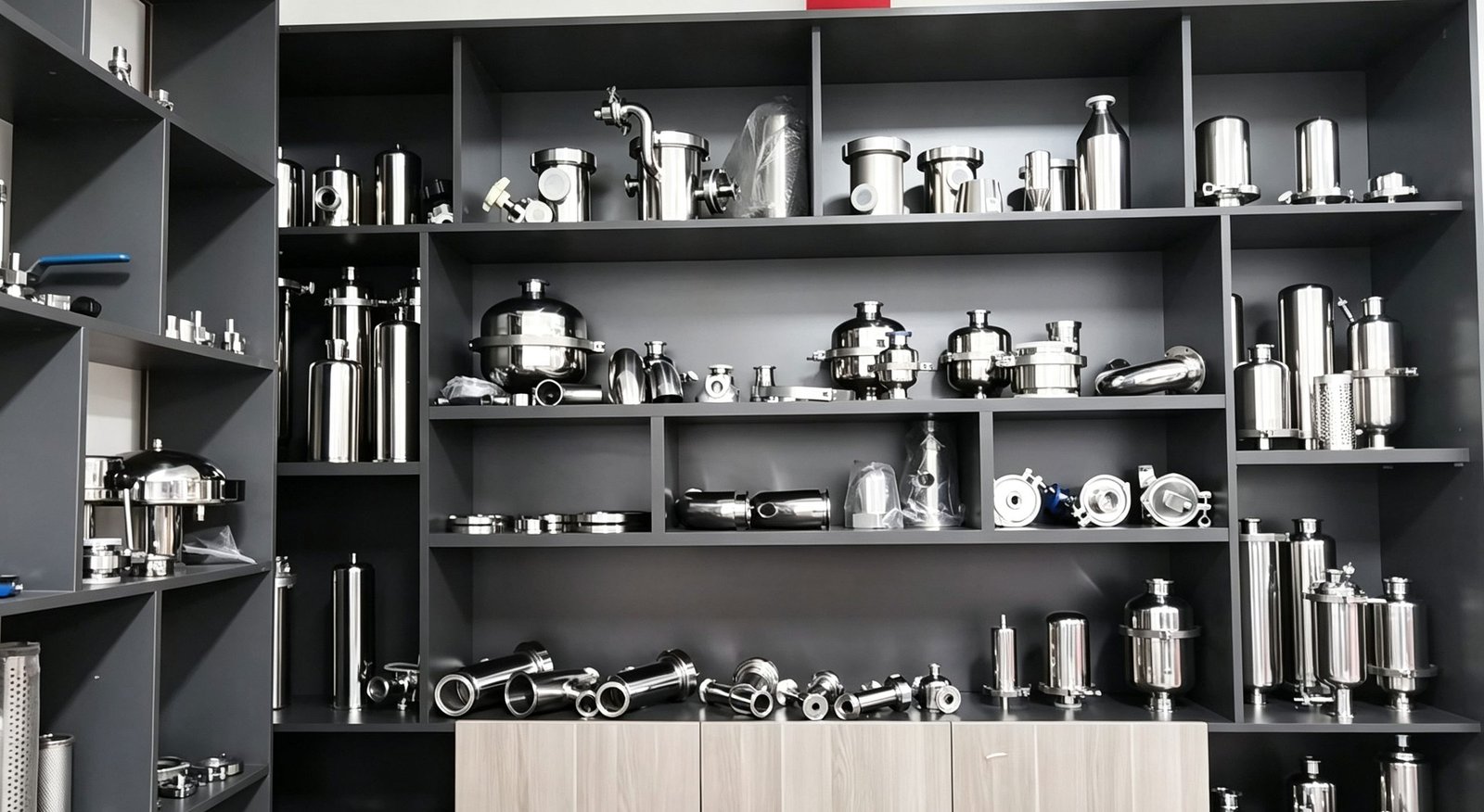
Haoqintech supplies sanitary filtration components for different stages of hygienic liquid processing, including:
- Sanitary Y-Strainers
- Sanitary Inline Strainers
- 304 Stainless Steel Filter Housings
- Multi-Cartridge Filter Housings
- Sanitary Pre-Filter Housings
- Filter Cartridges
The appropriate configuration depends on the required filtration level, flow rate, process pressure, connection size, material, and application.
Frequently Asked Questions
Is a strainer the same as a filter?
No. Both remove unwanted particles, but they are commonly used for different filtration tasks. Strainers are often used for coarse particle removal and equipment protection, while filters are commonly selected for finer or more controlled filtration.
Is a filter finer than a strainer?
Not necessarily in every application. However, filters are commonly selected when a defined or finer filtration level is required, while strainers are frequently used for coarse particle removal and pre-filtration.
Should I use a strainer before a cartridge filter?
In many systems, a strainer or pre-filter can be used upstream of a cartridge filter to remove larger particles and reduce the particle load on the finer filter.
What is the difference between mesh and micron filtration?
Mesh normally describes a woven screen or wire mesh, while micron ratings are commonly used to describe filter media or cartridges. They should not be treated as a universal one-to-one conversion.
How do I choose between a Y-strainer and an inline strainer?
The choice depends on the pipeline layout, available installation space, flow direction, cleaning requirements, connection configuration, and process requirements.
When should I use a cartridge filter instead of a strainer?
A cartridge filter is generally considered when the process requires finer or more controlled filtration, particularly when a defined micron rating is required.
Can a strainer and filter be used together?
Yes. Multi-stage filtration can combine a coarse strainer or pre-filter with a finer cartridge filter. This can help distribute the particle load and protect the downstream filtration stage.
Related Guides
- Mesh Size vs. Micron Rating: Filter Selection Guide
- How to Choose Sanitary Stainless Steel Filters and Strainers for Hygienic Processing
- How to Choose the Right Mesh for a Sanitary Tri-Clamp Inline Strainer
- Sanitary Y-Strainer vs. Inline Strainer
- What Is a Sanitary Filter Housing and How Does It Work?
- How to Choose the Right Sanitary Filter Size for Your Flow Rate
Conclusion
Sanitary filters and strainers serve different but complementary roles in hygienic processing systems.
A strainer is commonly used for coarse particle removal, equipment protection, and reusable mesh filtration. A sanitary filter, particularly a cartridge filter, is often selected when a finer or more controlled filtration level is required.
The right choice should be based on the actual process requirements, including particle size, filtration level, flow rate, pressure drop, cleaning requirements, and application.
In many systems, the most effective approach is not choosing between a filter and a strainer, but using them at different stages of the process.
Understanding these factors makes it easier to select the appropriate sanitary filtration equipment for food, dairy, pharmaceutical, fermentation, and other hygienic processing applications.