When selecting a sanitary filter or strainer, one of the most common questions is the difference between mesh size and micron rating.
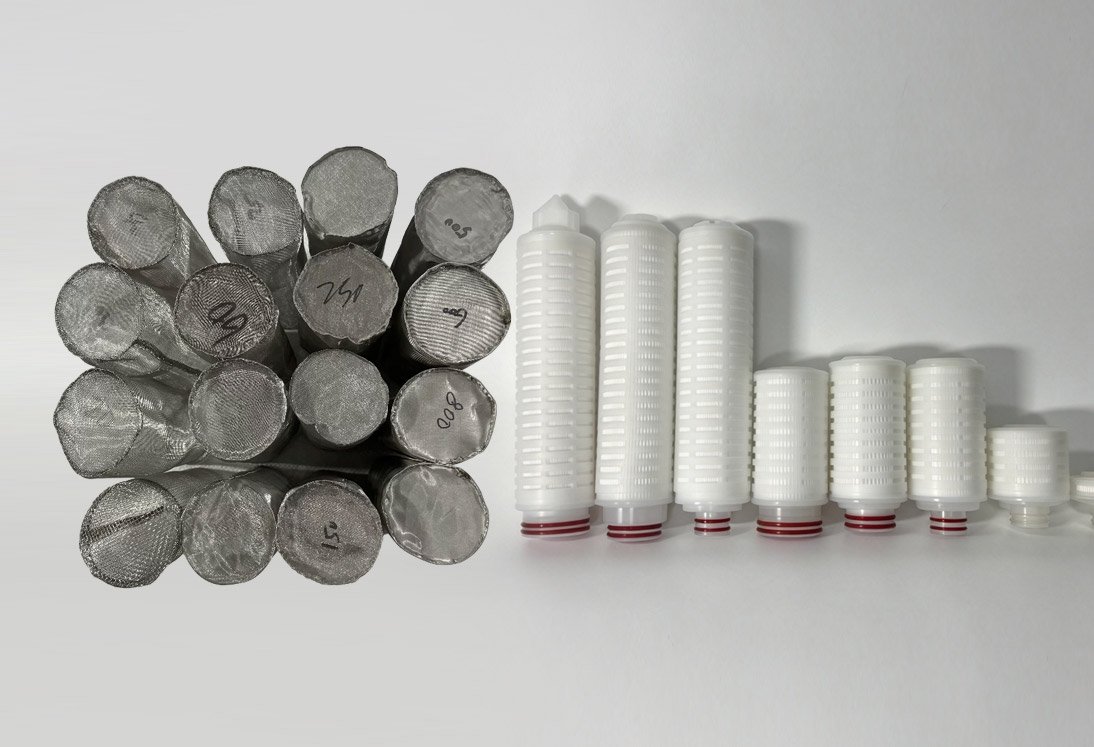
A sanitary inline strainer may be specified as 40 mesh, 100 mesh, or 200 mesh, while a cartridge filter is commonly specified as 1 micron, 5 micron, 10 micron, or 20 micron. Although both specifications describe filtration levels, mesh and micron are not the same measurement.
Understanding the difference helps engineers and purchasing teams select the appropriate filtration method for food processing, dairy, pharmaceutical production, fermentation, liquid culture, and other hygienic fluid-processing applications.
This guide explains what mesh size and micron rating mean, how they relate to particle size, and how to choose the appropriate filtration level for a sanitary processing system.
What Is Mesh Size?
Mesh size describes the number of openings in a woven screen over a defined length, traditionally measured as the number of openings per linear inch.
For example:
- 20 mesh has relatively large openings.
- 100 mesh has much smaller openings.
- 200 mesh is finer than 100 mesh.
- 400 mesh is finer than 200 mesh.
Therefore, a higher mesh number generally means a finer screen.
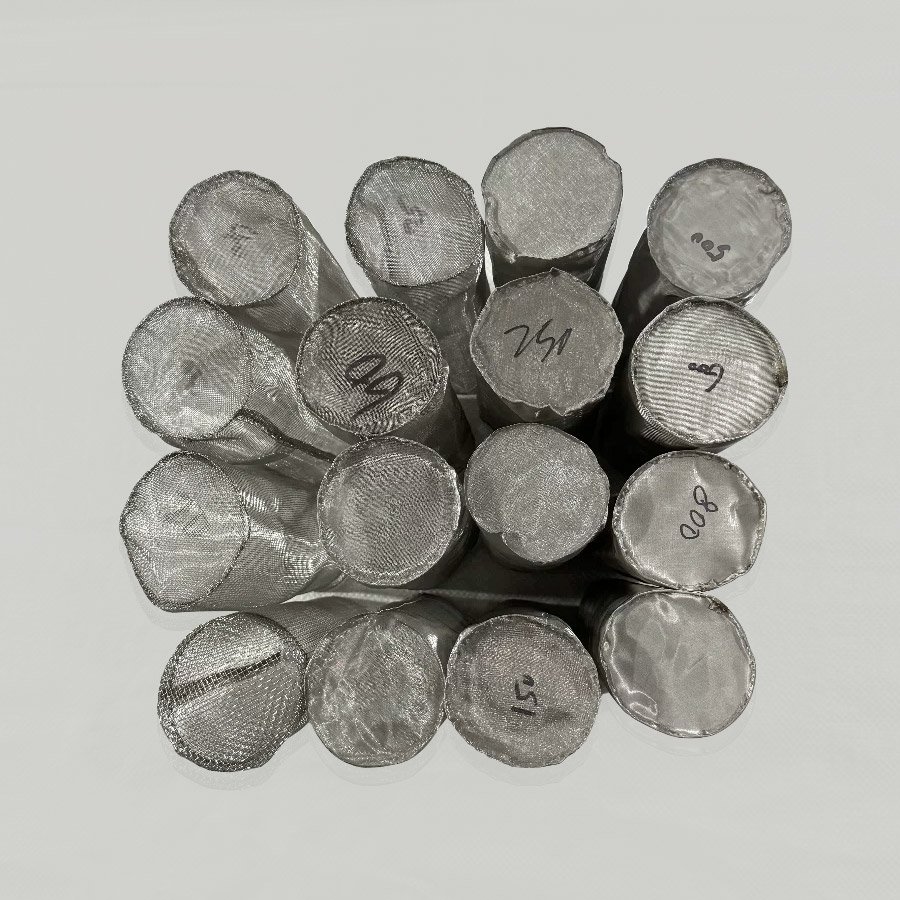
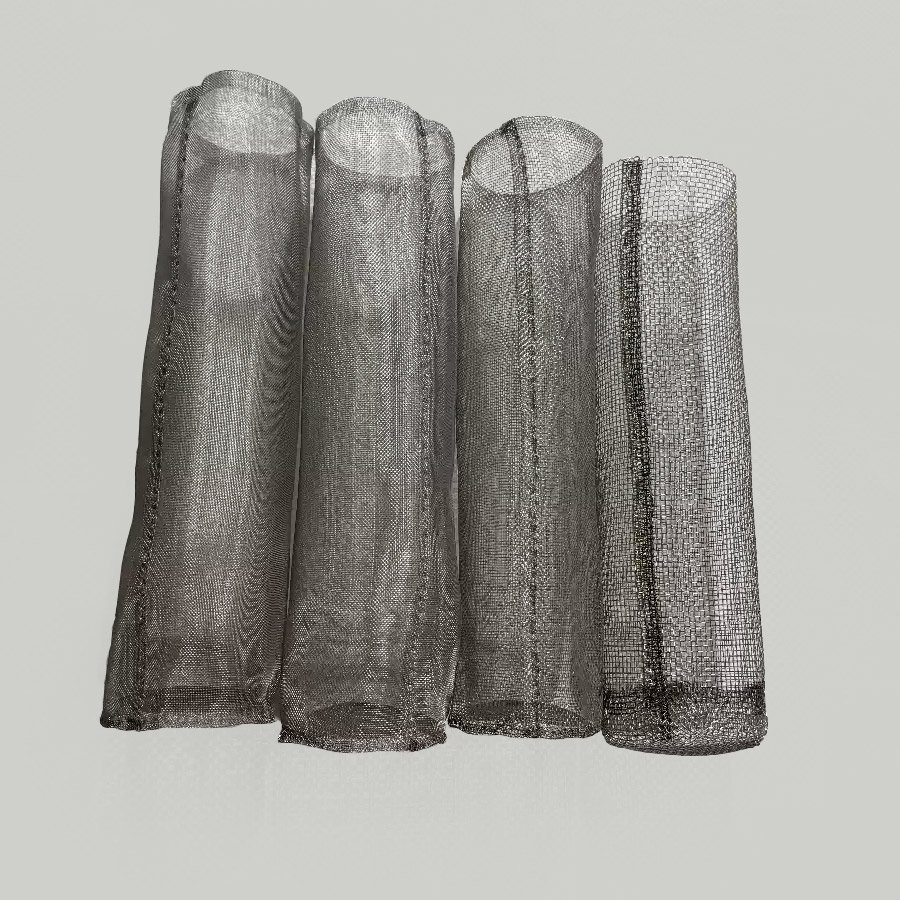
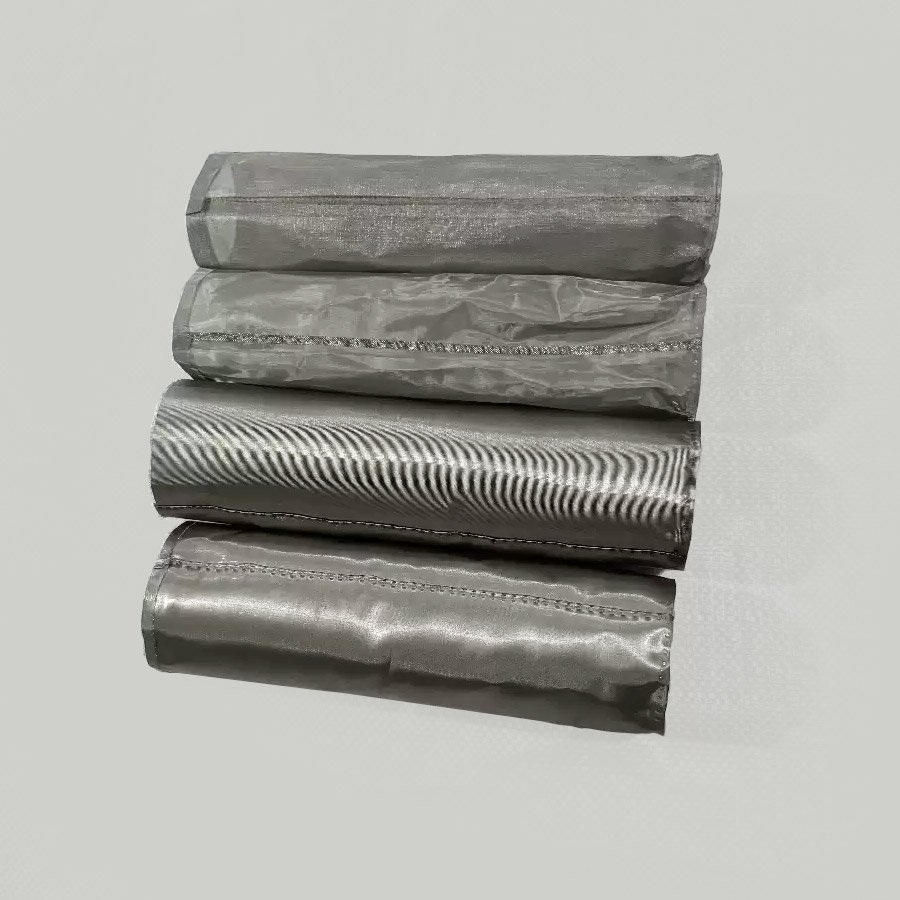
Mesh specifications are commonly used for stainless steel wire mesh used in sanitary strainers, inline strainers, Y-strainers, and other reusable screening components.
However, mesh number alone does not completely define the opening size.
The actual opening depends on factors such as:
- Wire diameter
- Weave construction
- Mesh count
- Manufacturing tolerances
- Screen material
For this reason, mesh should not be treated as a universal micron conversion.
What Is a Micron Rating?
A micron, written as μm, is a unit of length.
One micron is equal to:
1 micron = 0.001 millimeter
Micron ratings are commonly used to describe the filtration level of filter cartridges, membranes, and other filtration media.
For example:
- 100 μm is relatively coarse filtration.
- 20 μm is finer filtration.
- 5 μm is much finer filtration.
- 1 μm provides a significantly finer nominal or absolute filtration level, depending on the filter specification.
A lower micron number generally indicates a finer filtration rating.
However, it is important to understand what the manufacturer’s micron rating actually represents. Depending on the filtration media and product specification, a micron rating may refer to nominal filtration, absolute filtration, or another defined performance characteristic.
Therefore, two filters with the same stated micron rating should not automatically be assumed to have identical filtration performance.
Mesh Size vs. Micron Rating: What Is the Difference?
The simplest way to understand the difference is:
| Specification | Mesh Size | Micron Rating |
|---|---|---|
| Common use | Woven screens and strainers | Filter cartridges and filtration media |
| Describes | Screen opening related to mesh count | Filtration rating related to particle size |
| Direction of finer filtration | Higher mesh number | Lower micron number |
| Common products | Y-strainers, inline strainers | Cartridge filters, membrane filters |
| Exact conversion | Not universal | Depends on filter media and rating method |
This distinction is especially important when selecting sanitary filtration equipment.
For example, a 100 mesh stainless steel strainer and a 100 micron cartridge filter should not be considered equivalent simply because both contain the number 100.
They use different specifications and filtration mechanisms.Micron ratings are commonly used to describe the filtration level of cartridge filters and other filtration media. For applications requiring finer filtration, see our sanitary cartridge filter housing options.
Approximate Mesh-to-Micron Reference
For common woven stainless steel wire mesh, the following values can be used as a general reference:
| Mesh | Approximate Opening |
|---|---|
| 20 mesh | ~840 μm |
| 40 mesh | ~420 μm |
| 60 mesh | ~250 μm |
| 80 mesh | ~180 μm |
| 100 mesh | ~150 μm |
| 120 mesh | ~125 μm |
| 150 mesh | ~100 μm |
| 200 mesh | ~75 μm |
| 250 mesh | ~63 μm |
| 300 mesh | ~50 μm |
| 400 mesh | ~38 μm |
| 500 mesh | ~25 μm |
Important: These are approximate values for commonly used woven wire mesh. Actual opening size can vary depending on wire diameter, weave construction, and manufacturing specifications.
When ordering a sanitary strainer, it is better to confirm the actual screen opening size or manufacturer’s specification rather than relying only on a mesh-to-micron conversion table.
Does 100 Mesh Equal 100 Microns?
No.
This is one of the most common misunderstandings in filtration.
For a common woven wire mesh construction, 100 mesh may have an opening of approximately 150 μm, rather than 100 μm.
The reason is that mesh number describes the number of openings in a given length, while micron describes a physical dimension.
Therefore:
100 mesh ≠ 100 μm
The same principle applies to other mesh numbers. There is no single universal formula that can convert every mesh specification directly into an equivalent micron filtration rating.
If precise filtration performance is important, specify the required opening size, filtration rating, filter media, and application conditions rather than relying on a number alone.
Why Mesh Size Does Not Always Equal a Specific Micron Rating
There are several reasons why a direct mesh-to-micron conversion can be misleading.
1. Wire Diameter Changes the Opening
Two screens can have the same mesh count but use different wire diameters.
A thicker wire can result in a smaller opening, while a thinner wire can produce a larger opening.
Therefore, the mesh number alone does not fully describe the screen aperture.
2. Weave Construction Matters
Different wire mesh constructions can produce different opening characteristics.
For sanitary filtration applications, the actual screen specification should therefore be checked with the manufacturer.
3. Particle Shape Matters
Filtration is not determined only by the nominal size of a particle.
Particles can be:
- Round
- Irregular
- Fibrous
- Elongated
- Soft or deformable
An irregular particle may pass through or become retained by a screen differently from a spherical particle of a similar measured dimension.
4. Filter Media Performance Is Different
A cartridge filter is not simply a piece of wire mesh.
Depending on its construction, a cartridge may capture particles through mechanisms such as surface filtration, depth filtration, or other media-specific mechanisms.
As a result, a micron rating should always be interpreted together with the filter construction and manufacturer’s stated performance.
How to Choose the Right Filtration Level
Selecting a filtration level should start with the process requirement rather than simply choosing the finest available filter.
A practical selection process is:
Particle size → Filtration method → Flow rate → Pressure drop → Cleaning requirements → Application
Let’s look at each factor.
Identify the Particle Size
The first question should be:
What do you need to remove?
For example, the process may contain:
- Large particles
- Fibers
- Undissolved solids
- Process debris
- Suspended particles
- Fine particulate matter
- Microorganisms
Large particles generally require a relatively coarse strainer.
Smaller particles may require finer mesh or cartridge filtration.
If the objective is microbial control or sterile filtration, a different filtration technology may be required rather than simply selecting a finer stainless steel screen.
Consider the Flow Rate
The required filtration level must also be considered together with the process flow rate.
A very fine filter can create greater resistance to flow, particularly when the filter begins to collect particles.
For example, reducing the opening size may improve particle retention but can also increase pressure drop and reduce available flow if the filtration area is insufficient.
Therefore, filter selection should consider:
- Flow rate
- Fluid viscosity
- Particle loading
- Filter area
- Inlet pressure
- Outlet pressure
- Allowable pressure drop
This is especially important for sanitary processing systems where pumps and downstream equipment must operate within defined process conditions.
Consider Pressure Drop
Pressure drop is the difference between pressure upstream and downstream of the filter or strainer.
As a filter becomes loaded with particles, pressure drop can increase.
A finer filtration level can also increase resistance depending on the filter design and process conditions.
For this reason, selecting the smallest possible opening is not always the correct engineering approach.
The objective is to achieve the required filtration performance while maintaining acceptable flow and pressure conditions.
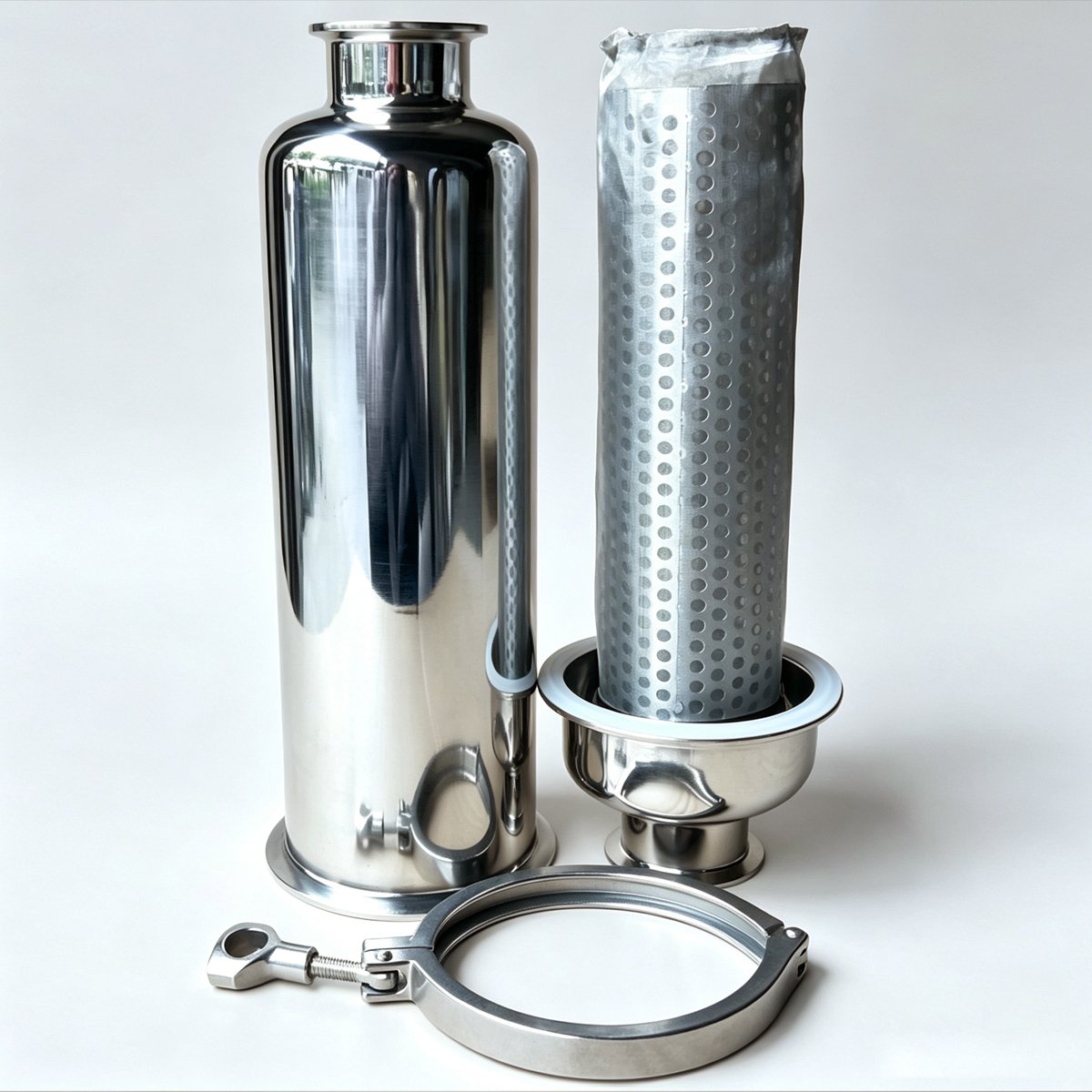
Choose Mesh or Cartridge Filtration
At this stage, determine whether the application is better suited to a reusable mesh strainer or a cartridge filter.
A mesh strainer is often appropriate when the primary objective is to remove larger particles and protect downstream equipment.
A cartridge filter is generally more suitable when finer or more controlled filtration is required.
The two technologies can also be used together.
For example:
Coarse strainer → Fine strainer or pre-filter → Cartridge filter → Final process
This staged approach can reduce the particle load on finer filtration equipment.
Consider Cleaning and CIP Requirements
In hygienic processing, filtration equipment may need to be cleaned repeatedly.
For applications involving CIP, the equipment design should be evaluated for:
- Drainability
- Cleanability
- Dead-leg control
- Internal surface finish
- Gasket compatibility
- Connection type
- Screen or cartridge accessibility
- Chemical and temperature compatibility
A reusable stainless steel mesh strainer can be advantageous where the process requires frequent cleaning and removal of larger particles.
Cartridge filters may be preferred where finer filtration is required and the process is designed around replaceable filtration media.
Mesh Selection for Sanitary Inline Strainers
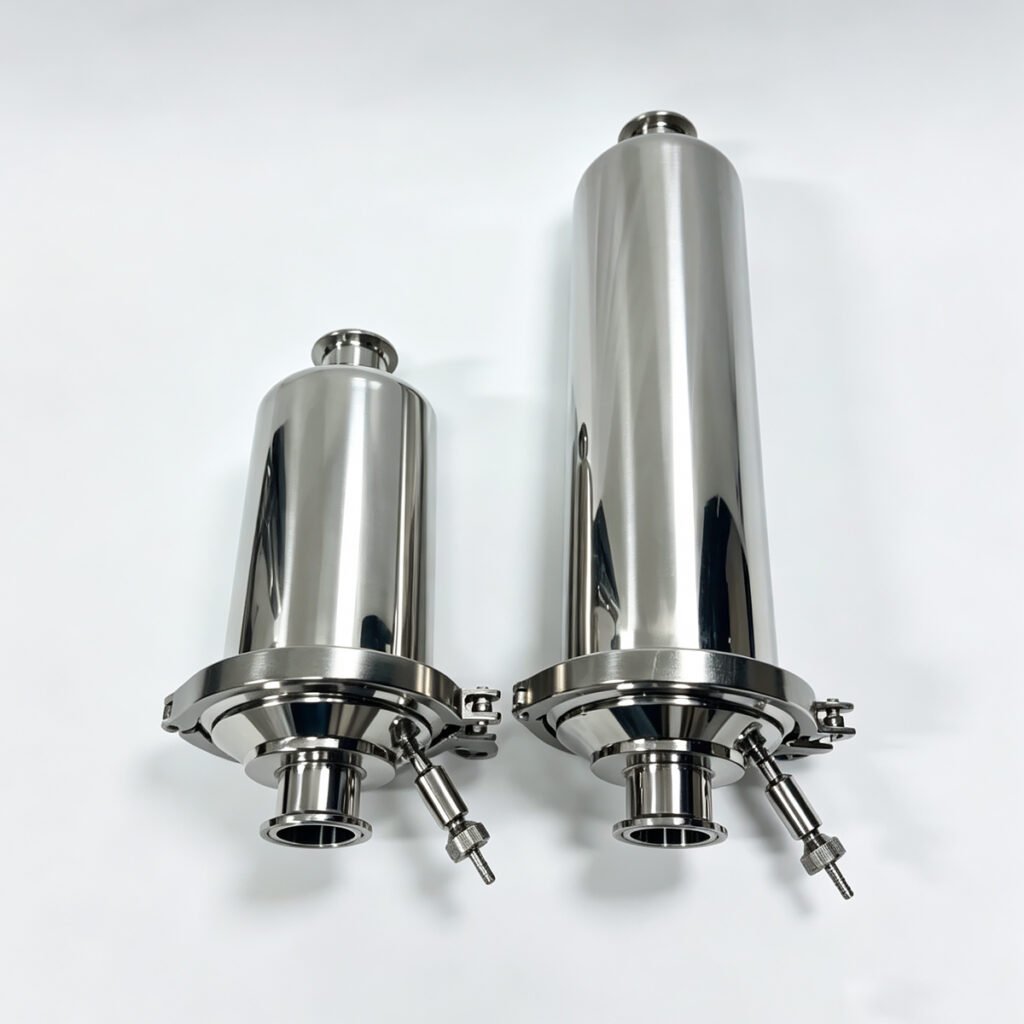
Sanitary inline strainers commonly use stainless steel mesh screens to remove particles from a liquid stream.
They can be used for:
- Pump protection
- Valve protection
- Pipeline protection
- Pre-filtration
- Removal of larger suspended particles
- Protection of downstream filtration equipment
Common mesh options may range from relatively coarse screens to much finer screens, depending on the product design.
For example, a sanitary inline strainer may be available with mesh options such as:
10, 20, 30, 40, 50, 60, 80, 100, 120, 150, 200, 250, 300, 400, or 500 mesh.
The appropriate selection depends on the actual process rather than the mesh number alone.
If the objective is to protect a pump from relatively large particles, a coarse screen may be sufficient.
If the objective is to remove smaller suspended particles before a downstream process, a finer screen may be appropriate.
For more detailed selection criteria, see our guide:
How to Choose the Right Mesh for a Sanitary Tri-Clamp Inline Strainer
Micron Selection for Sanitary Cartridge Filters
Cartridge filters are commonly selected according to their micron rating.
They can be used when the process requires more controlled filtration of suspended particles.
For example, a filtration system may use different cartridge ratings at different stages:
- Coarse pre-filtration
- Intermediate filtration
- Fine filtration
- Final filtration
The correct micron rating depends on the particle size that needs to be removed, the required flow rate, fluid characteristics, filter area, and the performance specification of the cartridge.
A smaller micron number should not automatically be selected simply because it represents finer filtration.
If the filter is too fine for the process, it may load more quickly and create unnecessary pressure drop.
A properly sized filter should provide the required filtration performance without unnecessarily restricting the process.
Mesh Strainer vs. Cartridge Filter
The following comparison can help with initial equipment selection:
| Requirement | Mesh Strainer | Cartridge Filter |
|---|---|---|
| Large particle removal | Suitable | Suitable, depending on cartridge |
| Pump protection | Common application | Less typical as the first stage |
| Reusable screen | Yes | Generally no |
| Fine filtration | Limited by screen design | Well suited |
| Defined micron rating | Not directly equivalent | Common specification |
| Cleaning and reuse | Common | Usually cartridge replacement |
| Pre-filtration | Excellent | Excellent |
| Final fine filtration | Usually not the first choice | Common application |
| CIP-oriented systems | Often suitable | Depends on cartridge and housing |
In many sanitary processing systems, these technologies are complementary rather than competing.
A strainer can protect a cartridge filter from larger particles, while the cartridge filter provides finer filtration downstream.
Common Filtration Levels for Food, Dairy, and Fermentation
Different processing stages can require different filtration levels.
Food and Beverage Processing
Sanitary strainers are often used to remove larger particles and protect pumps, valves, heat exchangers, filling equipment, and other downstream components.
The required screen opening depends on the product and process.
Dairy Processing
Dairy systems may require filtration for particulate removal while maintaining sanitary conditions and appropriate flow.
The selection should consider product viscosity, solids content, temperature, flow rate, and cleaning requirements.
Pharmaceutical Processing
Pharmaceutical applications generally require more controlled filtration and documentation.
The filtration level should be selected according to the process requirement, filter specification, material compatibility, and applicable validation requirements.
Fermentation and Liquid Culture
Fermentation and liquid culture systems may use different filtration stages for different purposes.
For example:
Process liquid → Coarse protection → Fine filtration → Process or final filtration
Mesh strainers can be used where the objective is to protect pumps, piping, or other equipment from larger particles.
Cartridge filters can provide finer particulate filtration.
Air filtration for fermentation systems is a separate application and may require dedicated sterile air or vent filtration equipment rather than a liquid strainer.
For more information about the equipment used in liquid culture and fermentation systems, see our Liquid Spawn Systems and related fermentation system content.
A Practical Filtration Selection Example
Consider a sanitary liquid-processing line where the incoming liquid contains visible suspended particles.
The process may include a pump followed by a cartridge filtration stage.
Instead of immediately installing a very fine cartridge filter, an engineer could consider:
Step 1 — Identify the particles
Determine the approximate particle size and type.
Step 2 — Protect the pump
Install a suitable sanitary strainer if larger particles could damage or interfere with the pump.
Step 3 — Select the pre-filtration level
Choose an appropriate mesh size based on the particle load and required flow.
Step 4 — Select the cartridge rating
Choose a cartridge with a suitable micron rating for the required downstream filtration.
Step 5 — Check flow and pressure drop
Confirm that the selected strainer and filter housing provide sufficient filtration area for the required flow.
Step 6 — Check cleaning requirements
Make sure the equipment and filtration media are compatible with the cleaning process.
This approach is usually more practical than selecting the finest possible filtration level at the beginning.
How Mesh, Micron, Flow, and Filtration Method Work Together
A useful way to think about filtration selection is:
Particle size determines the required filtration level.
Filtration level influences the choice of mesh or filter media.
Filter area and media affect pressure drop.
Flow rate determines the required filtration capacity.
Application and cleaning requirements influence the equipment design.
Therefore, the correct question is not simply:
“What mesh size or micron rating should I use?”
A better engineering question is:
“What particle size do I need to remove, at what flow rate, with what allowable pressure drop and cleaning requirement?”
This provides a much more reliable basis for selecting sanitary filtration equipment.
Frequently Asked Questions
What is the difference between mesh and micron?
Mesh describes the number of openings in a woven screen over a defined length, while micron describes a physical length of one-millionth of a meter. Mesh is commonly used for stainless steel strainer screens, while micron ratings are commonly used for cartridge filters and other filtration media.
Is a higher mesh number finer?
Generally, yes.
A higher mesh number normally indicates smaller openings in a woven wire screen.
For example, 200 mesh is finer than 100 mesh when comparing appropriate mesh constructions.
However, the actual opening size also depends on wire diameter and mesh construction.
Does 100 mesh equal 100 microns?
No.
A common 100 mesh woven wire screen may have an opening of approximately 150 μm, although the actual value depends on the wire diameter and construction.
Mesh and micron should therefore not be treated as interchangeable specifications.
What mesh size should I use for a sanitary strainer?
There is no single mesh size that is correct for every application.
The selection should consider:
- Particle size
- Particle loading
- Required flow rate
- Allowable pressure drop
- Pump and equipment protection
- Fluid characteristics
- Cleaning requirements
The actual process requirement should determine the screen selection.
When should I use a cartridge filter instead of a mesh strainer?
A cartridge filter is generally considered when finer or more controlled filtration is required.
A mesh strainer is often suitable for larger particle removal, equipment protection, and reusable pre-filtration.
In some systems, both are used in sequence.
Is micron rating the same for every cartridge filter?
Not necessarily.
A micron rating should be interpreted according to the manufacturer’s stated rating method and filter construction.
Nominal and absolute ratings can represent different filtration performance, so the rating alone should not be used to compare every filter directly.
Related Sanitary Filtration Equipment
Haoqintech supplies sanitary stainless steel filtration components for hygienic fluid-processing applications.
Depending on the process requirement, the filtration system may include:
- Sanitary Y-strainers
- Tri-Clamp inline strainers
- Stainless steel filter housings
- Pre-filter housings
- Cartridge filters
- Tank breather filters
- Sterile air filtration components
For liquid filtration, the selection should be based on the required particle removal, flow rate, pressure conditions, connection type, material, and cleaning requirements.
You can also explore our related guides:
- How to Choose Sanitary Stainless Steel Filters and Strainers for Hygienic Processing
- How to Choose the Right Mesh for a Sanitary Tri-Clamp Inline Strainer
- Sanitary Y-Strainer vs. Inline Strainer
- What Is a Sanitary Filter Housing and How Does It Work?
- 304 Stainless Steel Filter Housing: Which Filter Cartridge Should You Choose?
- How to Choose the Right Sanitary Filter Size for Your Flow Rate
Conclusion
Mesh size and micron rating are both important filtration specifications, but they describe filtration in different ways.
Mesh size is commonly used for woven stainless steel screens and sanitary strainers, while micron rating is commonly used for cartridge filters and other filtration media.
The two should not be treated as direct equivalents.
When selecting a sanitary filtration system, consider the complete process:
Particle size → Filtration method → Mesh or micron rating → Flow rate → Pressure drop → Cleaning requirements → Application
For many hygienic processing systems, a combination of sanitary strainers for coarse protection and cartridge filters for finer filtration provides a practical filtration strategy.
If you are selecting a sanitary filter or strainer for a specific process, the required flow rate, particle size, filtration level, connection size, material, and operating conditions should be evaluated together rather than choosing the finest available filtration level by default.