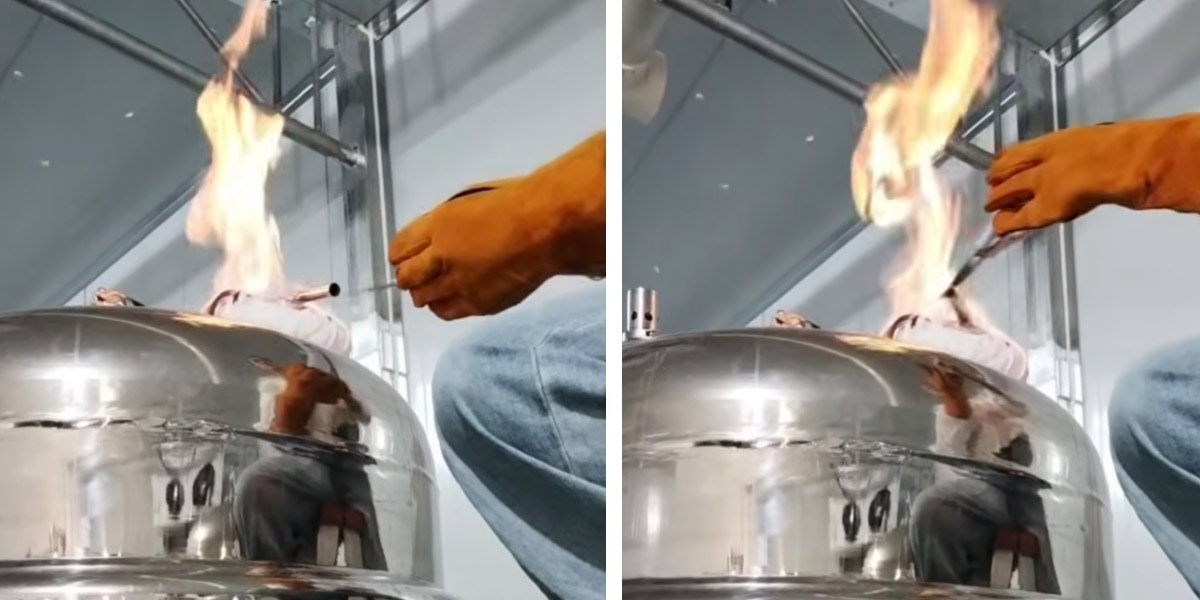
Liquid mushroom spawn production involves more than developing a healthy culture in a shake flask. When the culture is ready for the next stage, it must be transferred into a fermentation tank using an appropriate inoculation procedure.
This transition connects small-scale liquid culture development with larger-scale production. The transfer method, the condition of the equipment, and the handling of the inoculation connection all deserve attention.
In practical production, these details need to be considered together. A suitable fermentation tank is important, but the way the culture is introduced into the tank also matters.
From Shake Flask Culture to the Next Stage
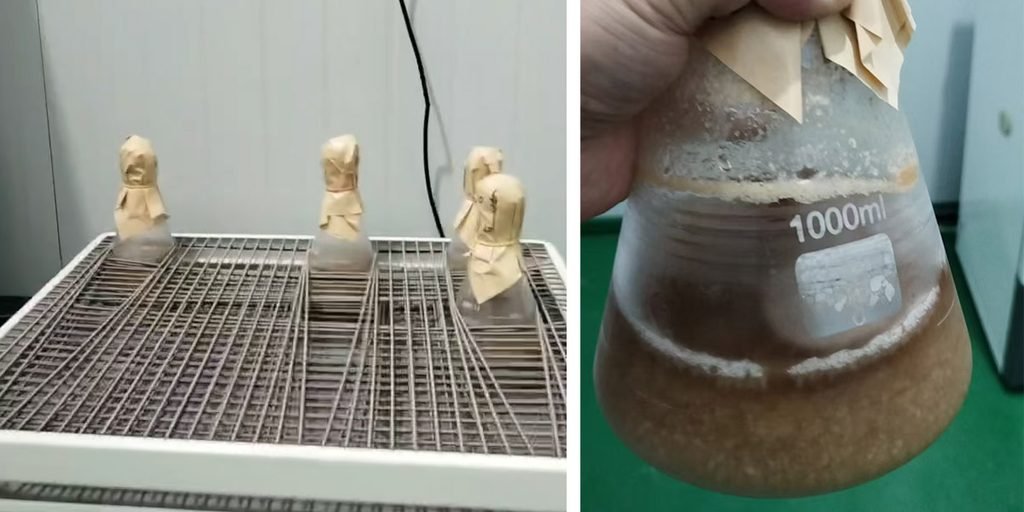
Shake flasks are commonly used during the early stages of liquid mushroom spawn cultivation. They provide a practical environment for developing liquid cultures before the process moves to a larger vessel.
Once the culture has reached the stage required by the established production procedure, it can be transferred to a fermentation tank for further cultivation.
The transfer is an important transition in the production process. The equipment arrangement needs to support the movement of the liquid culture while allowing the operator to follow the required contamination-control procedure.
The specific transfer method depends on the culture, the equipment configuration, and the production process. For this reason, the inoculation connection should be considered when planning the fermentation system rather than treated as an afterthought.
Why the Fermentation Tank Connection Needs Attention
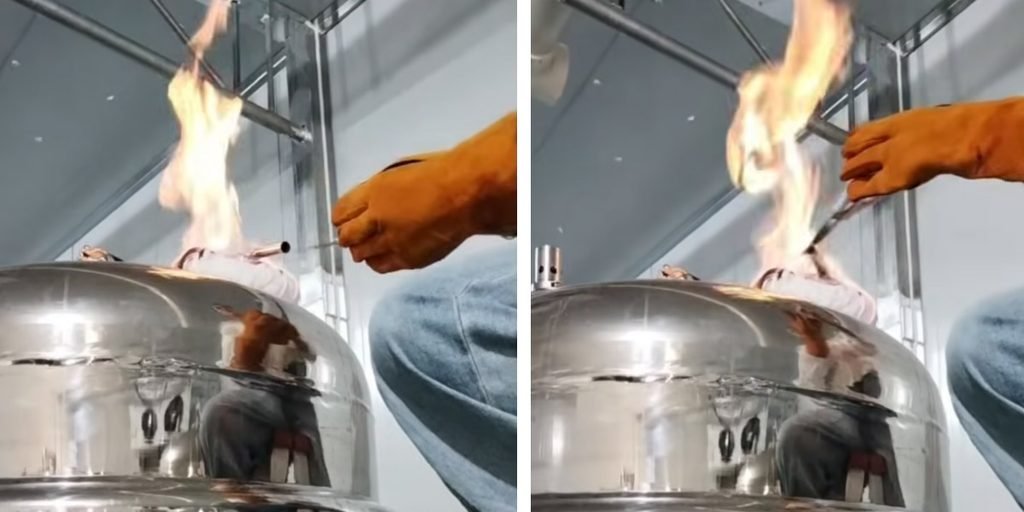
The inoculation connection is a critical point during liquid spawn transfer because the culture must pass from one container into another without introducing unwanted contamination.
The preparation of the fermentation tank, the condition of the transfer interface, and the operator’s handling procedure all contribute to contamination control.
In the process shown here, flame treatment is used around the inoculation connection as part of the operating procedure. Its purpose is to help reduce contamination risk around the connection during transfer.
However, flame treatment should not be regarded as a guarantee of sterility. It does not replace appropriate vessel sterilization, suitable transfer arrangements, or aseptic handling practices. The actual procedure must be appropriate for the equipment design and assessed for operational safety, particularly because an open flame introduces heat and fire hazards.
The key consideration is the complete transfer procedure, not simply whether a flame is present.
Transferring Liquid Spawn into the Fermentation Tank
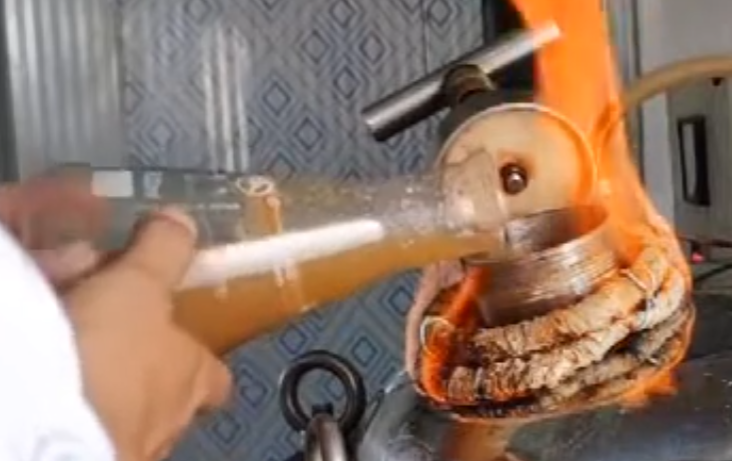
After the shake-flask culture is ready, the liquid spawn is transferred into the fermentation tank through the designated inoculation connection.
This operation requires coordination between the transfer itself and the contamination-control measures used at the connection. The operator must follow the established procedure for the equipment, including the required preparation of the vessel and transfer interface.
The connection should be arranged to make the transfer practical and manageable. Accessibility, compatibility with the chosen transfer method, and ease of preparation are all relevant when configuring the system.
The image illustrates the transfer stage in our production process. Rather than treating inoculation as an isolated action, it is useful to view it as part of a larger workflow involving culture preparation, equipment readiness, transfer, and subsequent fermentation.
A procedure that works for one vessel or production scale may not be suitable for another. The details should therefore be established according to the actual equipment and culture requirements.
How Fermentation Tank Design Supports the Process
The inoculation method should be considered alongside the design of the fermentation tank and its associated connections.
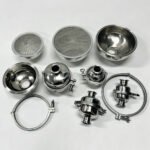
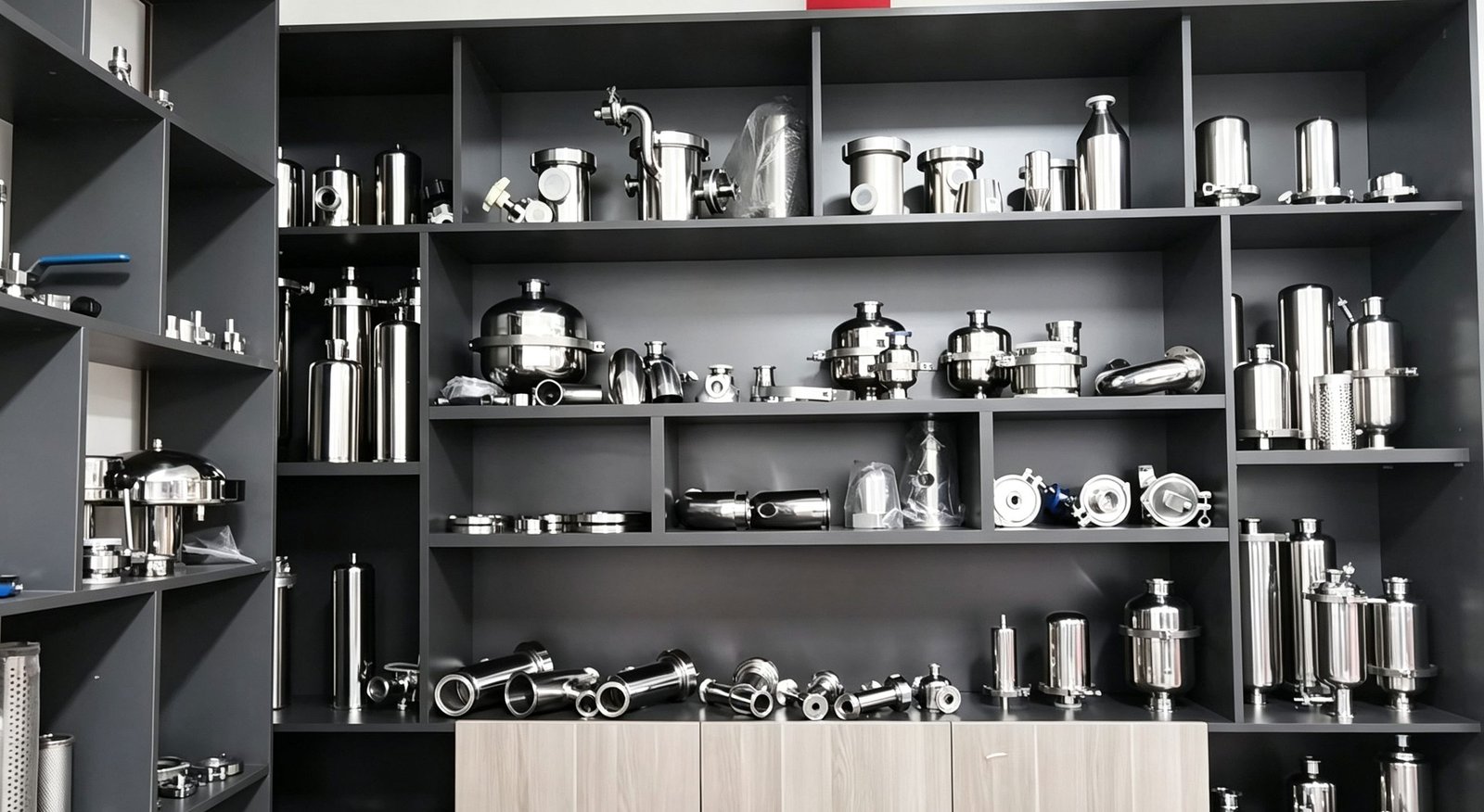
The tank, piping, valves, and other sanitary components need to suit the intended process. Their arrangement can influence how the equipment is prepared, how the culture is transferred, and how routine operations are carried out.
For example, a connection that is difficult to access may complicate preparation and handling. An unsuitable transfer arrangement may also make it harder to maintain a consistent operating procedure.
When planning a liquid mushroom spawn production system, it is therefore worth considering the inoculation procedure during the equipment-design stage.
For a broader explanation of the vessel’s role, see our guide to the working principle of a mushroom spawn fermentation tank.
You can also explore our liquid mushroom spawn production system and our overview of sanitary components used in liquid mushroom spawn fermentation systems.
Watch the Liquid Spawn Inoculation Process
The photographs above show the main stages of the operation, from shake-flask culture to transfer into the fermentation tank.
The video below provides a closer look at the actual procedure and how the transfer is carried out in the production environment.
Seeing the operation in context helps explain why inoculation needs to be considered together with equipment preparation, connection design, and contamination control.
For commercial liquid mushroom spawn production, these practical details should be discussed when configuring the fermentation equipment and planning the overall process.