Introduction
Commercial mushroom production increasingly requires stable, repeatable, and hygienic cultivation processes. Compared with traditional spawn production methods, liquid spawn technology provides a controlled environment where mushroom mycelium can grow in a nutrient-rich liquid medium.
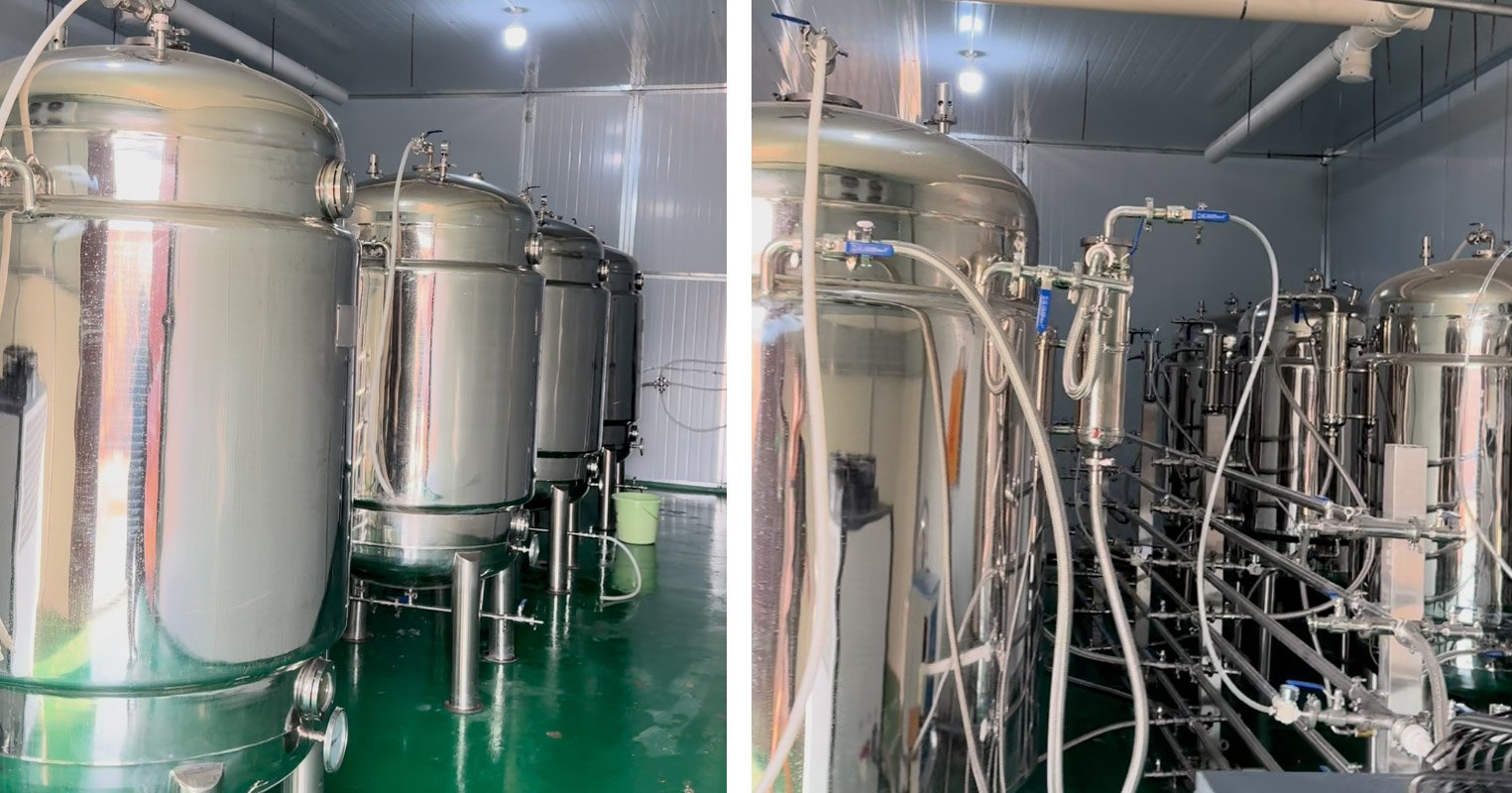
A mushroom spawn fermentation tank is the core equipment used in liquid culture production. It provides controlled conditions for aeration, mixing, temperature management, sterilization, and hygienic processing.
By combining fermentation vessels with sanitary air supply systems, filtration components, and cleaning systems, modern liquid spawn production facilities can achieve more consistent production and easier process management.
Why Choose Liquid Spawn Production for Commercial Mushroom Cultivation?
Traditional mushroom spawn production commonly uses solid substrates such as grain or other carrier materials. While solid spawn remains widely used, liquid spawn production has become increasingly attractive for commercial operations that require higher consistency, scalability, and process control.
Liquid spawn is produced by cultivating mushroom mycelium in a sterilized liquid nutrient medium inside a controlled fermentation environment.
Faster and More Controlled Mycelium Growth
In a liquid culture system, nutrients and oxygen can be distributed more evenly through aeration and agitation.
The fermentation environment can be controlled through:
- Temperature management
- Oxygen supply
- Mixing speed
- Fermentation time
This creates more stable growth conditions compared with processes that rely mainly on external environmental conditions.
More Consistent Spawn Quality
For industrial mushroom production, batch consistency is an important consideration.
Liquid spawn fermentation systems allow operators to monitor and control key parameters throughout the cultivation process.
Compared with traditional manual spawn preparation, a controlled fermentation system can help reduce variations caused by:
- Uneven substrate conditions
- Manual handling differences
- Environmental fluctuations
Easier Industrial Scale-Up
One of the main advantages of liquid spawn production is that the process can be expanded through different fermentation tank sizes.
A commercial system can integrate:
- Stainless steel fermentation tanks
- Sterile air supply
- Sanitary pipelines
- CIP cleaning systems
- Transfer equipment
This makes liquid culture technology suitable for laboratory development as well as industrial mushroom production facilities.
Reduced Manual Handling and Contamination Risk
Traditional spawn production often requires multiple manual preparation and transfer steps.
A closed liquid fermentation system reduces unnecessary exposure by using:
- Hygienic stainless steel vessels
- Filtered air supply
- Sanitary connections
- Controlled transfer processes
This helps create a cleaner production environment and improves process reliability.
Liquid Spawn Production vs Traditional Solid Spawn Production
| Liquid Spawn Production | Traditional Solid Spawn Production |
|---|
| Growth Medium | Liquid nutrient medium | Solid substrate |
| Process Control | Controlled fermentation parameters | More dependent on external conditions |
| Scale Expansion | Easier to increase production capacity | Requires more manual expansion |
| Automation | Can integrate monitoring and control systems | Usually more manual operation |
| Equipment | Fermentation tanks and sanitary systems | Incubation containers and preparation equipment |
What Is a Mushroom Spawn Fermentation Tank?
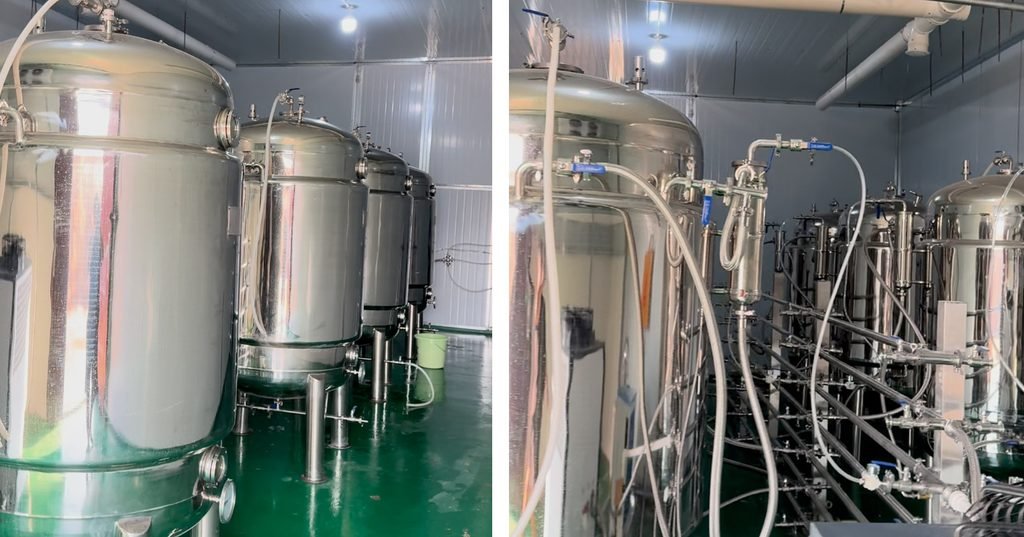
A mushroom spawn fermentation tank is a stainless steel vessel designed for producing liquid mushroom spawn through controlled microbial fermentation.
During the liquid culture process, a prepared nutrient medium is sterilized and transferred into the tank. After inoculation, mushroom mycelium grows inside the controlled environment with suitable oxygen supply, mixing, and temperature conditions.
Unlike simple cultivation containers, industrial fermentation tanks combine multiple functions, including:
- Sterile air supply
- Agitation and mixing
- Temperature control
- Pressure management
- Hygienic cleaning
For commercial applications, fermentation tanks are commonly manufactured using stainless steel materials such as 304 stainless steel because of their corrosion resistance, durability, and compatibility with hygienic processing requirements.
Working Principle of a Mushroom Spawn Fermentation Tank
The liquid spawn fermentation process usually includes several important stages.
1. Medium Preparation and Sterilization
Before fermentation begins, the nutrient medium must be prepared and sterilized.
The fermentation tank and connected pipelines also require proper cleaning and sterilization procedures to create a suitable environment for liquid culture production.
2. Inoculation
After sterilization and cooling, mushroom strains are introduced into the liquid medium.
The fermentation tank provides a controlled environment where mycelium can grow and multiply.
3. Aeration and Oxygen Supply
Oxygen supply plays an important role during liquid fermentation.
Compressed air enters the fermentation system through a sanitary air supply line. Before entering the tank, the air is normally treated through filtration systems to reduce contamination risks.
Typical airflow process:
Compressed Air

        ↓

Air Treatment

        ↓

Sterile Air Filter

        ↓

Fermentation Tank

        ↓

Liquid Culture
4. Mixing and Agitation
The agitation system keeps nutrients, oxygen, and microorganisms evenly distributed inside the tank.
Proper mixing helps maintain stable fermentation conditions and supports consistent liquid spawn quality.
5. Fermentation and Spawn Collection
During fermentation, operators monitor important parameters such as:
- Temperature
- Air supply
- Mixing conditions
- Fermentation time
After reaching the required growth stage, liquid spawn can be transferred through sanitary pipelines for further production processes.
Main Components of a Mushroom Spawn Fermentation System
A complete liquid spawn fermentation system includes several important components.
Stainless Steel Fermentation Tank
The fermentation vessel provides the controlled environment required for liquid culture growth.
Important design considerations include:
- 304 stainless steel construction
- Smooth internal surface
- Corrosion resistance
- Easy cleaning capability
Sterile Air Supply System
The fermentation process requires oxygen supply while maintaining contamination control.
A sterile air system helps deliver treated air into the fermentation tank.
The typical structure is:
Air Source

    ↓

Air Filtration

    ↓

Fermentation Tank

    ↓

Mycelium Growth
Tank Breather System
During fermentation, gas exchange occurs as oxygen enters and exhaust gas leaves the tank.
The relationship between the two systems:
              Clean Air

                 ↓

        Sterile Air Filter


                 ↓

     Mushroom Spawn Fermentation Tank


                 ↑

            Tank Breather


                 ↑

            Exhaust Gas
CIP Cleaning System
Hygienic cleaning is an important requirement for repeated fermentation cycles.
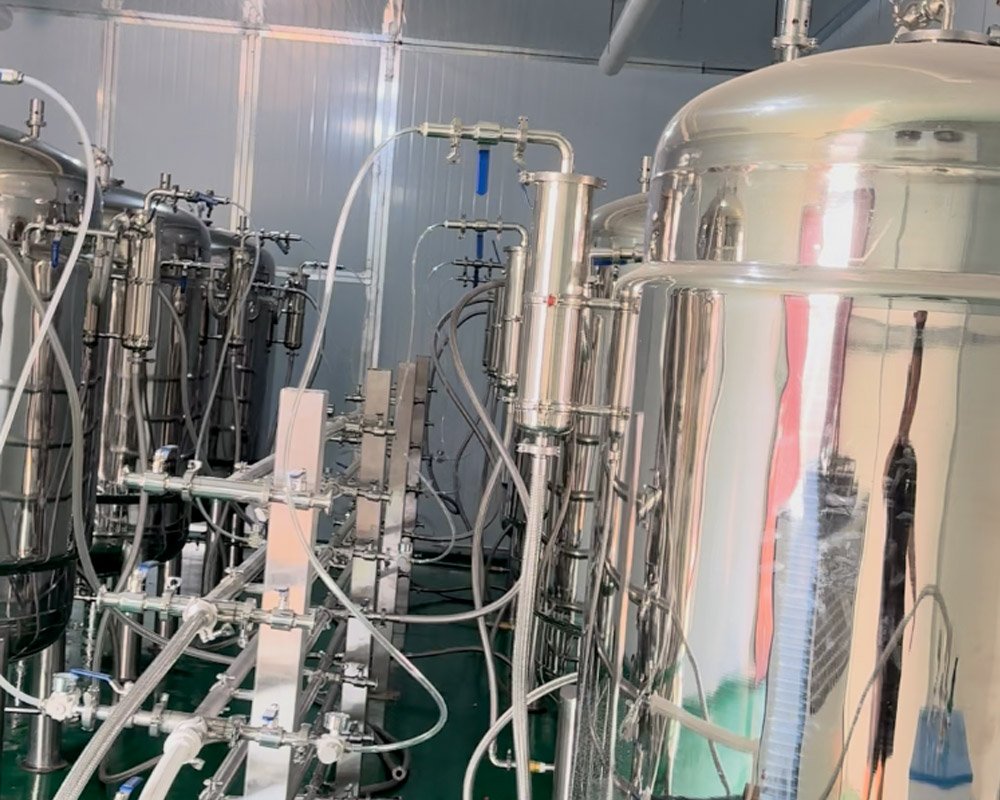
CIP systems, sanitary spray balls, and hygienic pipelines help clean equipment without unnecessary disassembly.
Hygienic Design Considerations for Liquid Spawn Fermentation Equipment
Industrial liquid culture equipment requires careful attention to sanitary design.
Stainless Steel Material
304 stainless steel is widely used for food and biological processing equipment because it provides good corrosion resistance and durability.
Sanitary Connections
Tri-Clamp connections are commonly used in hygienic processing systems because they allow easier installation, cleaning, and maintenance.
Smooth Internal Surfaces
A smooth internal surface reduces residue accumulation and supports effective cleaning procedures.
Contamination Control
A complete contamination control strategy usually combines:
- Sterile air filtration
- Tank breather systems
- Hygienic piping
- Proper cleaning procedures
Applications of Mushroom Spawn Fermentation Systems
Liquid spawn fermentation tanks are commonly used in:
- Commercial mushroom spawn production
- Liquid culture laboratories
- Food biotechnology applications
- Microbial fermentation processes
- Hygienic fluid processing systems
For industrial facilities, fermentation tanks are usually integrated with filtration equipment, air handling components, and sanitary processing systems.
Conclusion
A mushroom spawn fermentation tank is not simply a stainless steel container. It is an integrated liquid culture system that combines sterilization, aeration, agitation, gas exchange, and hygienic design.
Compared with traditional spawn production methods, liquid spawn fermentation provides advantages for commercial operations that require better process control, production consistency, and scalable manufacturing.
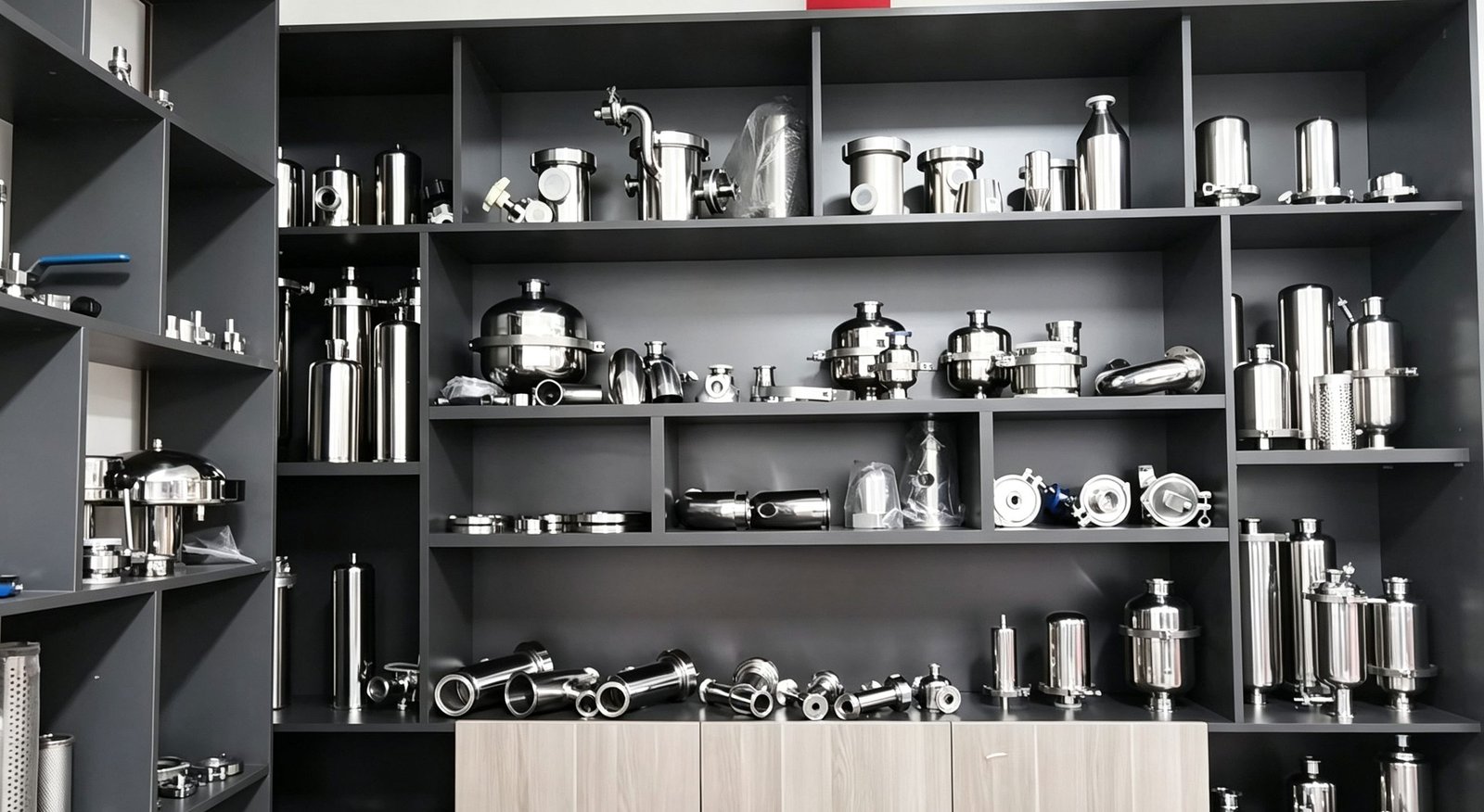
Haoqintech provides sanitary stainless steel components and fluid processing equipment for fermentation, liquid culture, food, and hygienic processing applications.