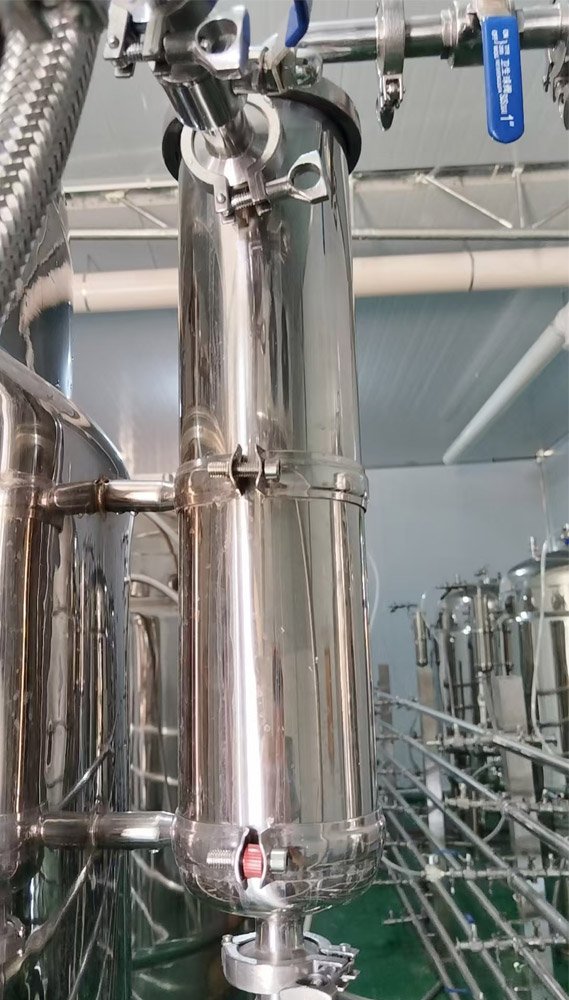
Introduction
In hygienic fermentation and liquid culture systems, maintaining a clean and controlled environment is essential for product quality and process stability.
While many people focus on fermentation tanks, agitators, and sterile air supply systems, the tank breathing system is also an important part of the overall design.
A sanitary tank breather filter helps the vessel exchange gases while reducing the risk of external contamination entering the process.
Understanding where a tank breather is installed and how it works helps engineers select suitable components for fermentation, food processing, pharmaceutical, and other hygienic applications.
What Is the Role of a Tank Breather Filter in a Fermentation System?
During fermentation, the internal condition of a tank changes continuously.
Several factors can affect tank pressure:
- temperature changes during operation;
- filling and discharge of liquid;
- gas generation from microbial activity;
- air consumption during fermentation.
Without proper ventilation, pressure differences may occur between the inside and outside of the vessel.
A tank breather filter provides controlled gas exchange by allowing air movement while helping prevent airborne particles and contaminants from entering the tank.
In a hygienic fermentation system, the tank breather is not simply a ventilation component. It is part of the contamination control system.
Where Is a Tank Breather Installed on a Fermentation Tank?
A tank breather filter is commonly installed on the upper section of a fermentation vessel, usually on the tank head or top port.
A typical arrangement can be illustrated as:
          Tank Top

             |
      Tank Breather Filter

             |
    ------------------
    |                |
    | Fermentation   |
    |     Tank       |
    |                |
    ------------------

             |
      Sterile Air Inlet
The installation position allows the tank to release or receive air during operation while maintaining hygienic conditions.
For liquid culture and fermentation applications, the tank breather is usually connected through sanitary fittings such as tri-clamp connections to ensure easy cleaning and maintenance.
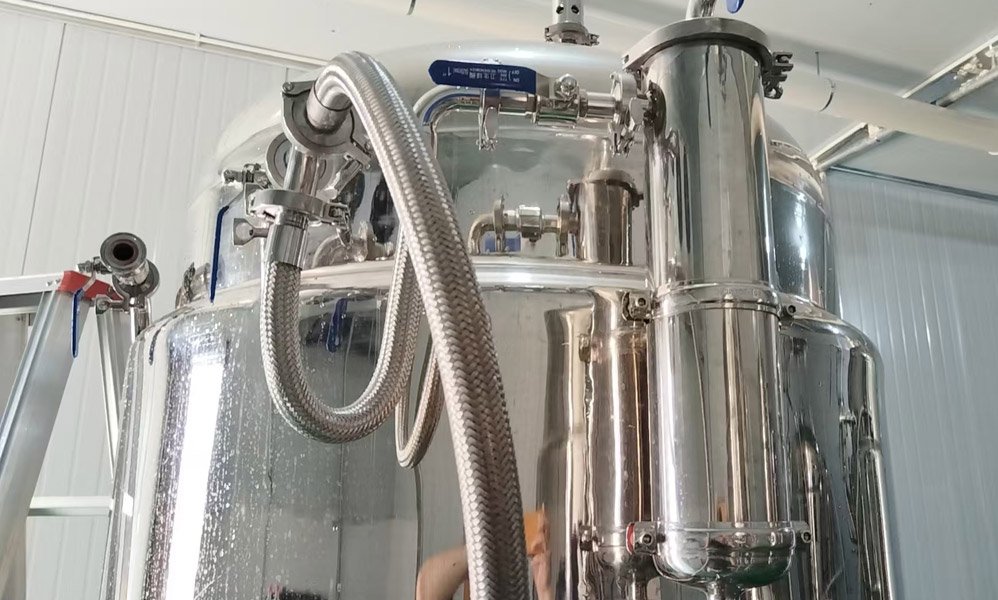
How Does a Tank Breather Filter Work?
The working principle is based on controlled filtration during gas exchange.
During normal operation:
- Gas inside the tank needs to be released or balanced.
- The breather filter allows air movement through the filtration media.
- The filter element helps reduce the risk of external particles entering the vessel.
The direction of airflow depends on the operating condition of the tank.
For example:
During tank filling:
Outside Air
     ↓
Tank Breather
     ↓
Fermentation Tank
During gas release:
Fermentation Tank
     ↓
Tank Breather
     ↓
Outside Environment
This continuous exchange helps maintain stable pressure conditions.
Tank Breather Filter vs Sterile Air Filter: What Is the Difference?
Tank breather filters and sterile air filters are often mentioned together in fermentation systems, but they perform different functions.
Sterile Air Filter
Main purpose:
- filtration of incoming process air;
- supplying clean air into the fermentation tank;
- supporting aerobic fermentation processes.
Air direction:
Outside Air → Sterile Air Filter → TankTank Breather Filter
Main purpose:
- managing exhaust air exchange;
- balancing tank pressure;
- protecting the vessel from external contamination.
Air direction:
Tank → Tank Breather → OutsideIn a complete fermentation system, both components may work together:
             Sterile Air Filter

                    ↓

             Fermentation Tank

                    ↑

             Tank Breather Filter
The sterile air filter manages incoming air, while the tank breather manages tank ventilation.
Why Are Tank Breather Filters Important in Liquid Culture Systems?
Liquid culture production requires strict control of contamination risks.
During cultivation, microorganisms grow in a nutrient-rich environment where unwanted contamination can affect the entire batch.
A suitable tank breathing system helps support:
- cleaner operating conditions;
- stable pressure control;
- reduced contamination risk;
- hygienic production processes.
For liquid mushroom spawn, fermentation, and biotechnology applications, tank breathers are commonly integrated with other sanitary components, including:
- stainless steel tanks;
- sanitary piping;
- tri-clamp fittings;
- valves;
- filtration systems.
Key Factors When Selecting a Tank Breather Filter for Fermentation Applications
When selecting a tank breather filter, engineers normally consider:
Filtration Requirement
The filtration media should match the cleanliness requirements of the application.
Air Flow Capacity
The breather needs sufficient airflow capacity to support tank operation.
Connection Type
Common hygienic connections include:
- tri-clamp connection;
- sanitary threaded connection.
Material Compatibility
Stainless steel construction such as 304 or 316L is commonly selected for hygienic processing environments.
Cartridge Configuration
Depending on tank size and process requirements, different cartridge configurations may be used:
- single cartridge;
- multi-cartridge design.
Tank Breather Filters as Part of a Complete Hygienic Processing System
A fermentation system is not built from a single component.
The tank breather works together with multiple sanitary components:
- fermentation vessel;
- sterile air filtration system;
- sanitary valves;
- tri-clamp fittings;
- CIP cleaning equipment;
- process filters.
Each component contributes to maintaining a controlled and hygienic production environment.
Conclusion
Tank breather filters play an important role in fermentation and liquid culture systems by supporting gas exchange, pressure balance, and contamination control.
Understanding the installation position and working principle of tank breathers helps engineers design more reliable hygienic processing systems.
For food, pharmaceutical, biotechnology, and fermentation applications, selecting suitable sanitary components requires consideration of the complete process system rather than individual parts only.
FAQ
Do fermentation tanks need tank breather filters?
Yes. Fermentation tanks require controlled gas exchange to maintain pressure balance and reduce contamination risks.
Where is a tank breather installed?
A tank breather is normally installed on the top section of a fermentation vessel or storage tank.
What is the difference between a sterile air filter and a tank breather?
A sterile air filter cleans incoming air entering the tank, while a tank breather manages air exchange leaving or entering the vessel.
Can a tank breather filter be used in liquid culture systems?
Yes. Tank breather filters are commonly used in hygienic liquid culture and fermentation systems where contamination control is important.