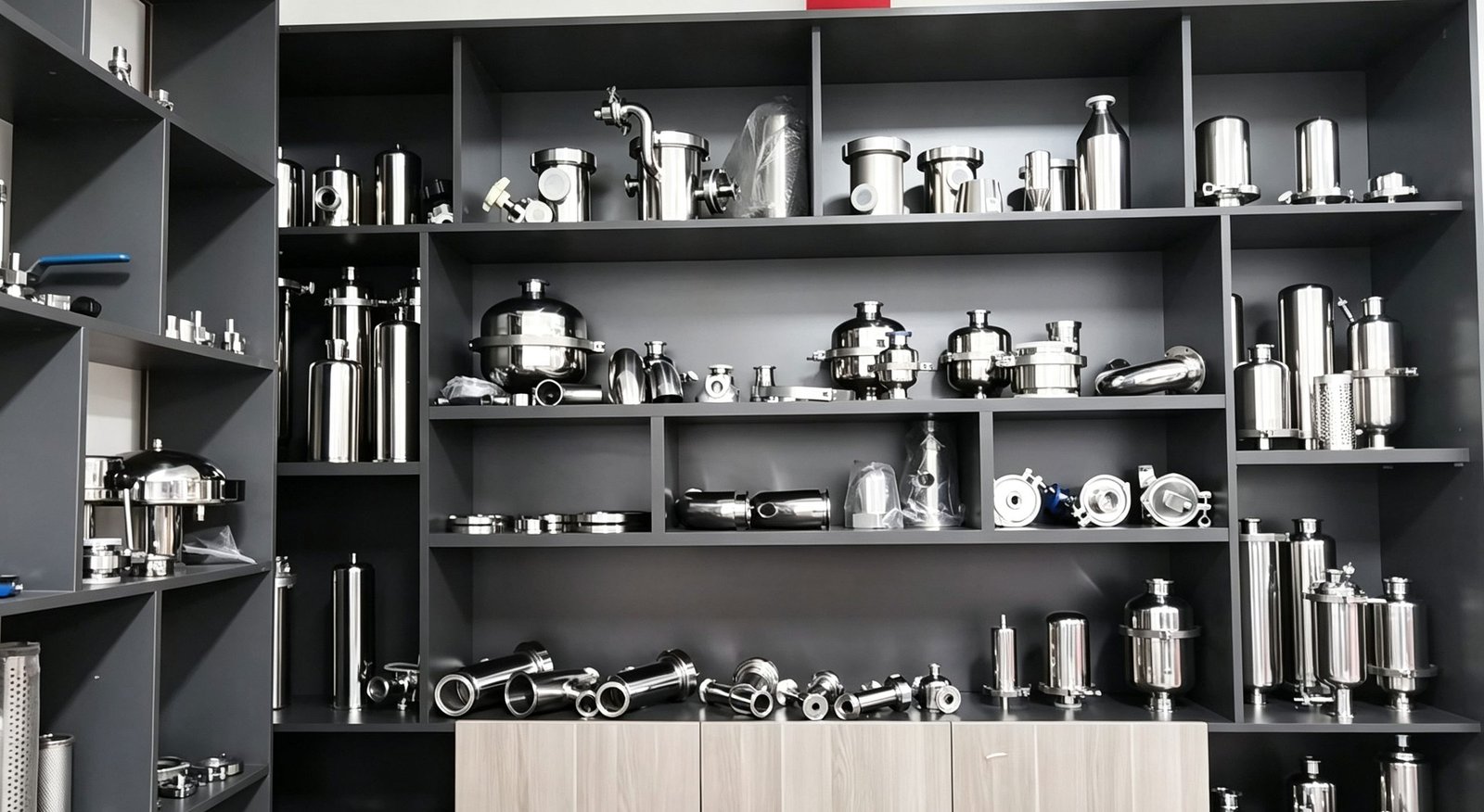
A sanitary straight-through strainer is an inline filtration component used to retain suspended solid particles from a liquid stream. Its compact body, removable mesh screen and stainless steel construction make it a practical option for liquid-processing systems that require accessible inspection and manual screen cleaning.
When selecting a strainer, buyers need to consider more than the nominal body diameter. Screen mesh, pipeline connections, material compatibility, operating conditions and maintenance access all affect whether a particular configuration is suitable for the process.
This guide explains how a sanitary straight-through strainer works, reviews the available configurations and outlines what to confirm before ordering.
How Does a Straight-Through Strainer Work?
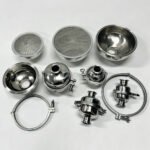
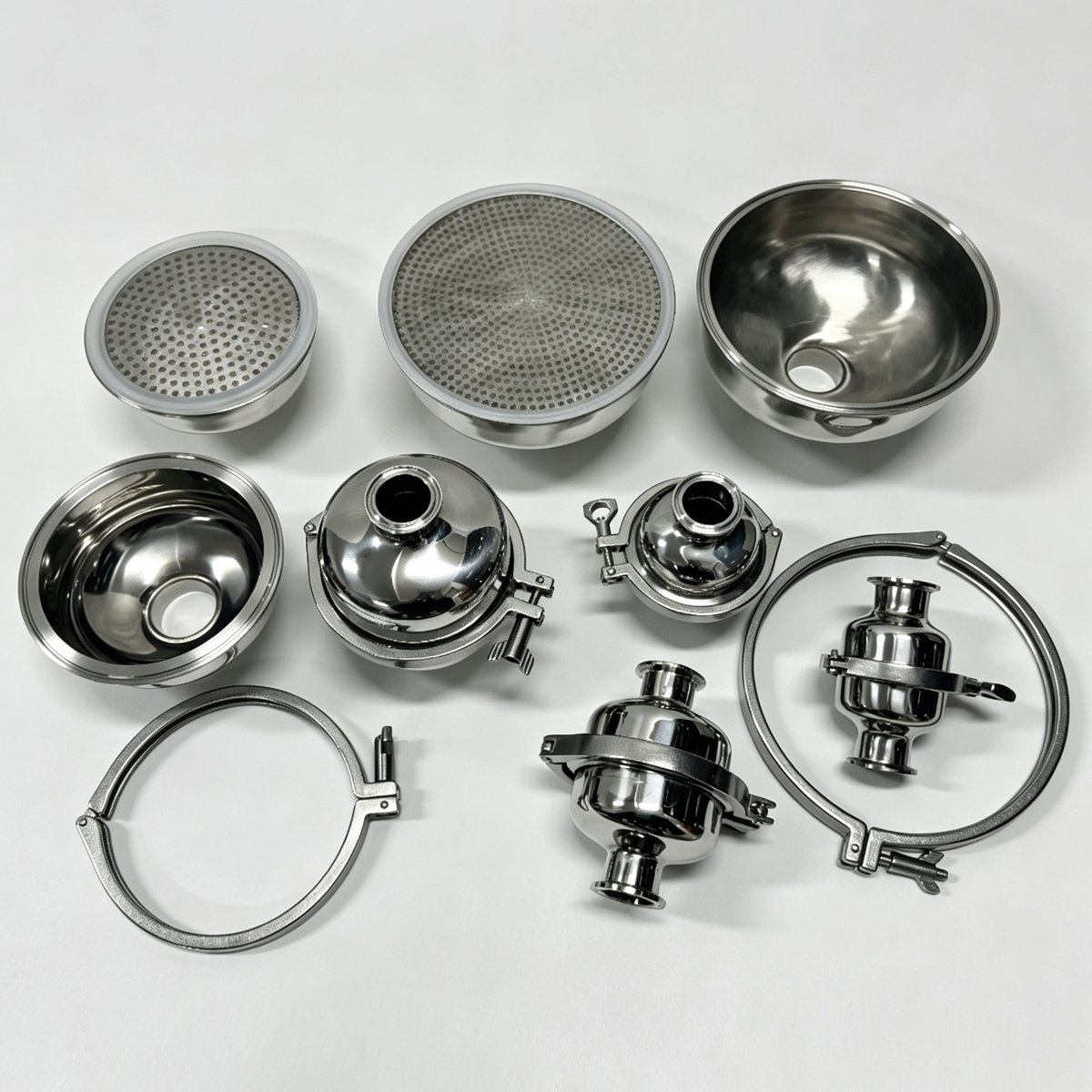
The strainer consists of a cylindrical body with inlet and outlet connections and a circular mesh screen installed inside. Liquid enters through one end, passes through the screen and leaves through the other end. Solid particles retained by the screen can then be removed during maintenance.
The screen acts as a physical barrier for particles. Its performance depends on the mesh specification, the characteristics of the particles and the process conditions.
A mesh strainer is not a sterilizing filter. If an application requires validated microbial removal or sterile filtration, a suitable filtration system must be selected separately.
Product Construction and Material
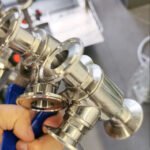
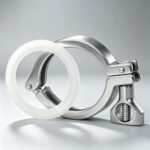
This sanitary straight-through strainer uses a stainless steel body with a mirror-polished internal and external surface. Its removable screen allows manual cleaning, while the Tri-Clamp connections support installation in compatible process piping.
The standard material is 304 stainless steel. A 316 stainless steel version may be available as a customized option; confirm availability and material requirements before ordering.
Key features include:
- Straight-through inline construction
- Removable circular mesh screen
- Standard 100-mesh screen
- Tri-Clamp connection options
- Mirror-polished internal and external surfaces
- Manual screen removal for cleaning
- Overall height of 145 mm for the listed configurations
- Specified inlet water temperature range of 0–80°C
A confirmed working-pressure rating is not currently available. Verify pressure and temperature suitability for the selected configuration before installation.
Screen Mesh Options: Why the Specification Matters
The standard configuration uses a 100-mesh screen. Other mesh sizes may be available on request, subject to confirmation by our team.
Mesh count refers to the number of openings per linear inch of screen. It should not be treated as an exact micron rating without the relevant screen specifications.
A finer mesh may retain smaller particles, but it can also increase flow resistance and may require more frequent cleaning. A coarser mesh may be preferable when the objective is to retain larger debris while maintaining flow.
Before selecting a screen, consider:
- The approximate size and type of particles to be retained
- The required filtration outcome
- The liquid’s characteristics
- The acceptable flow resistance
- The frequency of inspection and cleaning
- The requirements of downstream equipment
Do not choose a mesh solely because it has the highest number. The right screen is the one that meets the process requirement without creating unnecessary maintenance or flow restrictions.
Ordering note: The standard screen is 100 mesh. Please confirm the required mesh size and availability with our team before placing an order.
Available Body Sizes and Tri-Clamp Connections
The following configurations are available according to the supplied product specifications. The nominal body diameter, inlet/outlet pipe outside diameter and Tri-Clamp ferrule size are listed separately because they describe different dimensions.
| Nominal body diameter | Inlet/outlet pipe OD | Tri-Clamp ferrule size |
|---|---|---|
| 76 mm | 38 mm | 50.5 mm |
| 89 mm | 38 mm | 50.5 mm |
| 102 mm | 38 mm | 50.5 mm |
| 102 mm | 51 mm | 64 mm |
| 102 mm | 63 mm | 77.5 mm |
| 102 mm | 76 mm | 91 mm |
| 159 mm | 38 mm | 50.5 mm |
| 159 mm | 51 mm | 64 mm |
| 159 mm | 63 mm | 77.5 mm |
| 159 mm | 76 mm | 91 mm |
| 159 mm | 89 mm | 106 mm |
| 219 mm | 38 mm | 50.5 mm |
| 219 mm | 51 mm | 64 mm |
| 219 mm | 63 mm | 77.5 mm |
| 219 mm | 76 mm | 91 mm |
| 219 mm | 89 mm | 106 mm |
The overall height is 145 mm for the listed configurations. Confirm the required body size and connection dimensions against your existing pipeline before ordering.
Screen Plate Dimensions
The supplied screen plate measurements are listed below. For the nominal 159 mm and 219 mm sizes, the measured screen plate diameters are 158 mm and 218 mm, respectively.
| Nominal body/screen size | Measured screen plate diameter | Standard mesh |
|---|---|---|
| 76 mm | 76 mm | 100 mesh |
| 89 mm | 89 mm | 100 mesh |
| 102 mm | 102 mm | 100 mesh |
| 159 mm | 158 mm | 100 mesh |
| 219 mm | 218 mm | 100 mesh |
These dimensions are provided for reference. If a replacement screen must fit an existing unit, confirm the actual dimensions and compatibility before ordering.
Potential Applications in Liquid Processing
A straight-through strainer can be considered in process lines where suspended solids need to be retained by a removable mesh screen. Potential application areas include:
- Food and beverage processing
- Brewing and beverage production
- Dairy processing
- Pharmaceutical and chemical liquid handling, subject to process requirements
- Other compatible industrial liquid systems
Suitability depends on the liquid composition, temperature, pressure, filtration objective and material compatibility. The application list should not be interpreted as a guarantee that one configuration is suitable for every medium or process.
For liquid mushroom spawn or other biological culture processes, the filtration requirement should be evaluated as part of the complete process. A mesh strainer should not be assumed to provide sterilization or microbial removal.
Cleaning and Maintenance
The screen is manually removed for cleaning. A typical maintenance routine includes isolating the line, safely relieving pressure and draining the equipment before opening it. The screen can then be removed, inspected, cleaned and reinstalled according to the site’s maintenance procedure.
Cleaning frequency depends on the amount and type of solids in the liquid. A blocked or damaged screen may restrict flow or compromise the intended filtration function.
Before returning the strainer to service, check that the screen is correctly installed and that the connections are properly secured. Follow the applicable plant safety and sanitation procedures.
Straight-Through Strainer vs. Y-Strainer and Cartridge Filter
These filtration products serve different installation and process requirements.
Straight-through strainer: Uses a removable mesh screen in a straight-through body. It can suit applications where direct access for manual screen cleaning is important.
Y-strainer: Uses a branch-shaped body to accommodate the screen. Its geometry may suit particular piping layouts and maintenance arrangements.
Cartridge filter housing: Holds a replaceable filter element selected for the required filtration specification. It may be more suitable when a process requires a specified filter element rather than a reusable mesh screen.
These products are not automatically interchangeable. Compare the required filtration performance, available space, flow conditions, cleaning method and connection dimensions before choosing a design.
What to Confirm Before Ordering
To help identify a suitable configuration, prepare the following information:
- Body size: Confirm the required nominal body diameter.
- Pipeline connections: Provide the inlet/outlet pipe outside diameter and required Tri-Clamp ferrule size.
- Screen mesh: The standard is 100 mesh. Confirm any alternative mesh requirement and availability.
- Material: 304 stainless steel is the standard material; ask about a customized 316 stainless steel version if required.
- Process medium: Describe the liquid and any relevant chemical or cleaning conditions.
- Temperature: The specified inlet water temperature range is 0–80°C. Confirm suitability for the actual process medium and operating conditions.
- Pressure: Obtain the applicable working-pressure rating before installation.
- Maintenance: Ensure that the installation allows safe access to remove and clean the screen.
Providing these details helps reduce the risk of selecting an incompatible connection, unsuitable mesh or unverified operating configuration.
Request Product Information
If you are sourcing a sanitary straight-through strainer for a liquid-processing line, share your required body size, connection dimensions, mesh specification, material and operating conditions.
Our team can help confirm the available configuration and whether it matches your installation requirements.
Product: Sanitary 304 Stainless Steel Inline Filter / Tri-Clamp Pipeline Strainer