Introduction
Liquid mushroom spawn production is a process that connects laboratory culture, seed preparation, liquid fermentation, transfer, inoculation, and cleaning.
Although fermentation tanks are often the most visible part of the system, they are only one part of the complete process. Depending on the production scale and process design, the system may also include shaking incubators, seed culture vessels, media preparation tanks, sterilization equipment, sanitary process piping, valves, fittings, filters, sterile-air components, transfer equipment, and CIP equipment.
For equipment suppliers and process engineers, understanding how these components work together is important when designing a practical liquid mushroom spawn production system.
Haoqintech has practical experience with liquid culture and fermentation systems, including stainless steel fermentation tanks and the sanitary process components used around them. This article provides an engineering-oriented overview of the process, from laboratory culture to fermentation and inoculation.
1. Laboratory Culture and Seed Preparation
The process generally begins at laboratory scale, where the mushroom culture is maintained and prepared under controlled conditions before moving to larger liquid culture stages.
Depending on the process, laboratory equipment may include:
- Culture vessels and laboratory containers
- Shaking incubators or orbital shakers
- Sterilization equipment
- Clean working areas
- Small-scale liquid culture equipment
A shaking incubator can provide controlled temperature and agitation for small-scale liquid culture development. At this stage, the objective is to establish and prepare a suitable culture before it enters a larger seed or production system.
Once the culture is ready, it can be transferred to a larger seed culture or fermentation stage.
2. Media Preparation and Sterilization
Before fermentation, the liquid culture medium needs to be prepared according to the process requirements.
A larger-scale system may include a stainless steel media preparation or mixing tank together with heating, sterilization, transfer, and process-control equipment.
This is where sanitary process design becomes increasingly important. The transfer path may include:
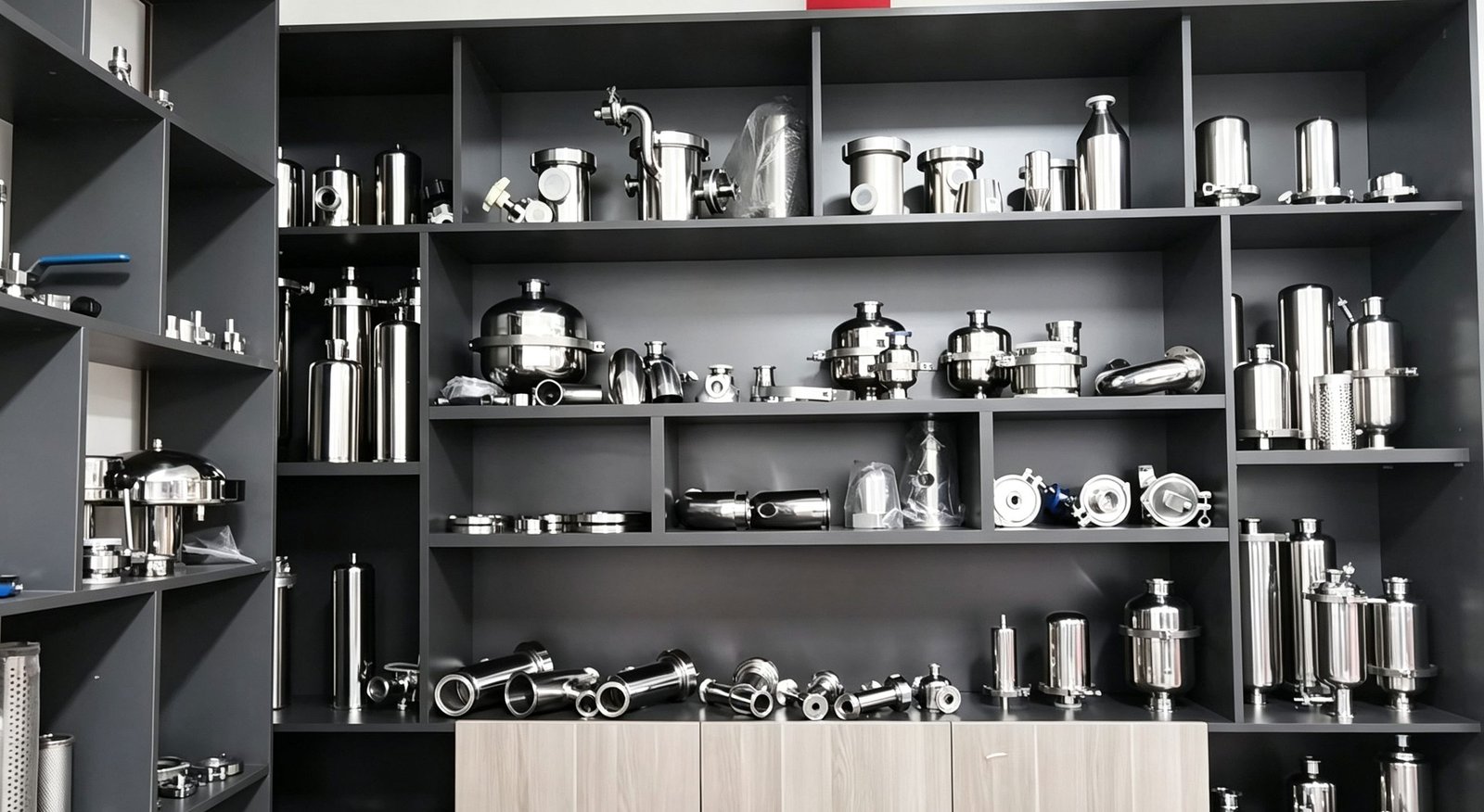
- Stainless steel process piping
- Sanitary valves
- Tri-Clamp fittings
- Pumps or other transfer equipment
- Filters
- Pressure and process monitoring components
The objective is not simply to move liquid between two vessels. The process path also needs to be considered in terms of cleaning, maintenance, connection methods, drainage, and the actual process requirements.
3. Seed Culture and Scale-Up
After laboratory preparation, the culture can be developed at a larger scale before entering the main production fermentation stage.
A typical process may therefore move through several scales:
Laboratory Culture → Seed Culture → Production Fermentation
The exact number and size of stages depend on the production process and required output.
As the scale increases, stainless steel vessels and sanitary process connections become more important. A seed culture vessel may require connections for liquid transfer, air supply, sampling, drainage, pressure monitoring, and cleaning.
Sanitary valves and fittings provide the connection points needed to control these different process paths.
4. Liquid Fermentation in Stainless Steel Tanks
The production fermentation stage is one of the central parts of the system.
A stainless steel fermentation tank may integrate several functions, depending on the system design, including mixing, temperature management, aeration, liquid transfer, monitoring, and cleaning.
The tank itself, however, is only one part of the process. A practical fermentation system may look conceptually like this:
Fermentation Tank → Sanitary Process Piping → Valves & Fittings → Filtration → Air / Sterile-Air Components → Transfer → CIP
This is why selecting a fermentation tank without considering the surrounding piping and process equipment can result in an incomplete system design.
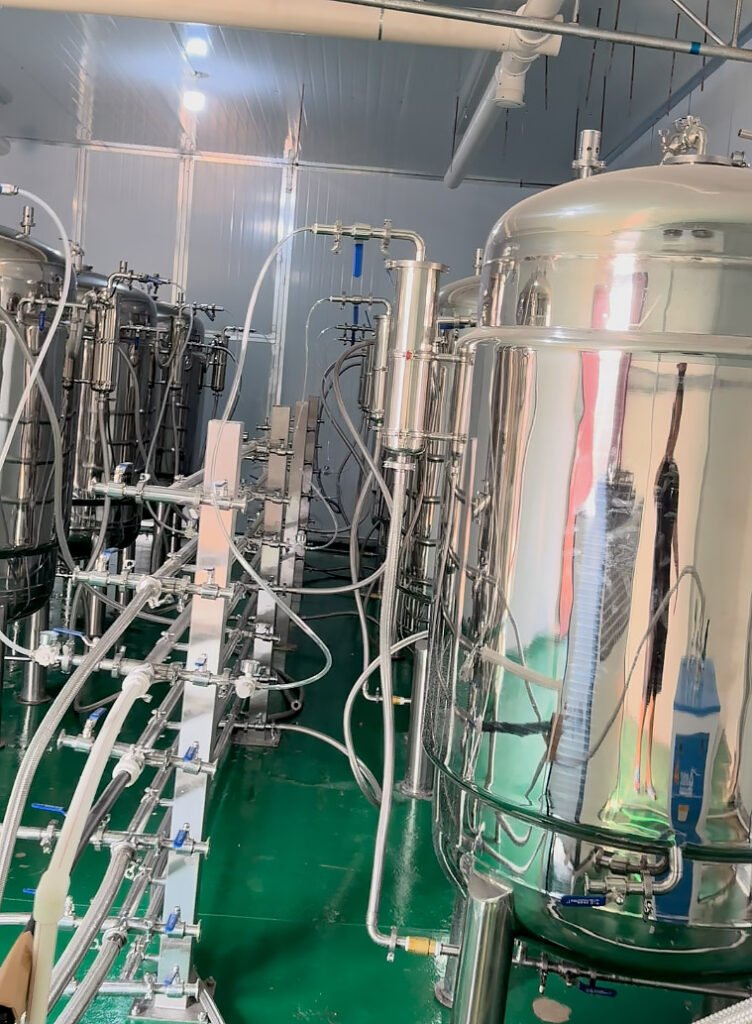
5. Sanitary Process Piping Connects the Equipment
Sanitary piping provides the process path between tanks and other equipment.
In a liquid mushroom spawn system, piping may be used for:
- Medium transfer
- Culture transfer
- Fermentation discharge
- Cleaning solution circulation
- Air or gas connections
- Drainage
Connection design is also important. Tri-Clamp connections are commonly used in hygienic processing where equipment needs to be assembled, disassembled, inspected, or cleaned. Welded and threaded connections may also be appropriate in specific locations, depending on the process and maintenance requirements.
For a closer look at common sanitary connection methods, see our guide to Tri-Clamp vs threaded sanitary connections.
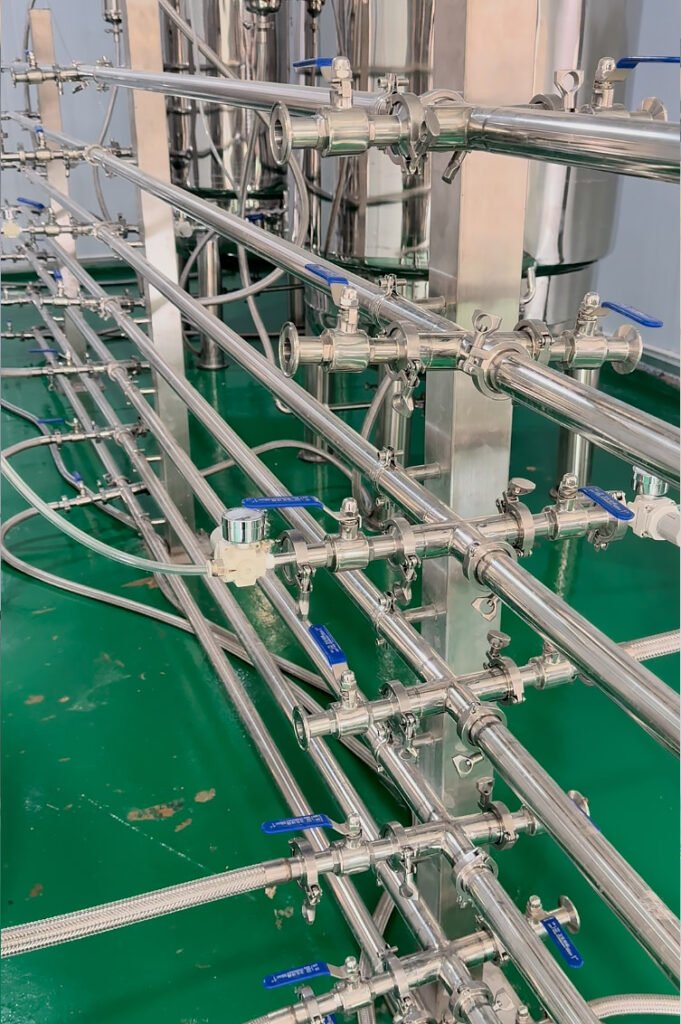
6. Sanitary Valves Control the Process Path
Piping provides the pathway, while valves determine how the process moves through that pathway.
In a multi-tank fermentation system, sanitary valves can be used to isolate vessels, control liquid transfer, drain tanks, manage process lines, and support cleaning operations.
A simplified transfer route might look like:
Fermentation Tank → Sanitary Valve → Process Piping → Filter → Receiving Tank
The exact configuration depends on the process design. As the number of tanks and process lines increases, valve arrangement becomes increasingly important for isolation, maintenance, drainage, and process control.
7. Filtration Has More Than One Role
Filtration in a liquid mushroom spawn fermentation system should not be treated as a single function. Different filtration equipment can serve different parts of the process.
Liquid Filtration
Liquid filtration may be used where the process requires removal of unwanted particles from a liquid stream. Depending on the application, cartridge filter housings, sanitary strainers, or other filtration equipment may be integrated into the liquid process line.
The appropriate filter depends on the liquid, required flow rate, filtration level, pressure conditions, connection type, and process requirements. For more information, see our guide to sanitary filtration and inline strainer selection.
Air and Sterile-Air Filtration
Air filtration serves a different purpose. During fermentation and other controlled processes, air entering or leaving a vessel may need to pass through an appropriate filtration system to reduce contamination risk.
This is why tank breather filters and sterile-air filtration components belong to the overall system, even though they are not liquid filters.
8. Tank Breathing and Sterile Air
A fermentation vessel is not simply a closed container. Changes in liquid level, temperature, pressure, and gas flow can affect the pressure inside the tank.
Sanitary tank breather filters can provide filtered air exchange for tanks and process vessels, while sterile-air filtration may be used where the process requires more controlled air handling.
These functions should not automatically be treated as interchangeable. The appropriate arrangement depends on the vessel, process, airflow requirements, pressure conditions, and overall system design.
For more information, see our guide on how to choose a sanitary tank breather filter.
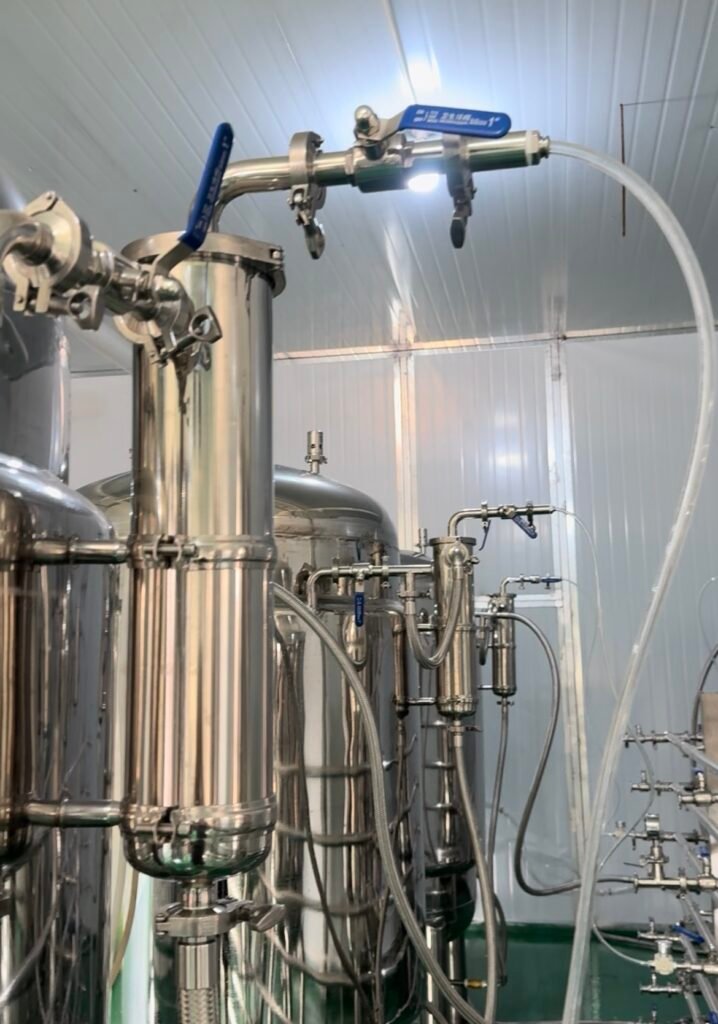
9. Aseptic Transfer and Inoculation
After liquid culture has reached the required stage, it may need to be transferred to another vessel or used for inoculation.
This stage connects fermentation with the next production step. The transfer path may include:
Fermentation Vessel → Sanitary Valve → Process Piping → Transfer Equipment → Receiving Vessel
Depending on the system, the transfer process may also involve filtration, pressure monitoring, and other sanitary components.
The transfer line should be considered as part of the complete process rather than as an independent pipe assembly. Connection points, valves, drainage, cleaning access, and equipment arrangement can all affect how practical the system is to operate and maintain.
10. CIP and Cleaning of the System
Cleaning is part of the system design, not simply an activity performed after production.
After fermentation or transfer, product-contact surfaces may need to be cleaned according to the process requirements.
CIP — Cleaning in Place
CIP allows equipment to be cleaned without completely dismantling the process system. A typical CIP arrangement may involve cleaning solution, sanitary piping, valves, spray devices, tank connections, pumps, and drainage lines.
Tank cleaning components such as rotary spray balls can distribute cleaning fluid across the internal surfaces of a vessel. The effectiveness of CIP depends on more than the spray device itself; flow conditions, coverage, piping configuration, drainage, and equipment geometry also matter.
See our Tank Cleaning & CIP solutions for related sanitary components.
SIP — Sterilization in Place
Where the process requires sterilization, SIP may also form part of the system. Steam or another validated sterilization method may be introduced through dedicated process connections.
This means valves, fittings, filters, tanks, piping, and other components need to be considered together when designing the cleaning and sterilization strategy.
11. How the Equipment Works Together
A liquid mushroom spawn production system can be understood as a sequence of connected process stages rather than a collection of individual products.
Laboratory Culture → Seed Preparation → Media Preparation → Sterilization → Fermentation → Transfer → Inoculation → Cleaning
Around these stages, different equipment and sanitary components perform different functions:
- Laboratory equipment supports initial culture preparation.
- Shaking incubators support small-scale liquid culture development where required.
- Fermentation tanks provide the main production vessels.
- Sanitary piping connects vessels and equipment.
- Valves control flow and isolate different sections.
- Filters support liquid or air filtration requirements.
- Tank breather and sterile-air components support controlled gas exchange.
- Transfer equipment moves culture between process stages.
- CIP components help clean tanks and process lines.
The actual configuration will vary according to the production process, vessel size, operating conditions, and level of automation.
The important point is that these components should not be selected in isolation. Changing one component can affect other parts of the process. For example, changing a pipe size may affect flow requirements; changing a filter may affect pressure drop and flow capacity; and changing a valve configuration may affect drainage or cleaning.
12. Haoqintech Experience with Liquid Fermentation Systems
Haoqintech’s experience with sanitary components is closely connected with practical work on liquid culture and fermentation systems.
Guangxi, China — Liquid Mushroom Spawn Fermentation System
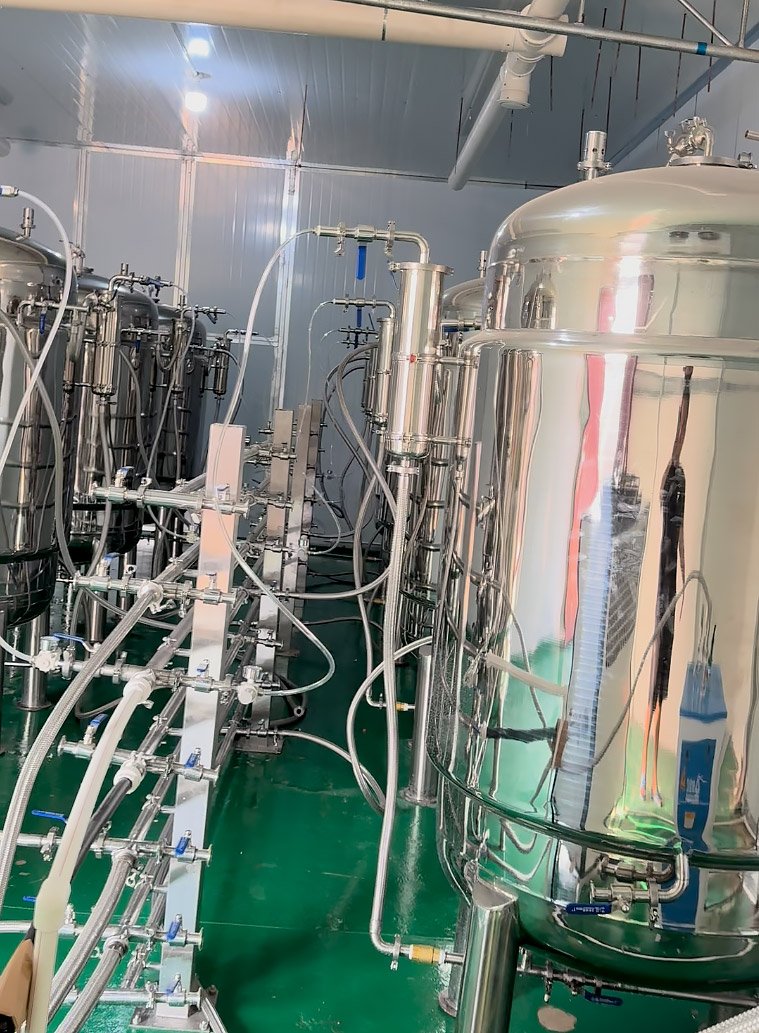
One documented Haoqintech project in Guangxi, China, involved multiple stainless steel fermentation tanks integrated with sanitary process piping and supporting process components.
The project included equipment and components such as:
- Stainless steel fermentation tanks
- Sanitary process piping
- Sanitary valves and fittings
- Filtration equipment
- Pressure monitoring components
- Supporting process equipment
Rather than treating each component as an isolated product, the equipment was integrated into a working process system.
For more details, see our real liquid mushroom spawn fermentation project in Guangxi, China.
Armenia — Liquid Edible Mushroom Spawn Fermentation Systems
Haoqintech has also been involved in liquid edible mushroom spawn fermentation systems in Armenia, where stainless steel fermentation equipment and related sanitary process connections were integrated into a production workflow.
These projects, together with other liquid culture and fermentation work, have given our team practical experience in the relationship between fermentation vessels, process piping, valves, filtration, air handling, and supporting sanitary equipment.
See our liquid edible mushroom spawn fermentation system project in Armenia for another example of this type of application.
Other Liquid Culture and Fermentation Experience
In addition to these documented projects, Haoqintech has worked with stainless steel fermentation equipment and related process components for liquid culture applications.
Across these applications, the common engineering requirement is to connect vessels, piping, valves, filtration, air-handling, transfer, and cleaning functions into a practical sanitary process system.
13. From Individual Components to an Integrated System
For a sanitary processing project, a fitting is not just a fitting, and a filter is not just a filter. Their value comes from how they perform within the complete process.
A suitable sanitary component should match the required material, connection standard, size, pressure and temperature conditions, flow requirements, cleaning method, and process application.
When these factors are considered together, individual components can become part of a practical and maintainable process system.
This system-level view is particularly important for fermentation and liquid culture applications, where hygienic design, contamination control, cleaning, and process integration all need to be considered.
Conclusion
A liquid mushroom spawn production system is a combination of process equipment and sanitary components working together.
Laboratory equipment starts the culture process. Seed vessels and fermentation tanks provide the larger-scale cultivation stages. Sanitary piping connects the process. Valves control flow. Filters support liquid and air filtration. Tank breather and sterile-air components support controlled gas exchange. Transfer equipment connects different production stages, while CIP and, where required, SIP-related equipment support hygienic operation.
The important point is that these components need to be considered as part of the complete process rather than selected in isolation.
For Haoqintech, this system-level understanding comes from practical experience with liquid culture, fermentation, sanitary processing equipment, and real project applications.
From individual sanitary components to integrated fermentation systems, the objective is to provide equipment and engineering solutions that fit the actual process.
Looking for sanitary components or equipment for a fermentation, liquid culture, or hygienic processing project?
Related Haoqintech Resources
For more information, see our Liquid Spawn Systems and Project Experience pages, including real liquid fermentation projects in Guangxi, China and Armenia.
Contact Haoqintech to discuss your application and requirements.