Tank breathing is an important part of hygienic fluid processing. As liquid is filled into or discharged from a process tank, the internal pressure can change. A suitable sanitary tank breather filter allows controlled air exchange while helping reduce the risk of unwanted contamination entering the vessel.
However, selecting a tank breather filter is not simply a matter of choosing the correct connection size. The right solution depends on the tank function, air exchange requirements, filtration level, material, connection configuration, operating conditions and maintenance requirements.
This guide explains the key factors to consider when selecting a sanitary tank breather filter for food, beverage, dairy, pharmaceutical, fermentation and other hygienic processing applications.
1. Understand the Function of a Sanitary Tank Breather Filter
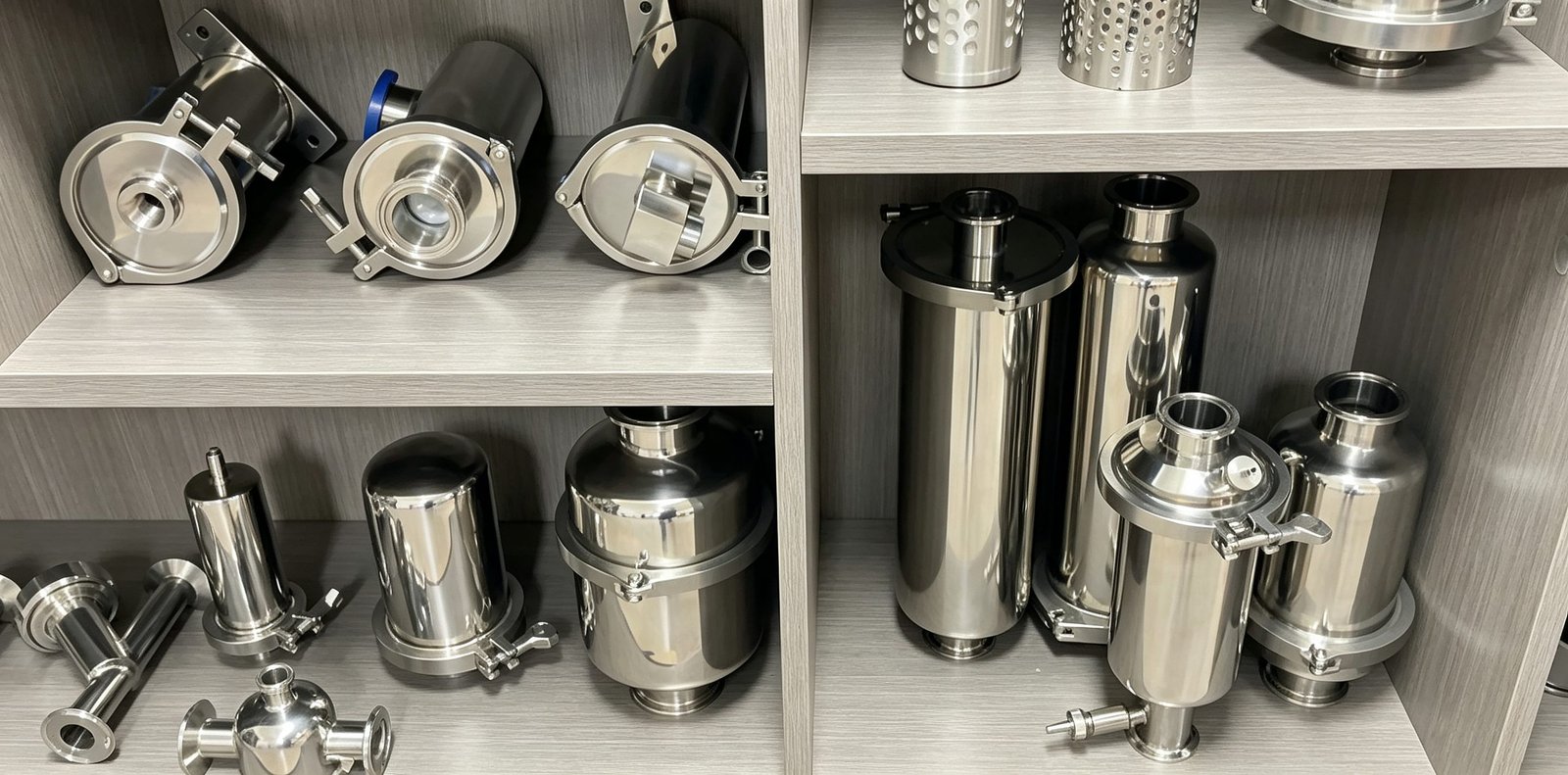
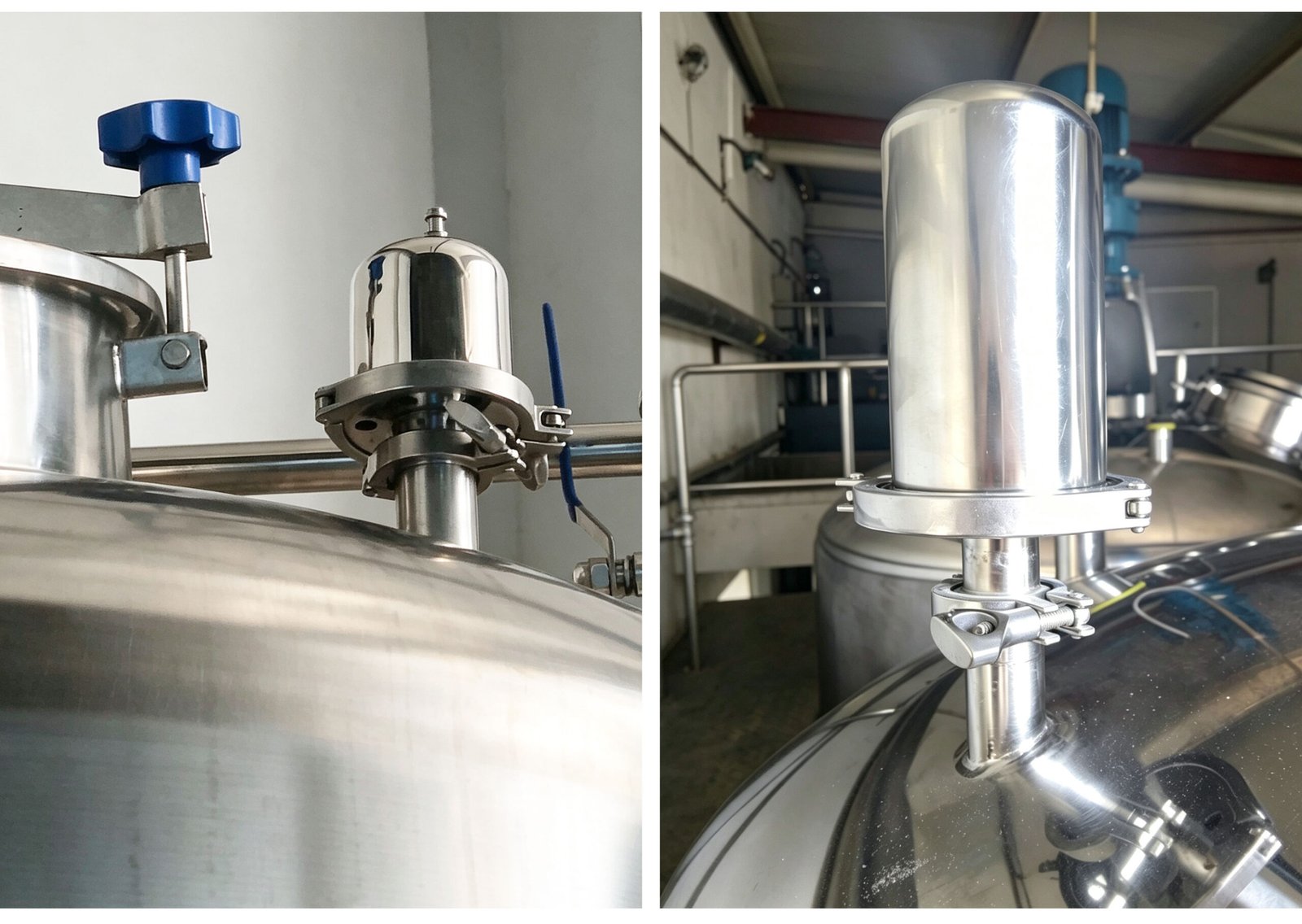
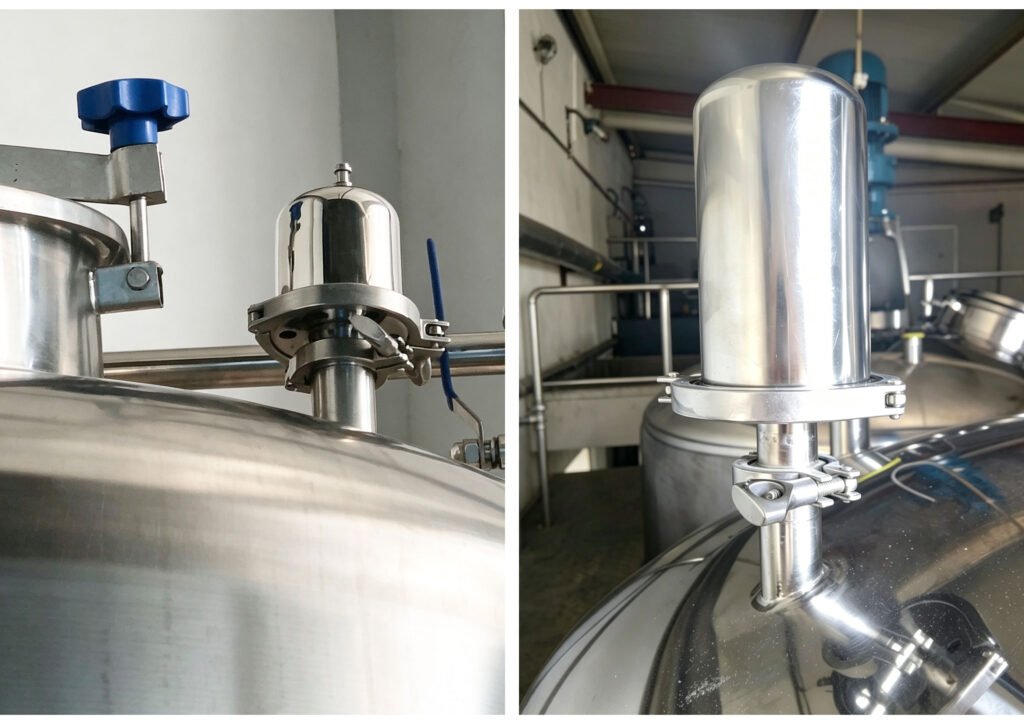
A sanitary tank breather filter is typically installed on the top of a process tank or vessel to allow controlled air exchange as the liquid level changes.
Air exchange may occur when:
- Liquid is pumped into the tank
- Liquid is discharged from the tank
- The tank temperature changes
- The gas volume inside the tank changes
- The process moves between different operating stages
The breather filter provides a filtration barrier during this air exchange.
The first step in selecting one is therefore to understand how the tank operates and when air needs to enter or leave the vessel.
2. How Does a Sanitary Tank Breather Filter Work?
The basic principle is simple:
Liquid level changes → tank pressure changes → air moves through the breather filter
A process tank may need to breathe in two different operating conditions.
Filling the Tank: Air Moves Out
When liquid enters the tank, the liquid level rises and the gas space inside the vessel becomes smaller.
This can cause:
Liquid filling → gas space decreases → internal pressure rises → air moves out through the breather filter
The breather assembly allows air to leave the tank while providing a filtration barrier between the process vessel and the surrounding environment.
This helps reduce the risk of excessive pressure caused by normal filling operations.
Emptying the Tank: Air Moves In
When liquid is discharged from the tank, the liquid level falls and the gas space becomes larger.
This can cause:
Liquid discharge → gas space increases → negative pressure develops → outside air enters through the breather filter
For sensitive processes such as fermentation, food processing or pharmaceutical production, the incoming air may need to pass through an appropriate filtration element before entering the vessel.
For example, a breather filter equipped with a suitable 0.22 μm sterilizing-grade filter element can be used where this level of air filtration is required.
This helps control microbial contamination while balancing the pressure inside and outside the tank.
Basic Structure of a Sanitary Tank Breather Filter
A typical sanitary breather filter may include:
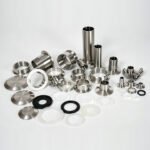
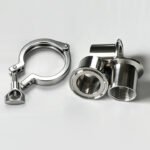
- Tri-Clamp sanitary connection — allows relatively quick installation and removal.
- Stainless steel filter housing — contains the replaceable filter element.
- Filter element — provides the required level of air filtration.
- Stainless steel construction — commonly available in 304 or 316L stainless steel depending on the application.
For a specific product, the filter material, filtration grade, connection type and cleaning/sterilization capability should be confirmed according to the actual configuration.
In simple terms:
Changes in tank liquid level cause pressure changes, allowing the tank to “breathe” through the breather filter—air moves out during filling and filtered air moves in during discharge.
3. Determine Whether You Need General Breathing or Sterile Air Filtration
Not every tank breathing application requires the same level of air filtration.
For general hygienic processing, the main requirement may be controlled air exchange and protection against environmental contamination.
For fermentation, pharmaceutical and other sensitive processes, the incoming air may require a higher level of microbial control.
Before selecting the filter, determine:
- What product is processed in the tank?
- Is the tank used for fermentation?
- Does the process require sterile air?
- What level of contamination control is required?
- Is the breather used continuously or only during specific process stages?
This distinction is important because a tank breather filter and a sterile air filter are not automatically interchangeable.
If sterile air filtration is required, the appropriate filter grade and operating conditions should be confirmed before ordering.
4. Choose the Right Stainless Steel Material
Material selection is another important consideration for sanitary tank breathing systems.
304 Stainless Steel
304 stainless steel is widely used for general sanitary processing equipment and hygienic piping applications.
It can be suitable for:
- Food processing
- Beverage processing
- General liquid processing
- Standard sanitary tanks
316L Stainless Steel
316L stainless steel offers higher corrosion resistance and is commonly selected for more demanding hygienic environments.
It may be preferred for:
- Pharmaceutical processing
- Sensitive fermentation applications
- More demanding corrosion conditions
- Applications with stricter material requirements
The correct material should be selected according to the process medium, cleaning chemicals, temperature and applicable sanitary requirements.
For applications where material traceability is important, ask the manufacturer whether material certificates are available.
5. Check the Connection Type Before Ordering
A breather filter must match the tank connection and installation configuration.
Common connection considerations include:
- Tri-Clamp connections
- Ferrule connections
- Threaded connections
- Custom connection configurations
For hygienic processing systems, Tri-Clamp connections are widely used because they allow relatively quick installation, disassembly and maintenance.
Before ordering, confirm:
- Tank connection size
- Connection standard
- Ferrule dimensions
- Available installation space
- Required installation orientation
A technically suitable breather filter can still be difficult to install if the connection specification does not match the existing tank.
👉 : Tri-Clamp connections → Sanitary Fittings
6. Consider Air Exchange and Filter Sizing
Filter size should be selected according to the actual air exchange requirements of the tank.
The required capacity may depend on:
- Tank volume
- Filling rate
- Discharge rate
- Pumping conditions
- Temperature changes
- Process operation
- Pressure or vacuum requirements
A larger filter is not automatically better.
The goal is to select a configuration that provides sufficient air exchange without unnecessarily increasing equipment size or cost.
For engineered systems, the required air flow and pressure/vacuum conditions should be confirmed with the equipment manufacturer or process engineer.
7. Consider Pressure and Vacuum Conditions
Some tanks experience pressure changes during filling, emptying, heating, cooling or other process operations.
For these systems, the breather assembly should be evaluated together with the tank’s pressure and vacuum requirements.
Important parameters may include:
- Operating pressure
- Vacuum conditions
- Air flow
- Tank operating temperature
- Pressure relief requirements
If the application requires dedicated pressure/vacuum protection, do not assume that a standard breather filter provides this function.
A separate tank protection component, such as a suitable breather valve or flame-arrestor-equipped assembly, may be required depending on the process.
8. Evaluate Cleaning and Maintenance Requirements
Sanitary equipment should be designed with maintenance in mind.
Before selecting a tank breather filter, consider:
- How frequently the filter needs inspection
- Whether the filter element can be replaced easily
- How the housing is opened
- Whether the assembly can be removed without complicated tools
- Whether the surrounding area is accessible for maintenance
For hygienic production environments, simple disassembly and maintenance can help reduce downtime and make routine inspection easier.
The filter should also be compatible with the cleaning procedures used in the facility.
If the application requires CIP or SIP, confirm that the specific breather housing and filter element are designed for the required cleaning or sterilization conditions.
9. 304 vs. 316L: Which Should You Choose?
A simple rule does not apply to every application because the correct material depends on the actual process.
| Consideration | 304 Stainless Steel | 316L Stainless Steel |
|---|---|---|
| General food processing | Suitable | Suitable |
| Beverage processing | Suitable | Suitable |
| General sanitary applications | Suitable | Suitable |
| More demanding corrosion conditions | May be limited | Often preferred |
| Pharmaceutical applications | Application dependent | Common choice |
| Higher material requirements | Application dependent | Often preferred |
For a standard hygienic tank, 304 stainless steel may be sufficient.
For more demanding applications, 316L may provide additional corrosion resistance and may better match the material requirements of the overall process system.
10. Avoid Choosing a Breather Only by Pipe Size
One common purchasing mistake is selecting a tank breather based only on the connection diameter.
The connection size is important, but it does not determine whether the breather is suitable for the complete application.
Before placing an order, confirm:
- Tank volume
- Process medium
- Required air exchange
- Operating temperature
- Pressure and vacuum conditions
- Filter type
- Filtration requirements
- Material
- Connection type
- Installation space
- Cleaning and maintenance method
This information gives the manufacturer enough context to recommend an appropriate configuration.
11. What Information Should You Send to the Manufacturer?
If you are requesting a quotation for a sanitary tank breather filter, providing the following information can make the process faster.
Tank Information
- Tank volume
- Tank type
- Tank connection size
- Operating conditions
Process Information
- Process medium
- Filling and discharge rate
- Temperature range
- Cleaning method
Filtration Requirements
- General breather filtration or sterile air filtration
- Required filtration grade, if specified
- Replacement filter requirements
Mechanical Requirements
- Material: 304 or 316L
- Connection type
- Required dimensions
- Installation orientation
If you have an existing drawing, sample or equipment specification, provide it to the manufacturer for confirmation.
12. When Should You Consider a Custom Configuration?
Standard tank breathers are suitable for many applications, but some process tanks require customized configurations.
Customization may be useful when you need:
- Non-standard connection sizes
- Special dimensions
- Different mounting configurations
- Customized sanitary connections
- Integration with an existing tank
- OEM production based on drawings or samples
For custom sanitary components, it is important to confirm the mechanical dimensions and process requirements before manufacturing.
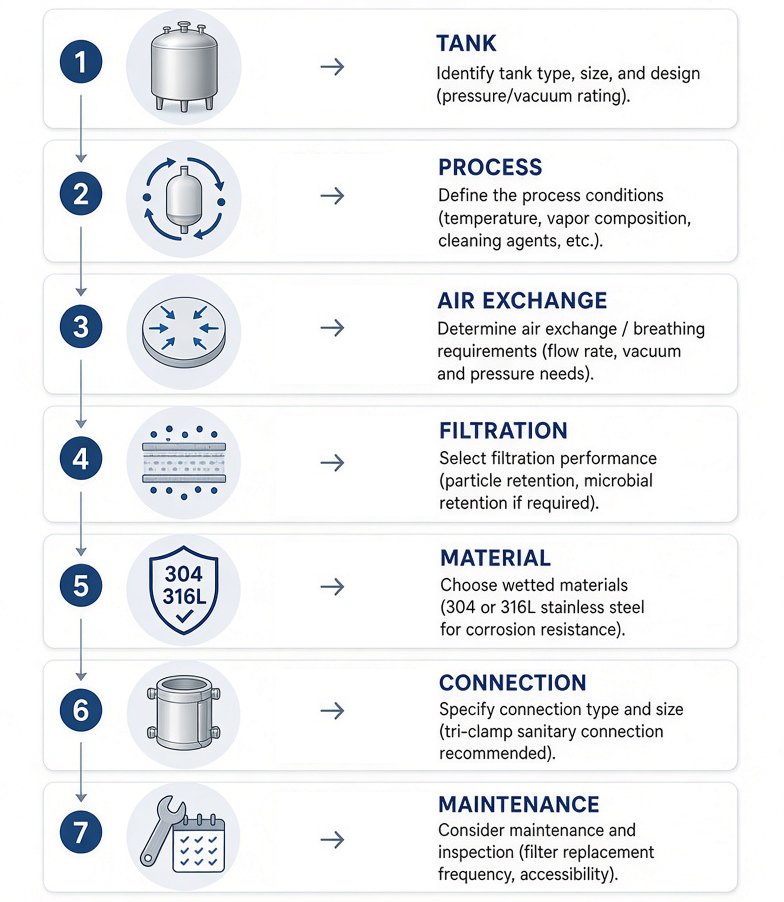
13. Sanitary Tank Breather Filter Selection Checklist
Before ordering, use this checklist:
Tank → Process → Air Exchange → Filtration → Material → Connection → Pressure/Vacuum → Cleaning → Maintenance
More specifically:
☐ Tank volume confirmed
☐ Process medium confirmed
☐ Air exchange requirement determined
☐ General or sterile filtration requirement determined
☐ 304 or 316L material selected
☐ Connection type and size confirmed
☐ Pressure/vacuum conditions checked
☐ Cleaning method confirmed
☐ Installation space checked
☐ Replacement and maintenance requirements considered
Conclusion
Choosing the right sanitary tank breather filter requires more than selecting a stainless steel housing with the correct pipe size.
The most important factors are the tank’s operating conditions, required air exchange, filtration requirements, stainless steel material, connection configuration, pressure and vacuum conditions, and maintenance method.
For food, beverage, dairy, pharmaceutical and fermentation applications, selecting the breather according to the complete process can help ensure better compatibility with the sanitary system and simplify installation and maintenance.
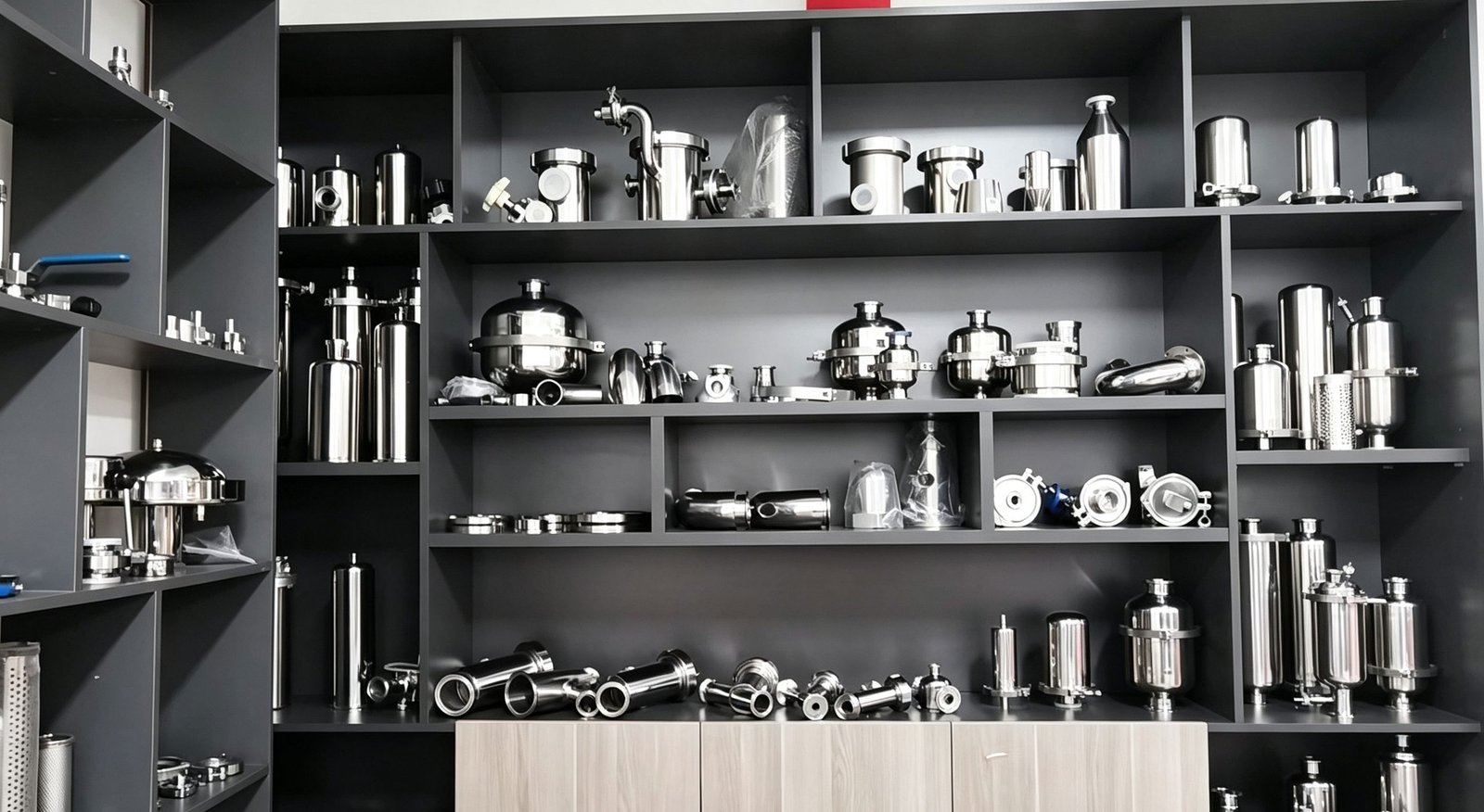
Haoqintech supplies sanitary stainless steel tank breathers and related air filtration components for hygienic tanks and process vessels. Standard and customized configurations are available depending on the application requirements.
Need help selecting a sanitary tank breather filter? Contact Haoqintech with your tank size, connection, process conditions and filtration requirements for a suitable configuration.