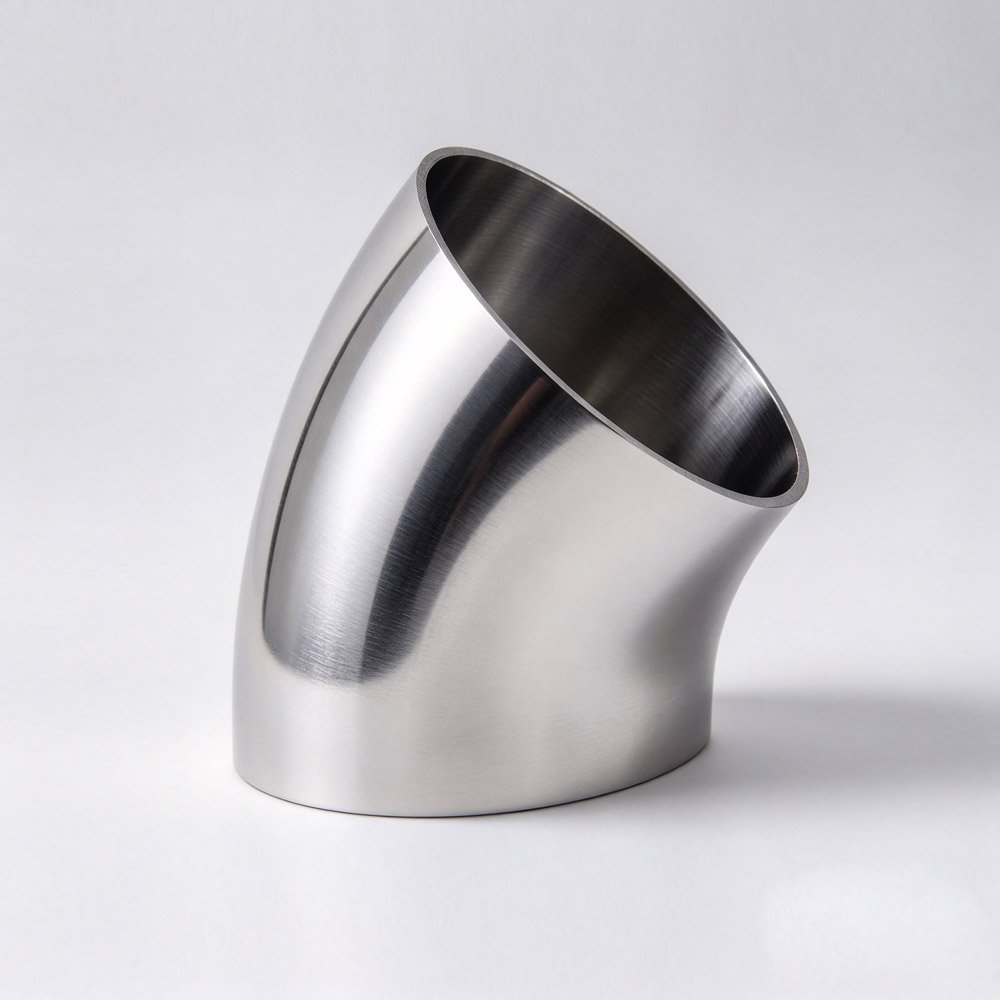
In sanitary stainless steel piping systems, elbows are used to change the direction of a pipeline and connect different sections of process equipment. While 90-degree elbows are commonly used for right-angle turns, a 45-degree butt-weld elbow is an option when the piping layout requires a diagonal change in direction.
When selecting a sanitary 45° butt-weld elbow, buyers should consider more than just the angle. Pipe outside diameter, material, connection type, and surface finish all need to match the requirements of the piping system.
This guide introduces the main features of sanitary 45° butt-weld elbows and explains what to check before ordering.
What Is a Sanitary 45° Butt-Weld Elbow?
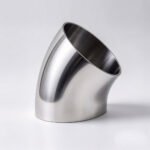
A sanitary 45° butt-weld elbow is a stainless steel pipe fitting designed to change the direction of a pipeline by 45 degrees.
Both ends are designed for butt-weld connections. They are joined directly to compatible stainless steel pipes through welding, creating a permanent connection within the piping system.
These fittings are used in hygienic fluid-processing applications where stainless steel piping is required, including food and beverage processing, dairy production, and other sanitary process systems.
Unlike a 90-degree elbow, which creates a right-angle turn, a 45-degree elbow provides a diagonal change in pipeline direction. The appropriate fitting depends on the actual equipment arrangement and piping design.
Where Are 45° Butt-Weld Elbows Used?
Sanitary 45° elbows can be used in different sections of stainless steel process piping.
Typical applications include:
- Connecting process equipment: Connecting pipe sections around tanks, filters, pumps, and other processing equipment.
- Adjusting pipeline direction: Changing the direction of a pipe when a diagonal connection is required.
- Working around equipment layouts: Routing pipes around structural supports or nearby equipment according to the installation design.
- Sanitary process piping: Providing directional connections in stainless steel piping systems used for hygienic fluid handling.
The final fitting angle should always be selected according to the piping layout and installation requirements.
Available Sizes and Material
Our sanitary 45° butt-weld elbows are available in SS304 stainless steel.
The current available specifications are:
| Parameter | Specification |
|---|---|
| Product Type | Sanitary 45° Butt-Weld Elbow |
| Material | SS304 Stainless Steel |
| Elbow Angle | 45° |
| Connection | Butt-Weld × Butt-Weld |
| Available Pipe OD | 19, 25, 32, 38, 45, 51, 57, 63, 76, 89, 102, 108, 114, 133, 159, 219 mm |
| Surface Finish | Rough Polished / Fine Polished |
The listed dimensions refer to pipe outside diameters (OD). Before ordering, confirm that the elbow size matches the outside diameter of the pipe used in your system.
For product details and available sizes, see our 304 stainless steel sanitary 45° butt-weld elbow.
Rough Polished vs. Fine Polished: What Is the Difference?
Surface finish is another consideration when selecting a sanitary stainless steel fitting.
Our 45° butt-weld elbows are available with two surface finish options: rough polished and fine polished.
Rough Polished
Rough polishing provides a basic polished surface. It is an option for applications where a standard polished finish is sufficient for the project requirements.
Fine Polished
Fine polishing involves a more refined polishing finish, resulting in a smoother and more polished-looking surface compared with rough polishing.
The appropriate option depends on the surface finish requirements of the piping system and the buyer’s application.
If a project requires a specific surface roughness value (Ra), polishing standard, or inspection requirement, confirm these details with the supplier before ordering. Do not assume that a particular polishing option automatically meets a specified Ra value.
45° Elbow vs. 90° Elbow: Which Should You Choose?
Both 45-degree and 90-degree elbows are used to change pipeline direction, but they serve different layout requirements.
| Comparison | 45° Elbow | 90° Elbow |
|---|---|---|
| Turning Angle | 45 degrees | 90 degrees |
| Direction Change | Diagonal turn | Right-angle turn |
| Typical Selection | When a diagonal direction change is required | When a right-angle direction change is required |
| Main Consideration | Overall piping layout | Overall piping layout |
A 45° elbow is suitable when the pipeline needs a diagonal change in direction. A 90° elbow is generally selected when the piping layout requires a right-angle turn.
Neither option is universally better. The selection should be based on the equipment arrangement, available installation space, and piping design.
What Should You Check Before Ordering?
Before purchasing sanitary 45° butt-weld elbows, confirm the following details:
1. Pipe Outside Diameter
Check the actual outside diameter of the connecting pipe. Do not select a fitting based only on an assumed nominal size.
2. Material Compatibility
Our listed product is made from SS304 stainless steel. Confirm that this material is suitable for the process medium and operating conditions of your application.
3. Connection Type
This product uses butt-weld connections at both ends. Make sure your piping system is designed for welded connections.
4. Surface Finish
Choose between rough polished and fine polished according to your project requirements. If a specific Ra value or polishing standard is required, confirm it before placing an order.
5. Project Drawings and Special Requirements
For equipment integration or custom piping projects, providing a drawing or connection details can help confirm whether the fitting is suitable for the intended installation.
Frequently Asked Questions
What is a 45° butt-weld elbow used for?
It is used to change the direction of a stainless steel pipeline by 45 degrees. It is commonly selected when the piping layout requires a diagonal turn rather than a right-angle turn.
What sizes are available for your SS304 sanitary 45° elbows?
The available pipe outside diameters range from 19 mm to 219 mm, with 16 listed size options.
What is the difference between rough polishing and fine polishing?
Rough polishing is a basic polished finish, while fine polishing provides a more refined surface finish. If your project requires a specific surface roughness, confirm the required Ra value with the supplier.
Can I use these elbows in a sanitary processing system?
These SS304 butt-weld elbows are intended for sanitary stainless steel piping applications. Suitability for a particular process depends on the material requirements, operating conditions, and surface finish specifications of the system.
Conclusion
A sanitary 45° butt-weld elbow is a practical fitting for stainless steel piping systems that require a diagonal change in direction.
Before selecting one, check the pipe outside diameter, material, butt-weld connection, and required surface finish. These details help ensure that the fitting matches the intended piping layout and project specifications.
Haoqintech supplies sanitary stainless steel components for fluid-processing applications. If you are selecting fittings for a new system or an existing piping project, contact us with your required size and surface finish.
You can also explore our guide to sanitary Tri-Clamp fittings to learn more about another common connection type used in sanitary piping systems.