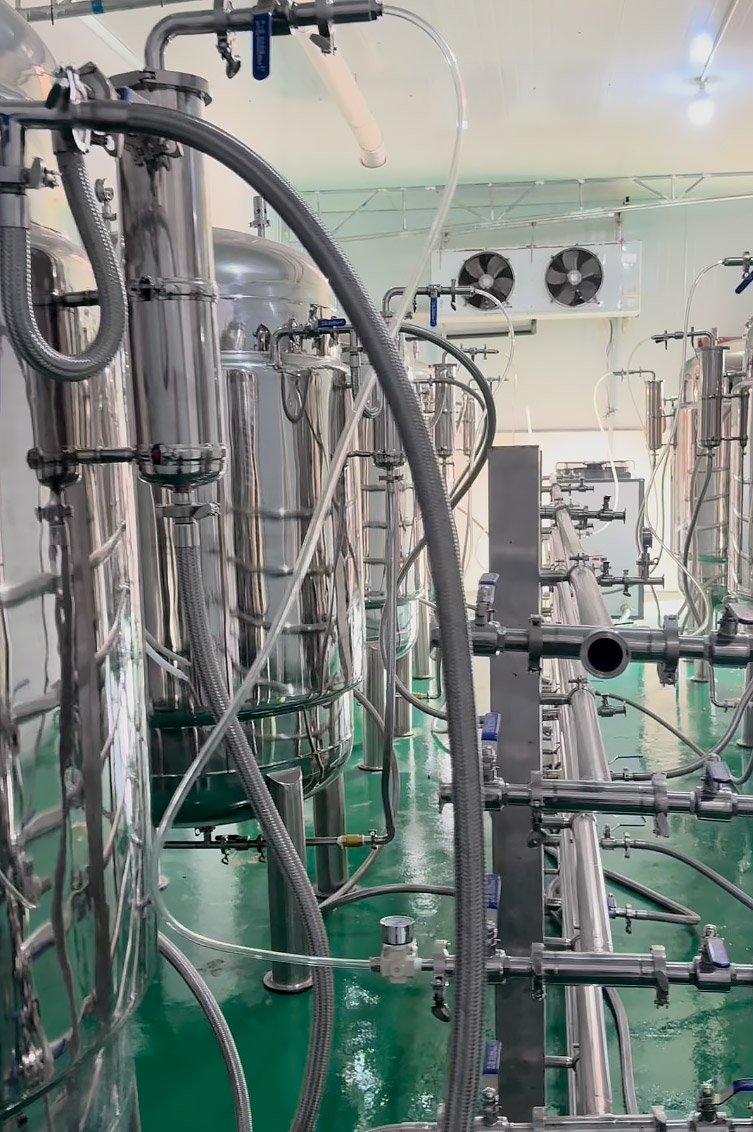
Contamination is one of the operational challenges that mushroom farms need to consider when producing liquid mushroom spawn. A batch may become contaminated because of problems with sterilization, inoculation, equipment handling, or other parts of the production process.
For farms investing in a liquid mushroom spawn production system, the concern is not only how to prevent contamination, but also what to do if it occurs.
When a batch is suspected of contamination, the priority is to contain the problem, investigate the possible cause, and determine how to prepare the equipment for another production run. For operators who are still learning to use a new system, technical guidance can help them work through these steps more systematically.
What Can Cause Contamination in Liquid Mushroom Spawn Production?
Liquid mushroom spawn production involves several connected operations, including culture-medium preparation, sterilization, inoculation, fermentation, and transfer. A problem at any stage may affect the final culture.
Common areas to investigate include:
Incomplete or unsuitable sterilization
The sterilization process must be appropriate for the culture medium, equipment configuration, and operating procedure. If the required conditions are not achieved, unwanted microorganisms may survive.
Problems during inoculation
Inoculation involves handling cultures and connecting equipment while maintaining suitable aseptic conditions. Incorrect handling or a compromised connection may introduce contamination.
Incorrect equipment operation
Operators need to understand the correct procedures for using the fermentation tank, valves, connections, and associated systems. Mistakes during operation may compromise the process.
Air supply and filtration issues
The sterile air supply system is another area worth checking when contamination is suspected. The investigation may include the condition of relevant filters, connections, and operating procedures.
Insufficient cleaning between batches
Residual material or inadequate cleaning of relevant components may create risks for subsequent production. The cleaning procedure should be appropriate for the equipment and the process.
These are possible causes, not a diagnosis. The actual source of contamination should be investigated using production records, operating conditions, equipment checks, and other available evidence.
How Can You Recognize a Possible Contamination Problem?
Changes in culture appearance or behavior may indicate that something is wrong, but no single visual sign can reliably identify every contaminating microorganism.
Depending on the culture and production stage, operators may notice unexpected turbidity, unusual deposits, abnormal growth, or changes that differ from the established appearance of a healthy culture. These observations should be assessed alongside the normal characteristics of the specific mushroom culture.
Orange or reddish growth may also appear in contaminated mushroom cultivation materials. Some molds, including fungi in the genus Neurospora, can produce conspicuous orange to reddish spores. However, color alone is not sufficient to confirm the organism or establish the source of contamination.
If contamination is suspected, the affected batch should be assessed according to the farm’s procedures. Avoid opening, agitating, or transferring the material unnecessarily, as these actions may increase the risk of spreading contamination.
What Should You Do When a Liquid Spawn Batch Is Contaminated?
Once a batch is confirmed or strongly suspected to be contaminated, the response should focus on preventing further spread and preparing for a controlled restart.
1. Isolate the Affected Batch
Stop using the suspected batch for inoculation or further culture propagation. Keep it separated from healthy cultures and follow the site’s procedures for handling and disposing of contaminated biological material.
Do not assume that the batch can be made suitable for production simply by treating it again. Whether it can be used depends on the circumstances, and contaminated production cultures should not be reused without an appropriate assessment.
2. Investigate the Operating Process
Review how the affected batch was prepared and processed. Check the culture-medium preparation, sterilization procedure, inoculation steps, equipment connections, and fermentation records.
It is also useful to establish when the abnormal condition was first noticed and whether similar problems occurred in other batches.
A systematic review can help distinguish between a possible operating error, a problem with an equipment component, and other potential causes.
3. Clean and Sterilize the Relevant Equipment
Before preparing another batch, the affected equipment and relevant components should undergo the cleaning, disinfection, and sterilization procedures appropriate to their design and intended use.
The procedure may involve the fermentation tank, connecting pipes, valves, inoculation points, and other parts of the system, depending on where contamination may have occurred.
Cleaning removes residual material, while sterilization is intended to eliminate viable microorganisms under an appropriate process. The two steps are not interchangeable.
Equipment instructions and validated procedures should be followed, particularly for components such as filters, seals, and other parts that may have specific temperature or chemical compatibility limits.
4. Prepare a New Batch Under Controlled Conditions
After the relevant equipment has been treated and its readiness for production has been assessed, a new batch of liquid mushroom spawn can be prepared.
The operating team should follow the established procedures for culture-medium preparation, sterilization, inoculation, and fermentation. The new culture should be assessed against the appropriate acceptance criteria before it is used for further production.
The objective is not simply to restart the equipment, but to restart production under controlled conditions and reduce the likelihood of repeating the same problem.
How Haoqintech Supports Customers When Contamination Occurs
Purchasing a liquid mushroom spawn production system is an important investment. However, installing the equipment is only one part of establishing a reliable production process. Operators also need to understand how to use the system correctly and respond when unexpected problems occur.
When a customer experiences suspected contamination related to an operating problem with equipment purchased from Haoqintech, our technical team can assist with reviewing the situation and planning the next steps.
Depending on the circumstances, this support may include:
- Reviewing the operator’s procedures and available production records.
- Helping investigate possible sources of contamination.
- Providing guidance on appropriate equipment cleaning and sterilization procedures.
- Helping the operating team understand which components require inspection or attention.
- Assisting the customer in preparing a new batch of liquid mushroom spawn after the necessary corrective steps have been completed.
- Reviewing operating practices to help reduce the risk of similar problems in future production.
For example, if an operator’s mistake contributes to contamination, the response may require treating the affected batch as unsuitable for further use, cleaning and sterilizing the relevant equipment, and preparing a new batch under technical guidance.
The exact steps depend on the equipment configuration and the nature of the problem. Technical support helps customers work through the recovery process, but it cannot guarantee that contamination will never occur.
Why Technical Support Matters Beyond Equipment Delivery
For a farm starting liquid mushroom spawn production, unfamiliar operating procedures can make unexpected problems difficult to resolve. Even when equipment is properly configured, the production team must understand the procedures needed to maintain suitable conditions throughout the process.
This is why technical support should be considered when planning a liquid mushroom spawn project, alongside equipment selection, production capacity, sterilization requirements, and operator training.
At Haoqintech, we support liquid mushroom spawn projects with equipment planning and technical assistance. When customers encounter operating problems, our team can help review the situation and guide them through the appropriate steps toward restarting production.
Planning a Liquid Mushroom Spawn Production System?
If you are planning to establish or expand a liquid mushroom spawn production operation, consider both the equipment and the technical support your team may need after installation.
Contact Haoqintech to discuss your project requirements, liquid spawn production equipment, and available technical assistance.