In liquid mushroom spawn production, cultivation does not always begin directly in a large fermentation tank. A smaller cultivation stage using shake flasks is often used during laboratory preparation, early culture development, or seed expansion.
But why are shake flasks important? What happens inside a flask when it is placed on a shaker? And why do some production processes use flask cultivation before transferring the culture to a larger fermentation system?
Understanding the role of shake flasks helps explain how liquid mushroom cultures are developed and prepared for larger-scale production.
What Is a Shake Flask in Liquid Mushroom Cultivation?
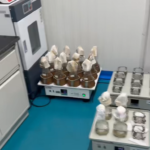
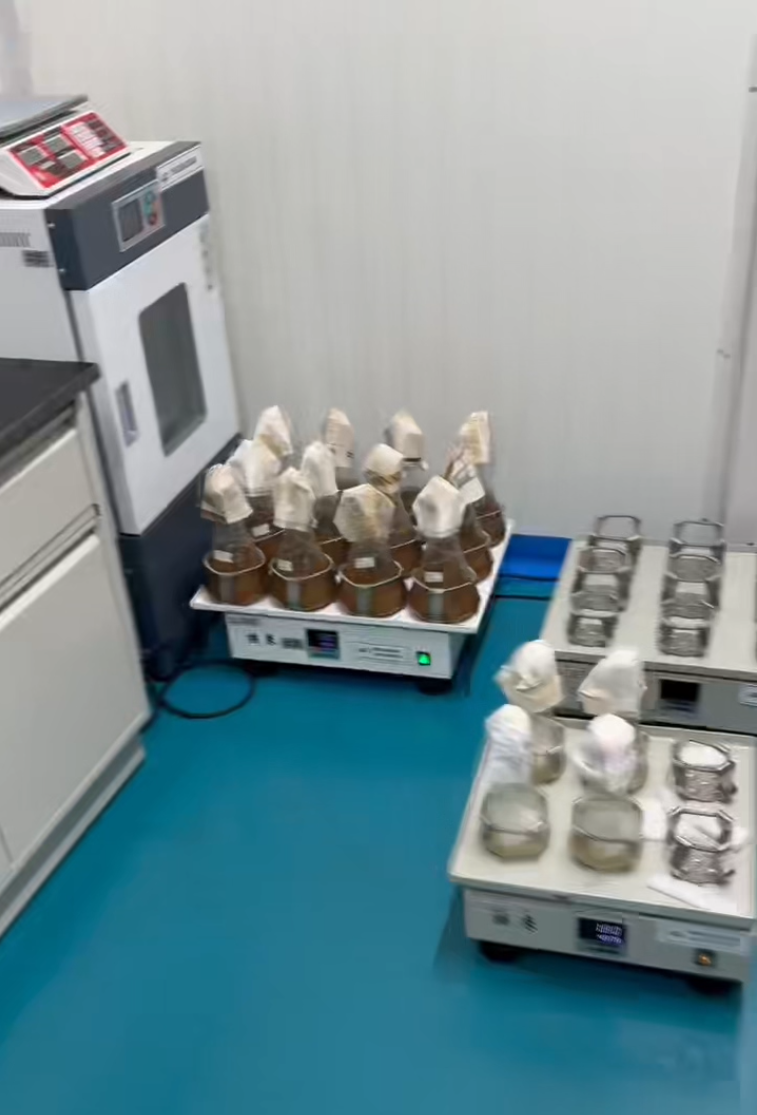
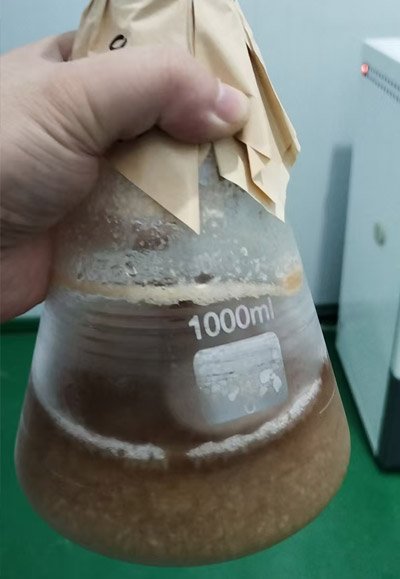
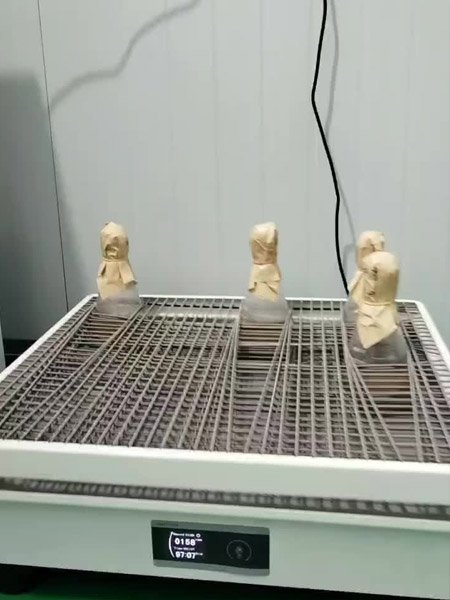
A shake flask is a laboratory vessel used to cultivate microorganisms in a liquid medium. In mushroom cultivation, it can provide a small-scale environment for growing mycelium in a prepared nutrient solution.
The flask is placed on a shaking incubator or orbital shaker, which moves the liquid during cultivation.
Unlike static cultivation, where the liquid remains relatively undisturbed, shaking creates continuous liquid movement. This influences mixing, contact between the liquid and air, and the distribution of nutrients within the culture.
Shake flasks are commonly used in early-stage liquid culture development because they are relatively simple to handle and allow operators to observe cultures before moving to larger cultivation equipment.
How Does Shaking Help Liquid Mycelium Cultivation?
Shaking is not simply about moving the liquid from side to side. It influences several conditions inside the flask.
1. Improving Liquid Mixing
During cultivation, nutrients are dissolved in the liquid medium and used by the growing mycelium.
Shaking helps move the liquid and distribute dissolved nutrients throughout the flask. It also reduces the tendency for the culture to remain in completely static layers.
The actual mixing performance depends on factors such as flask design, liquid volume, and shaking conditions.
2. Supporting Oxygen Transfer
Many mushroom cultivation processes involve aerobic growth, meaning that oxygen is important for fungal metabolism.
In a shake flask, movement of the liquid helps renew contact between the liquid surface and the air inside the flask. Oxygen can then transfer from the gas phase into the liquid.
However, shaking does not automatically guarantee sufficient oxygen supply.
Oxygen transfer is also affected by:
- The amount of liquid in the flask
- Flask size and geometry
- Shaking frequency and movement
- The design and permeability of the flask closure
- The characteristics of the culture medium
If oxygen transfer becomes limiting, mycelial growth and culture performance may be affected.
3. Supporting Mycelial Growth and Culture Development
A liquid medium provides nutrients for mycelial development. Under suitable cultivation conditions, fungal mycelium can grow and develop in different forms, including suspended fragments, aggregates, or pellets.
Shaking influences the physical environment in which this growth takes place. Depending on the species and cultivation conditions, it may also influence mycelial morphology.
This is one reason why operators should observe more than just whether mycelium is visible. Changes in culture appearance and growth behavior can provide useful information during process development.
Why Use Shake Flasks Before Fermentation Tanks?
One important reason for using shake flasks is that they allow small-scale cultivation before a process is transferred to larger equipment.
A flask provides an opportunity to observe culture development and investigate whether a selected medium and cultivation approach are suitable.
For example, during early culture development, operators may use shake flasks to:
- Observe how a selected strain develops in liquid medium.
- Compare different nutrient formulations.
- Examine changes in mycelial morphology.
- Evaluate the general behavior of a culture under different cultivation conditions.
- Prepare liquid culture for a subsequent cultivation stage.
Once the process has been evaluated, the culture may be transferred to a larger seed cultivation vessel or fermentation tank, depending on the production design.
This does not mean every liquid mushroom spawn production line must use the same flask stage. The cultivation sequence depends on the strain, production scale, inoculum preparation method, and process requirements.
Shake Flask Cultivation vs. Fermentation Tank Cultivation
Although both systems cultivate microorganisms in liquid media, they serve different purposes and operate in different ways.
| Aspect | Shake Flask | Fermentation Tank |
|---|---|---|
| Typical application | Laboratory and early-stage cultivation | Larger-scale seed or production cultivation |
| Mixing | Movement generated by a shaker | Mechanical agitation, depending on tank design |
| Oxygen supply | Gas exchange through the flask closure and liquid surface | Usually controlled through aeration and agitation |
| Process monitoring | Relatively limited | Can support more systematic process monitoring |
| Scale | Small-scale | Larger cultivation volumes |
| Main advantage | Simple setup and convenient observation | Greater capacity and process control possibilities |
A key point is that conditions inside a shake flask cannot simply be copied into a fermentation tank.
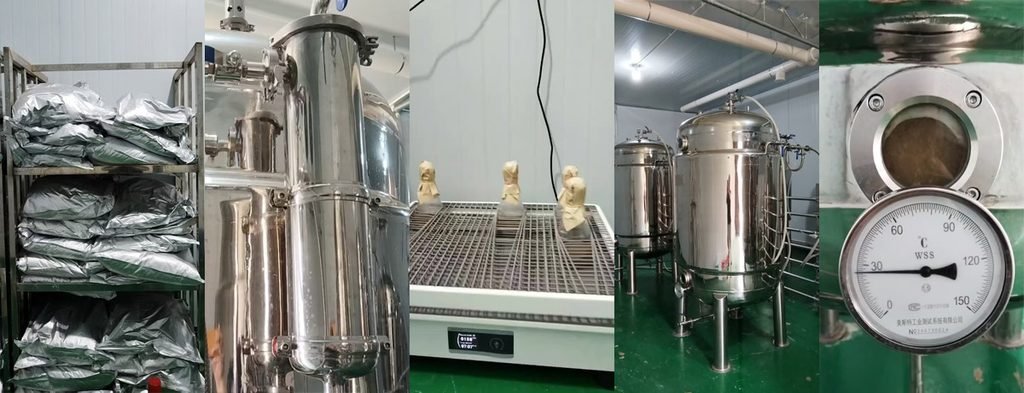
As cultivation volume increases, mixing patterns, oxygen transfer, heat removal, and mechanical forces can change. A process that performs well in a small flask may behave differently in a larger vessel.
Therefore, scale-up requires consideration of the characteristics of the cultivation system rather than simply increasing the volume.
What Should Operators Observe During Shake Flask Cultivation?
Shake flask cultivation also provides an opportunity to observe how a liquid culture develops.
Operators may pay attention to:
Mycelial appearance
Observe the general appearance and distribution of mycelium in the liquid. Different mushroom species and cultivation conditions may produce different growth forms.
Changes during cultivation
Compare the culture at different observation points. Changes in appearance or growth behavior may help identify differences between batches.
Liquid condition
Observe whether there are unusual changes in color, clarity, or other visible characteristics compared with the expected condition for that specific culture.
Flask and closure condition
Check that the flask remains properly closed and that the closure is suitable for maintaining a sterile barrier while allowing the required gas exchange.
Visual observation is useful, but it cannot confirm that a culture is free from microbial contamination. When contamination is suspected, further assessment using appropriate procedures may be necessary.
There is no single visual appearance that should be treated as a universal quality standard for every mushroom species or liquid culture process.
From Shake Flasks to Larger-Scale Liquid Spawn Production
Shake flask cultivation is one part of a broader liquid mushroom spawn production process.
A production system may involve culture preparation, seed expansion, fermentation, and subsequent handling of the finished liquid culture. The exact arrangement depends on the production target and the cultivation strategy.
When moving from laboratory cultivation to larger-scale production, several factors need to be considered together:
- The selected mushroom strain and its growth characteristics
- The composition of the liquid medium
- Oxygen transfer and mixing requirements
- Sterile operation and contamination prevention
- The capacity and configuration of the cultivation equipment
A well-designed liquid mushroom spawn production system should consider the relationship between each cultivation stage rather than treating the fermentation tank as an isolated piece of equipment.
For a broader overview of the equipment and process involved, see our Liquid Mushroom Spawn Production System.
You can also read more about the Mushroom Spawn Production Process to understand how the different stages fit into the overall production workflow.
Conclusion
Shake flasks are useful in liquid mushroom cultivation because they provide a relatively simple way to develop, observe, and evaluate cultures on a small scale.
Shaking influences liquid mixing and oxygen transfer, while the flask environment allows operators to examine mycelial development before moving to larger cultivation equipment.
However, shake flask cultivation is not a universal requirement for every production line, and its conditions cannot be transferred directly to a fermentation tank without considering scale-up effects.
Understanding the role of each cultivation stage is an important part of developing a reliable liquid mushroom spawn production process.