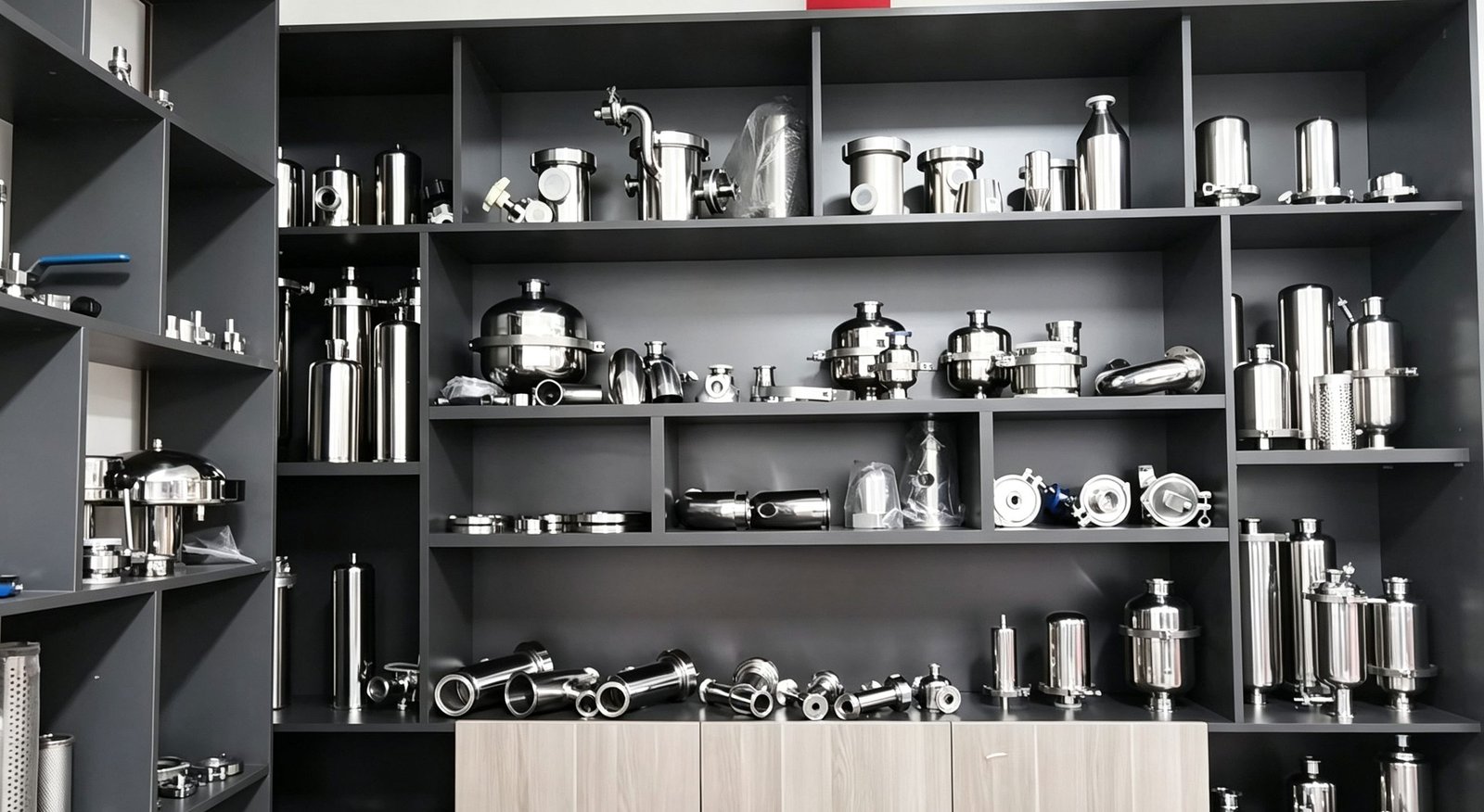
Commercial mushroom spawn production involves several controlled processing stages, from substrate preparation and sterilization to clean inoculation and liquid culture fermentation. Each stage has a different equipment requirement and plays a role in maintaining process consistency and contamination control.
For industrial mushroom production, the process is not simply about growing mushrooms. It involves a combination of material preparation, steam sterilization, controlled inoculation, liquid culture, fermentation, and hygienic fluid processing.
This article explains the typical mushroom spawn production process and the main equipment used at each stage.
1. Overview of the Mushroom Spawn Production Process
A typical industrial mushroom spawn production process can be organized into the following stages:
Raw Material Preparation
↓
Bag Filling
↓
Steam Sterilization
↓
Clean Inoculation
↓
Liquid Culture / Fermentation
↓
Spawn Production
↓
Transfer and Application
Different mushroom production facilities may use different process configurations, but the basic principle is to move from controlled material preparation toward controlled biological propagation while minimizing contamination risks.
The equipment used at each stage therefore needs to work together as part of a complete production system.
2. Raw Material Preparation and Bag Filling
The first stage is the preparation of the cultivation material or substrate.
Depending on the mushroom species and production method, the substrate may contain different agricultural or nutrient-based materials. After preparation, the material needs to be filled into cultivation bags or other suitable containers.
Automatic Mushroom Bag Filling
In larger production facilities, an automatic mushroom bag filling machine can be used to improve filling consistency and reduce manual handling.
The equipment typically controls several operations, including:
- Feeding the prepared material
- Filling cultivation bags
- Controlling filling volume
- Compacting or forming the substrate
- Preparing bags for the sterilization stage
Consistent filling is important because differences in material density and volume can affect the subsequent sterilization and cultivation process.
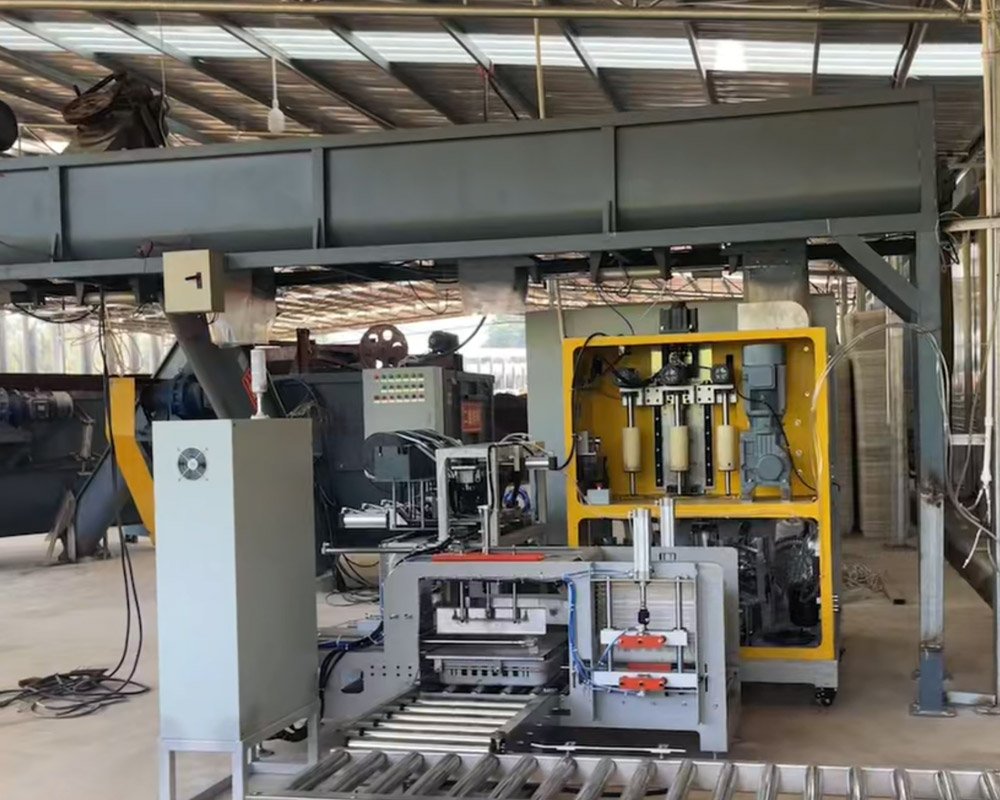
Automatic mushroom bag filling machine used for preparing cultivation bags in a mushroom production facility.
3. Steam Sterilization of Cultivation Materials
After bag filling, the prepared cultivation material needs to undergo a controlled sterilization process.
Steam sterilization is commonly used to reduce microorganisms that could compete with the intended mushroom culture.
For larger production volumes, industrial steam sterilizers can process multiple cultivation bags in a controlled chamber.
Industrial Mushroom Sterilizer
A large stainless-steel sterilization cabinet, such as the YGQ-58 type used in mushroom production facilities, can be used for batch sterilization of cultivation materials.
The main functions of the sterilization system include:
- Controlled steam supply
- Heating of the cultivation material
- Holding at the required sterilization conditions
- Controlled pressure and temperature
- Batch processing of cultivation bags
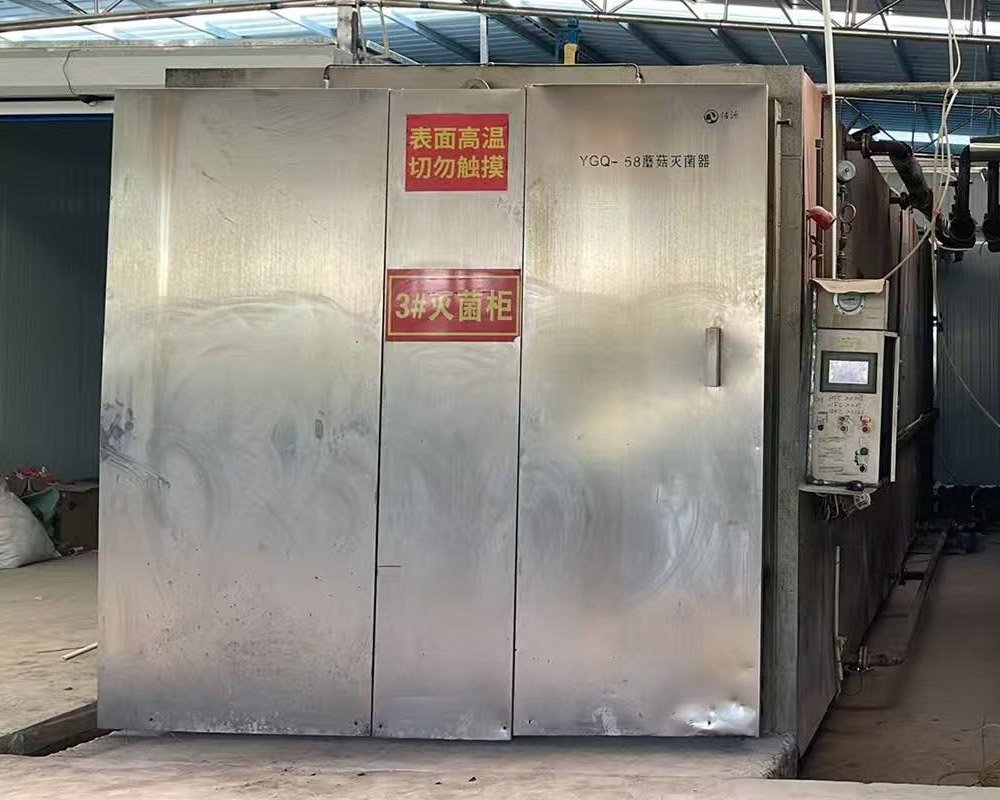
YGQ-58 mushroom sterilizer used for batch sterilization of cultivation materials.
The sterilization stage is particularly important because the material must be prepared before it enters a more controlled inoculation or culture environment.
4. Small-Batch and Laboratory Sterilization
Not every sterilization operation requires a large industrial chamber.
Laboratories, pilot facilities, and small-scale production areas may use vertical high-pressure steam sterilizers for smaller batches of materials, culture media, tools, glassware, or spawn containers.
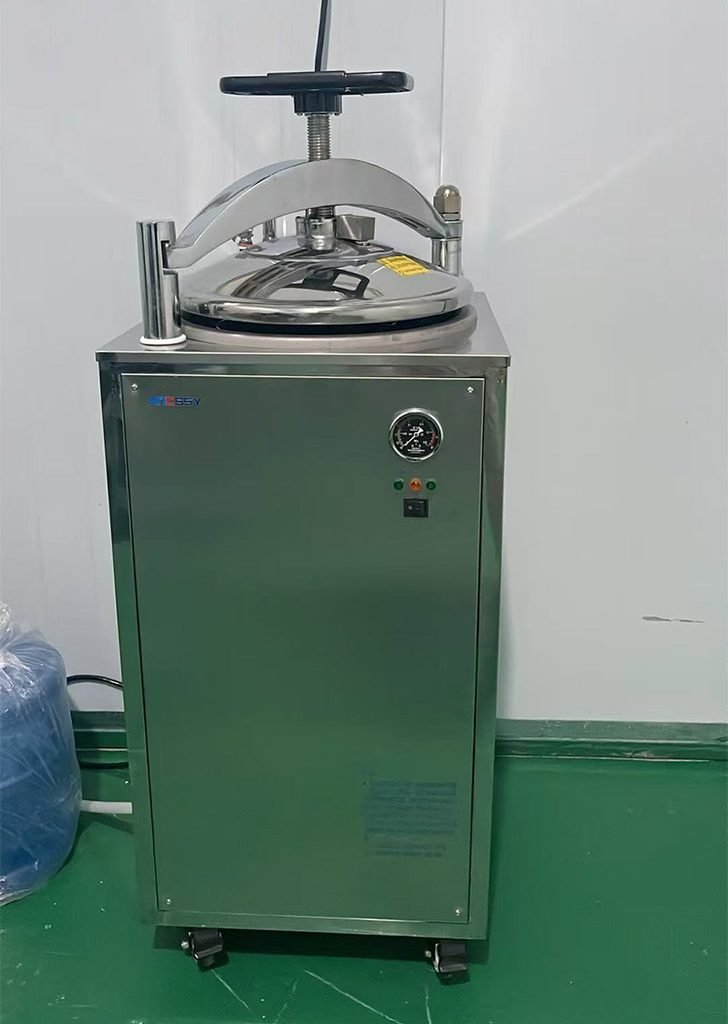
Vertical high-pressure steam sterilizer for laboratory and small-batch sterilization.
The difference between large industrial sterilizers and smaller vertical sterilizers is mainly related to production capacity and application scale. Both serve the same basic purpose: preparing materials under controlled sterilization conditions before the next processing stage.
5. Clean Inoculation and Culture Transfer
After sterilization, the material or culture needs to be transferred into the next stage without unnecessary exposure to contamination.
This is where a controlled clean working environment becomes important.
A clean bench or laminar flow cabinet can provide a localized clean-air working area for inoculation, transfer, and other operations requiring greater environmental control.
Clean Bench for Mushroom Spawn Inoculation
A typical clean bench may include:
- HEPA-filtered air
- Controlled airflow
- Stainless-steel or easy-to-clean work surfaces
- UV sterilization functions on some models
- Enclosed or semi-enclosed working areas
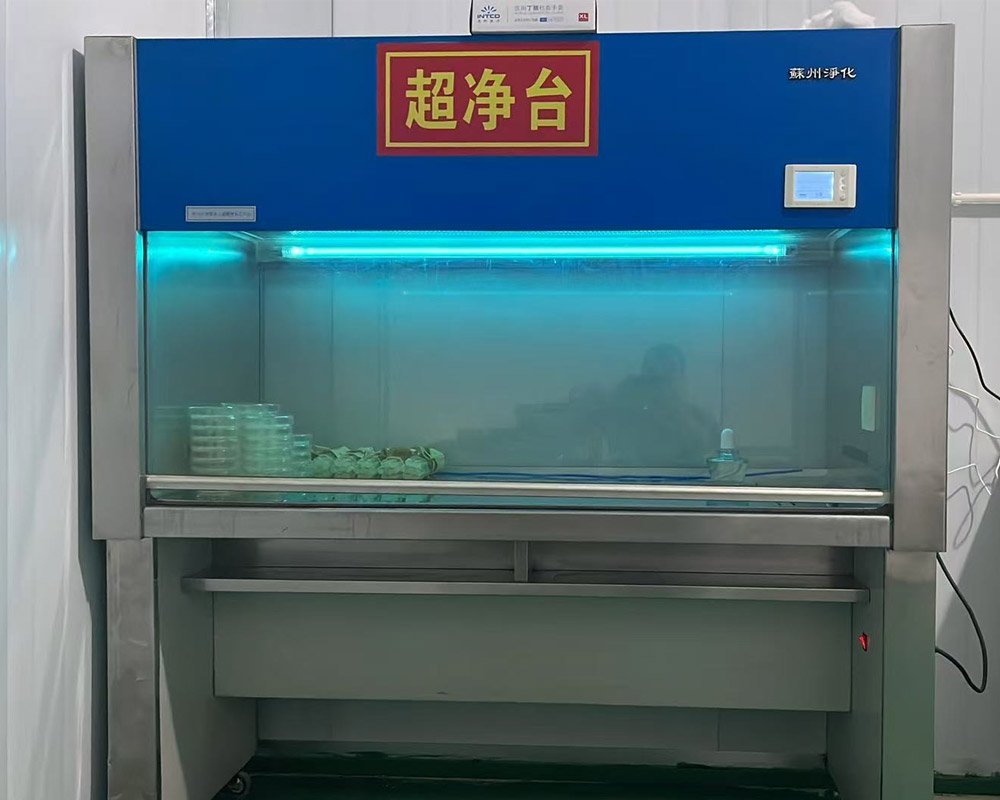
Clean bench used for controlled mushroom spawn inoculation and culture transfer.
The clean inoculation stage provides the connection between sterilized materials and the subsequent biological culture process.
6. Liquid Culture and Mushroom Spawn Fermentation
Liquid culture provides another approach to producing mushroom spawn at a larger and more controlled scale.
Instead of relying only on solid substrate propagation, mushroom cultures can be propagated in a liquid nutrient medium inside a controlled fermentation vessel.
A typical liquid spawn fermentation system may include:
- Stainless-steel fermentation tank
- Sterile air supply
- Agitation or mixing system
- Temperature monitoring and control
- Sanitary piping
- Tank breather or sterile gas filtration
- CIP cleaning capability
During fermentation, air and mixing conditions need to be controlled according to the process requirements.
The objective is to provide a suitable environment for mycelial growth while maintaining process hygiene and repeatability.
Mushroom Spawn Fermentation Tank
The fermentation tank is therefore one of the central pieces of equipment in a liquid mushroom spawn production system.
For a detailed explanation of the tank structure, working principle, aeration, mixing, and hygienic design, see:
Mushroom Spawn Fermentation Tank: Working Principle and Liquid Culture System
A properly designed fermentation system can integrate liquid culture production with sterile air handling, hygienic connections, cleaning, and controlled fluid transfer.
7. Why Liquid Spawn Production Is Used in Commercial Mushroom Produc tion
Liquid spawn production can offer several advantages when the production scale increases.
More Controlled Culture Conditions
Liquid culture allows key process conditions to be monitored and controlled within a fermentation vessel.
Depending on the system design, parameters such as temperature, aeration, mixing, and fermentation time can be managed more systematically.
Easier Scale-Up
A controlled liquid culture system can be scaled by increasing vessel capacity or using multiple fermentation vessels.
This provides greater flexibility than relying entirely on manual propagation methods.
More Consistent Production
A standardized fermentation process can help reduce variation between production batches when the process parameters and raw materials are properly controlled.
Reduced Manual Handling
A closed or semi-closed liquid processing system can reduce unnecessary manual transfer between different production stages.
This is particularly relevant when contamination control and production repeatability become important.
8. Hygienic Design in a Mushroom Spawn Production System
For liquid culture and fermentation systems, hygienic design is not limited to the fermentation tank itself.
The surrounding fluid-processing components also need to be considered.
Important elements may include:
304 Stainless Steel
Stainless steel construction provides a durable and cleanable surface for equipment used in hygienic processing environments.
Sanitary Connections
Tri-Clamp and other sanitary connection methods can simplify equipment assembly, maintenance, and cleaning.
Sterile Air
Fermentation systems may require controlled air supply for aeration. The air path needs appropriate filtration and hygienic design to reduce the risk of introducing unwanted contamination.
Tank Breather
The fermentation vessel also needs controlled gas exchange.
A tank breather or sterile air filtration assembly can help manage the air entering or leaving the vessel while maintaining a more controlled processing environment.
For more information about the role and installation position of tank breather filters in fermentation systems, see:
CIP Cleaning
Where the equipment configuration allows it, clean-in-place systems can reduce the need for repeated manual disassembly and cleaning.
This becomes increasingly important as fermentation vessels and associated piping become larger and more complex.
9. From Individual Equipment to a Complete Production System
A mushroom spawn production facility should not be viewed simply as a collection of individual machines.
The different stages are connected:
Bag Filling
→ prepares the cultivation material
Sterilization
→ reduces unwanted microorganisms
Clean Inoculation
→ introduces the intended culture under controlled conditions
Liquid Culture / Fermentation
→ provides a controlled environment for mycelial propagation
Gas Exchange and Filtration
→ supports controlled aeration and pressure management
Hygienic Fluid Transfer
→ connects the different processing stages
This system-level approach becomes particularly important for commercial production where process consistency, hygiene, cleaning, and equipment integration are more important than any single machine.
10. Conclusion
The mushroom spawn production process combines material preparation, bag filling, steam sterilization, clean inoculation, liquid culture, and fermentation into a connected production workflow.
For facilities using liquid mushroom spawn technology, the fermentation system becomes an important part of the overall process. Its performance depends not only on the tank itself but also on sterile air, gas exchange, sanitary connections, filtration, cleaning, and controlled fluid transfer.
This is why mushroom spawn production equipment is increasingly connected with the same hygienic processing principles used in food, pharmaceutical, biotechnology, and other controlled fluid-processing applications.
Haoqintech focuses on stainless-steel sanitary components, filtration, tank accessories, fermentation-related equipment, and hygienic fluid-processing systems for applications including liquid culture and fermentation.