As mushroom producers look for more efficient and consistent cultivation methods, liquid edible mushroom spawn, also known as liquid culture, is increasingly used as an alternative to traditional solid spawn.
A well-designed liquid spawn system can help improve process consistency, simplify scale-up and provide better control over sterile transfer and fermentation conditions.
This case study presents a liquid edible mushroom spawn fermentation system designed, manufactured, installed and commissioned by Haoqintech for a client in Armenia.
Project Overview
| Item | Details |
|---|
| Location | Armenia |
| Application | Liquid edible mushroom spawn / liquid culture production |
| Scope of work | Process design, equipment manufacturing, on-site installation, commissioning and operator training |
| Main requirements | Hygienic design, flexible layout, cleanability and reliable contamination control |
The project covered the process from laboratory-scale mother culture preparation through liquid fermentation and sterile filling.
Main Project Challenges
The client required a complete system that could support both laboratory preparation and larger-scale production.
The main requirements included:
- Maintaining controlled hygienic conditions throughout the process
- Providing a flexible equipment layout
- Supporting efficient cleaning and sanitation
- Allowing the process to scale from mother culture preparation to production volumes
- Reducing unnecessary manual handling during liquid culture transfer
These requirements meant that the system needed to combine fermentation equipment with appropriate sanitary components and process controls.
Our Liquid Spawn System Solution
Haoqintech provided a complete liquid culture production system consisting of several interconnected stages.
1. Laboratory-Scale Mother Culture Preparation
The process begins with the preparation of healthy starter cultures.
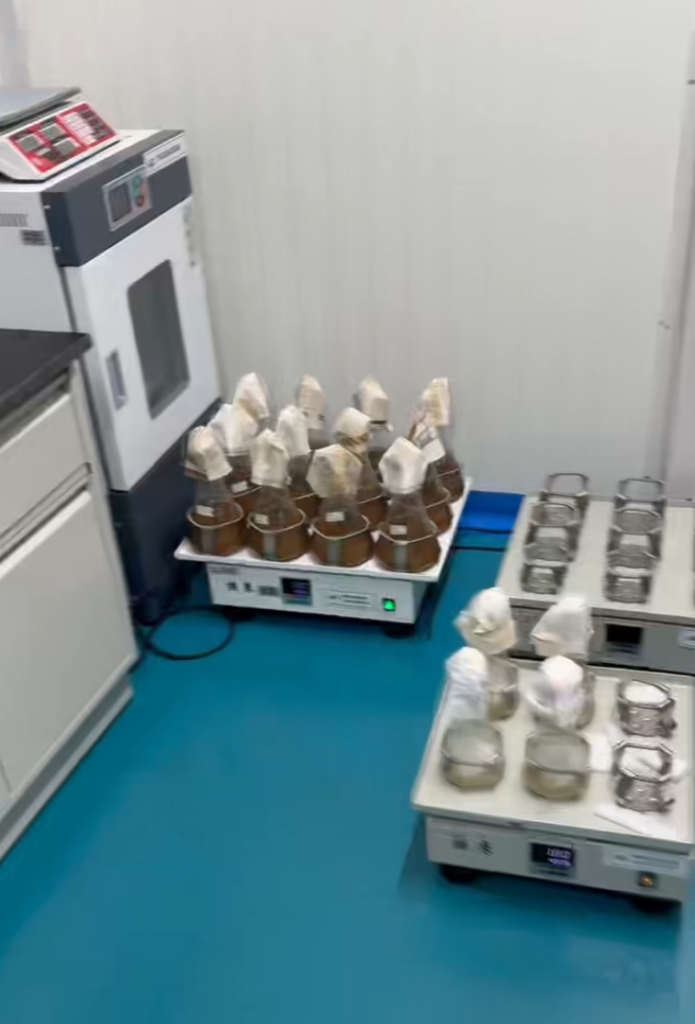
The laboratory section includes shaker stations with Erlenmeyer flasks and incubators for preparing and maintaining mother cultures before they are transferred to larger fermentation vessels.
This stage provides a controlled starting point for subsequent liquid fermentation.
We delivered a full liquid culture production line with three main sections:
2. Sanitary Stainless Steel Fermentation Tanks
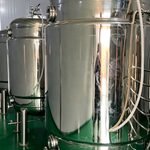
The next stage uses stainless steel fermentation vessels designed for liquid culture production.
The fermentation tanks used in this project feature:
- Stainless steel sanitary construction
- Controlled temperature and process conditions
- Aeration capability
- Smooth internal surfaces for easier cleaning
- Mobile design for flexible equipment positioning
- Construction suitable for controlled production environments
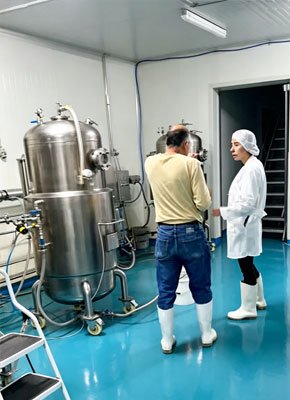
The mobile configuration was particularly useful for arranging the production area according to the client’s available space and workflow.
3. Inoculation and Filling System
After fermentation, the liquid culture needs to be transferred and distributed into the cultivation substrate.
The project included an inoculation and filling system designed to reduce unnecessary manual handling during liquid culture transfer.
The system incorporates conveyors and controlled liquid dosing to support a more consistent filling process.
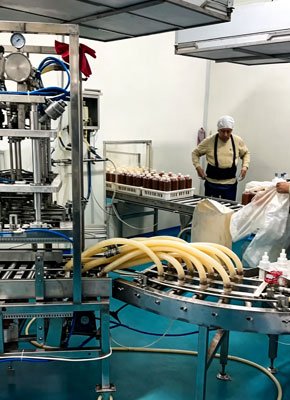
The exact configuration of the filling system can be adapted according to the substrate container, production capacity and process requirements.
Key Sanitary Components Used in the Project
One important lesson from this project was the importance of reliable sanitary components throughout the process line.
The system incorporated components such as:
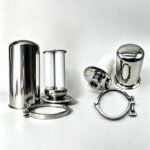
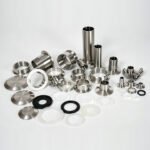
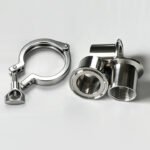
- Sanitary Tri-Clamp fittings and connections
- Sanitary butterfly valves and ball valves
- Y-strainers and sanitary filters
- Rotary spray balls for tank cleaning
- Sterile air breathers and filters
These components were selected according to the requirements for hygiene, cleanability, process control and reliable operation.
Many of these components later became part of Haoqintech’s standard sanitary product range.
This is one of the reasons our current product offering is closely connected to real-world system engineering experience.
Project Results
The completed system provided the client with:
- A complete liquid spawn production workflow
- A more organized and hygienic production layout
- Mobile fermentation equipment for flexible positioning
- A system designed with cleaning and sanitation in mind
- Operator training and on-site commissioning support
The project was successfully installed and handed over in Armenia.
Project Video
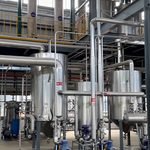
The project video shows the actual equipment and production environment in Armenia, including:
- Mobile stainless steel fermentation tanks
- The production environment
- Overall system layout
- Major equipment and process areas
Final Result: Mushroom Fruiting
Following the use of liquid spawn produced by the system, the client achieved healthy and relatively uniform fruiting of king oyster mushrooms.
The following photos show the mushroom fruiting results from the project.
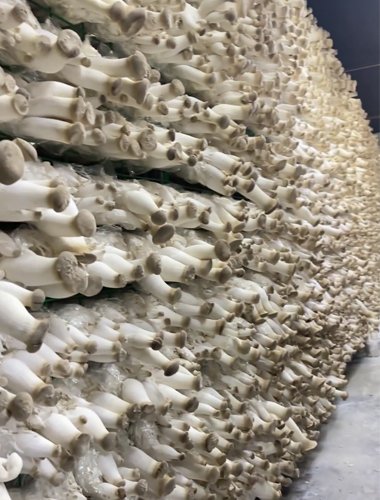
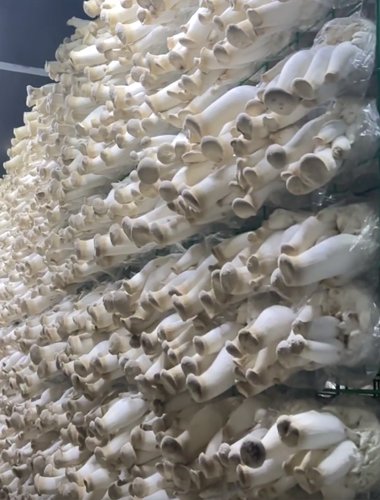
The results provide a practical example of how a properly designed liquid spawn production system can be integrated into commercial mushroom cultivation.
What We Learned from This Project
This project also played an important role in the development of Haoqintech.
While designing and installing complete liquid culture systems, including this project in Armenia, we encountered the practical challenge of sourcing reliable sanitary stainless steel components for different parts of the process.
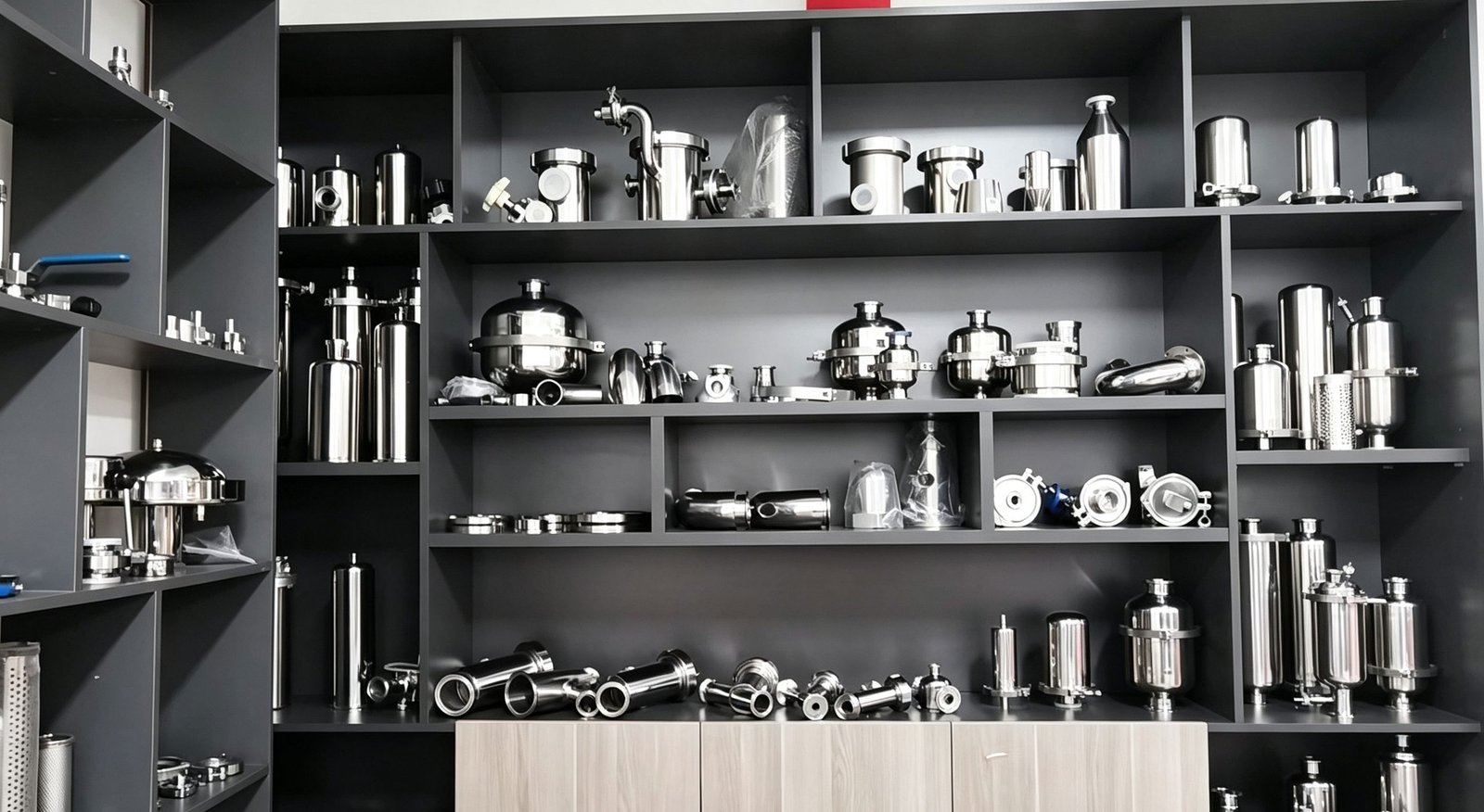
This experience encouraged us to develop and manufacture our own range of sanitary components, including:
- Tri-Clamp fittings
- Sanitary valves
- Filters and strainers
- Tank-cleaning spray balls
- Air breathers and related sanitary components
As a result, our product range is based not only on standard product specifications but also on practical requirements encountered during real system projects.
Why Project Experience Matters
For customers planning a liquid mushroom spawn or fermentation system, choosing individual components is only one part of the process.
The compatibility between tanks, valves, filters, sanitary fittings, cleaning systems and transfer equipment also needs to be considered.
Our project experience allows us to understand these components from a system-level perspective and provide technical support based on actual application requirements.
Looking for a Similar Liquid Spawn Solution?
If you are planning a liquid mushroom spawn system, liquid culture production line or related fermentation project, Haoqintech can provide technical support and sanitary stainless steel components based on your application.
Our support can include:
- Process and equipment recommendations
- Sanitary stainless steel components
- Custom equipment and OEM manufacturing
- Material certificates and traceability documentation
- Installation and commissioning support
- Technical assistance based on project experience
Learn More About Haoqintech >>
Contact Haoqintech for Technical Support or a Factory-Direct Quotation >>
Conclusion
The Armenia liquid edible mushroom spawn project demonstrates how laboratory culture preparation, sanitary fermentation equipment and controlled inoculation can be integrated into one production workflow.
More importantly, the project reflects Haoqintech’s approach to sanitary equipment: developing products from real engineering requirements and practical production experience.
For customers looking for liquid spawn fermentation equipment or sanitary stainless steel components, this combination of project experience and manufacturing capability can provide a practical foundation for developing reliable process systems.