Sanitary filters and strainers play an important role in hygienic liquid processing systems. They help remove unwanted particles, protect downstream equipment and maintain the cleanliness of process lines used in food, beverage, dairy, pharmaceutical and other sanitary applications.
However, not every filter or strainer is suitable for every process. The correct selection depends on the type of particles being removed, required filtration level, flow conditions, connection type, material and cleaning requirements.
This guide explains the main types of sanitary stainless steel filters and strainers and the key factors to consider when selecting one for a hygienic processing system.
Filter vs. Strainer: What Is the Difference?
The terms “filter” and “strainer” are sometimes used interchangeably, but they generally refer to different levels of particle separation.
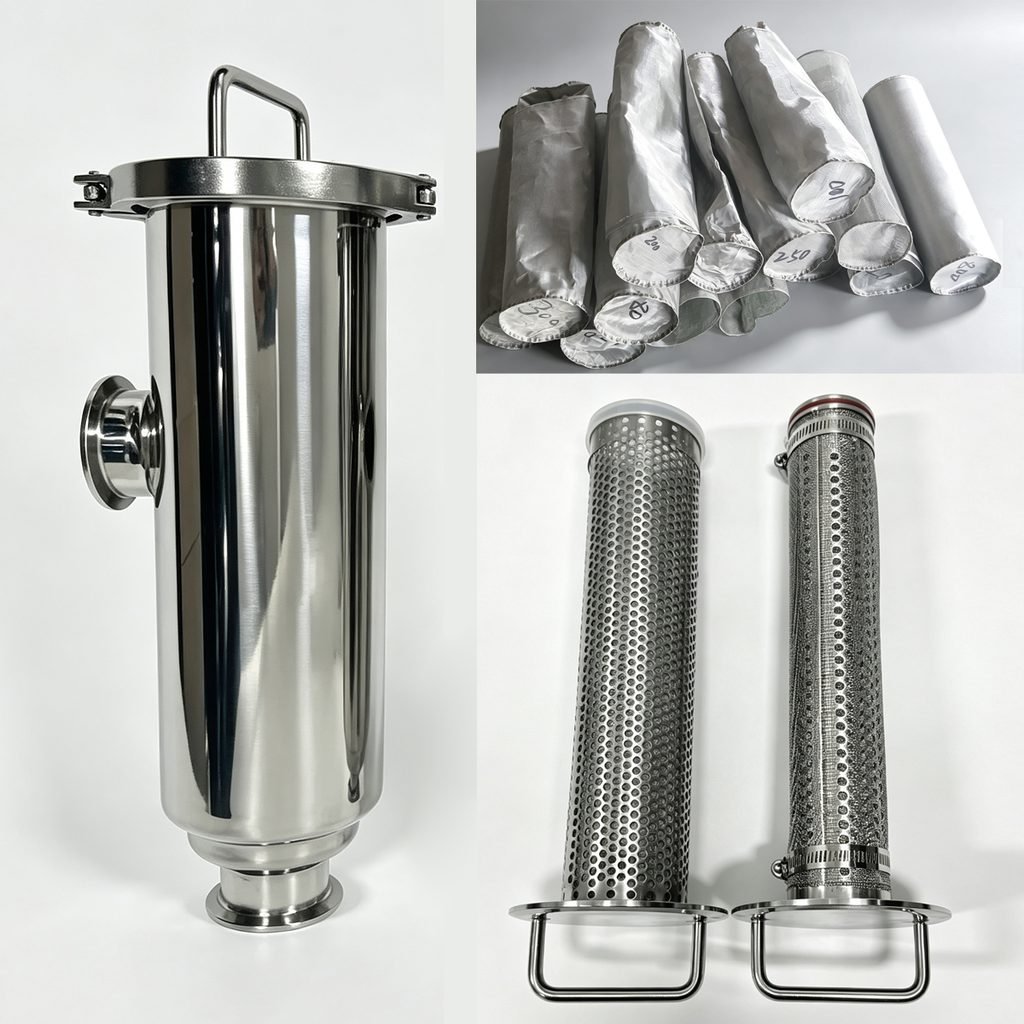
A strainer normally uses a perforated or mesh screen to remove relatively larger particles from a liquid or gas stream. The screen can usually be removed, cleaned and reused.
A filter is generally designed for finer filtration and may use a cartridge, membrane or other filtration media.
For example, a stainless steel mesh inline strainer is commonly used to protect pumps, valves and other equipment from larger particles. A cartridge filter housing, on the other hand, can accommodate a replaceable filter cartridge for finer filtration requirements.
Understanding this difference is important when selecting sanitary filtration equipment.
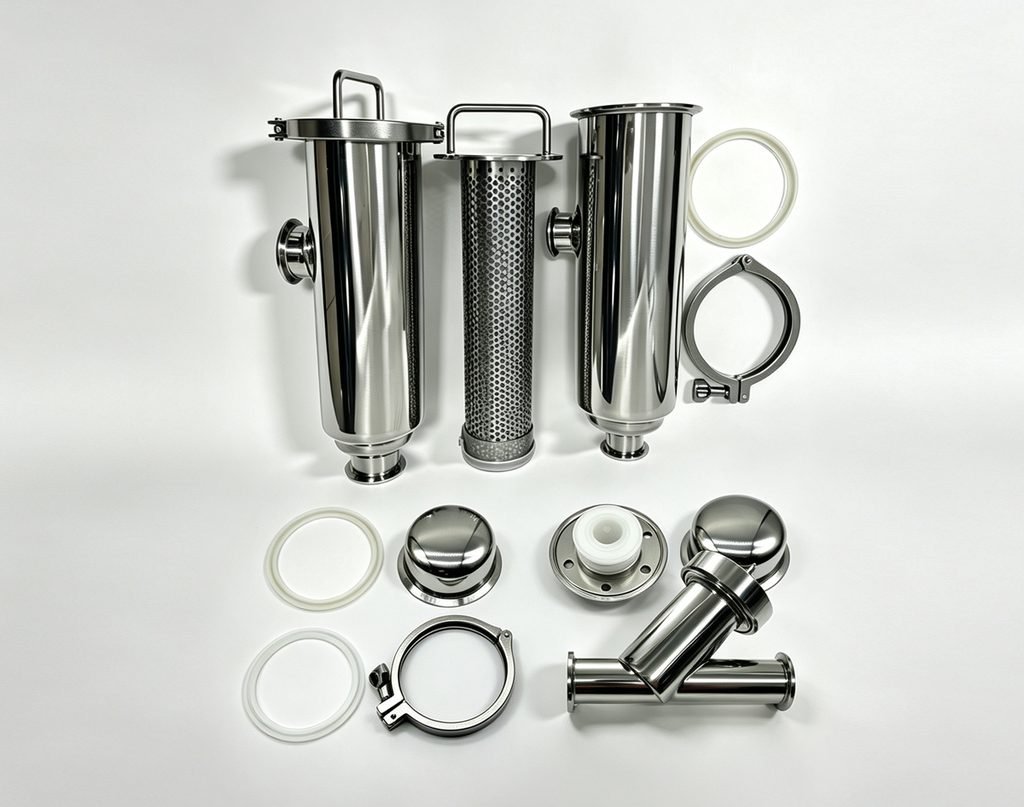
Common Types of Sanitary Stainless Steel Filters and Strainers
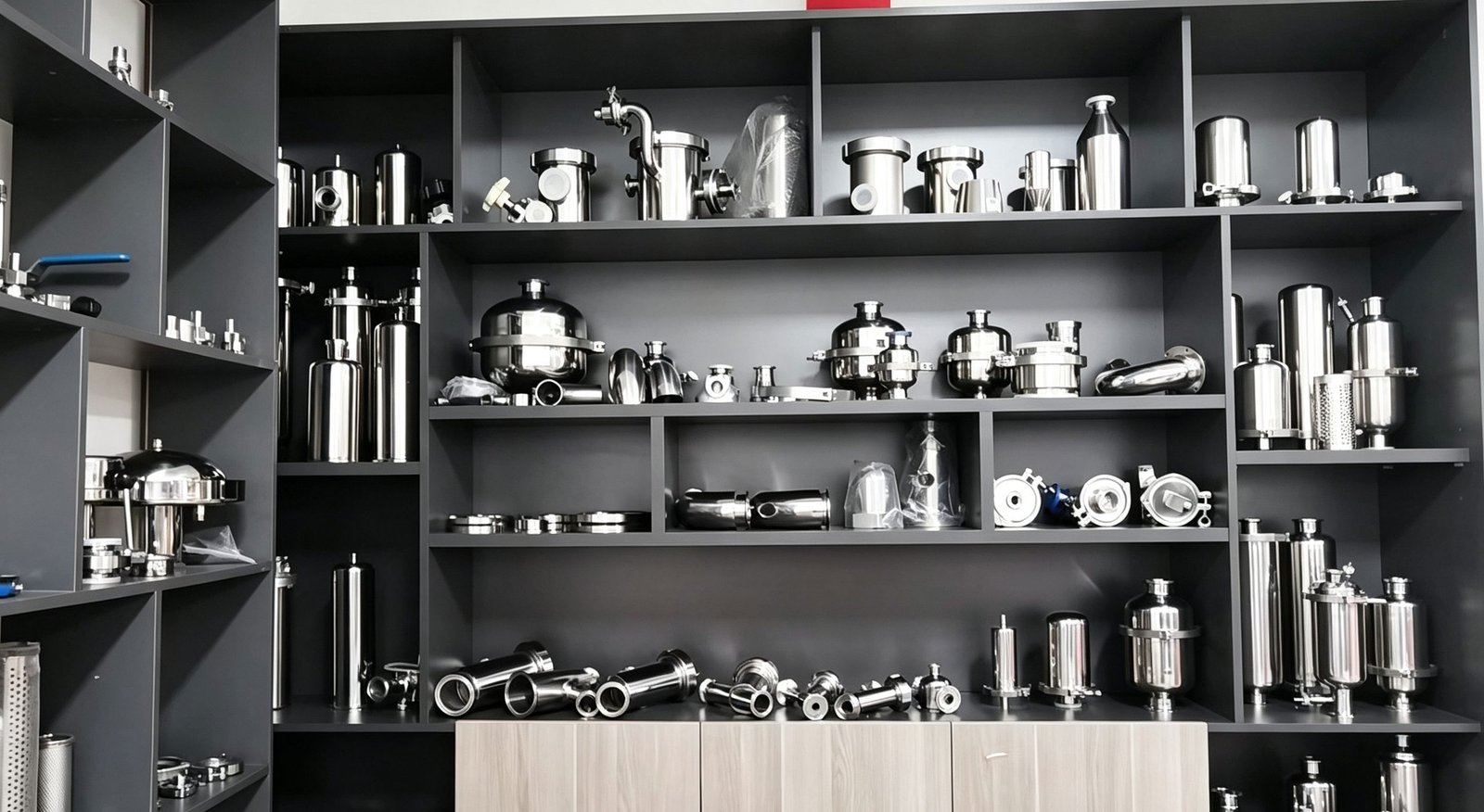
Haoqintech supplies several types of sanitary filtration and straining components for hygienic processing systems.
1. Sanitary Inline Strainers
Inline strainers are installed directly into a process pipeline. They are commonly used to remove particles from a liquid stream while allowing the process to continue through the pipeline.
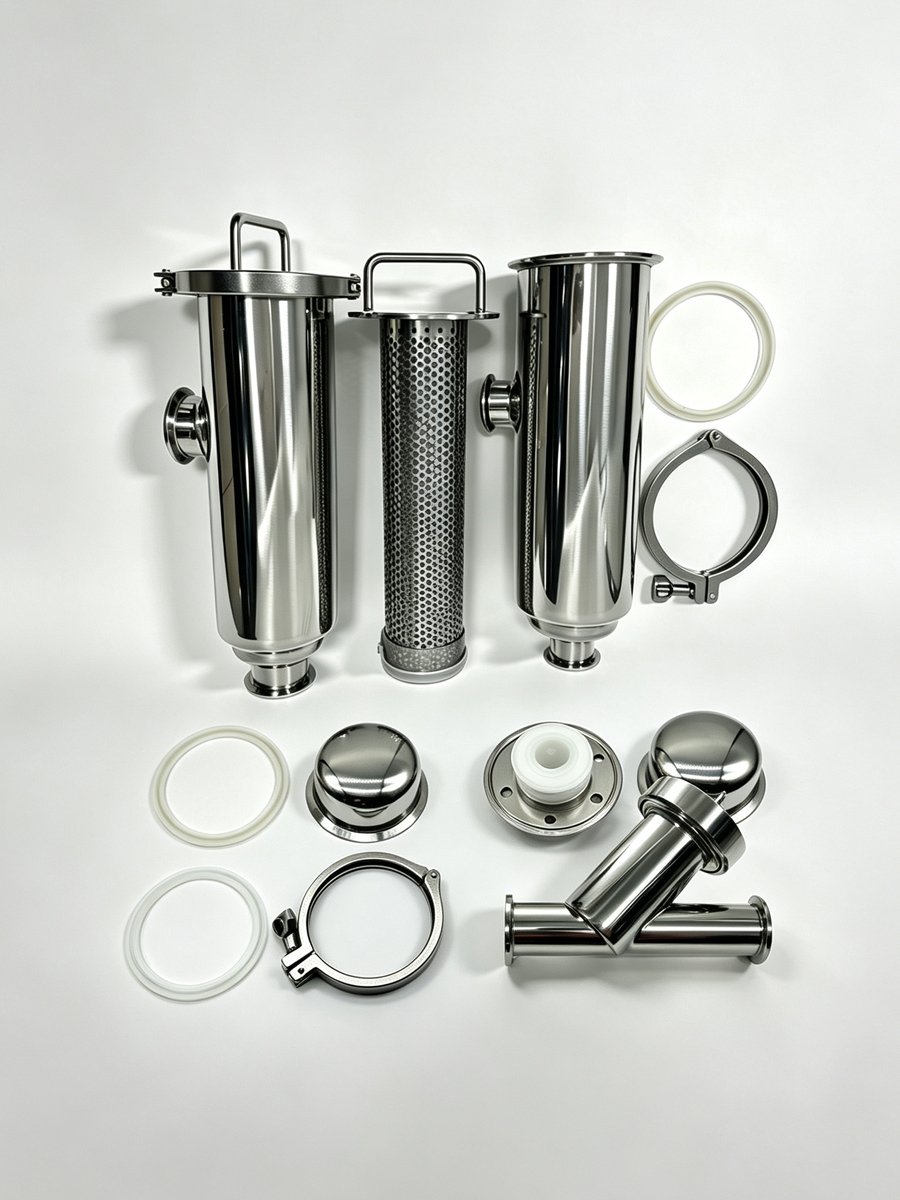
A typical sanitary inline strainer consists of a stainless steel housing and a removable mesh screen.
Important selection factors include:
- Pipe size
- Mesh size
- Flow direction
- Connection type
- Operating pressure
- Cleaning requirements
- Material grade
Tri-Clamp connections are widely used when quick installation, disassembly and cleaning are important.
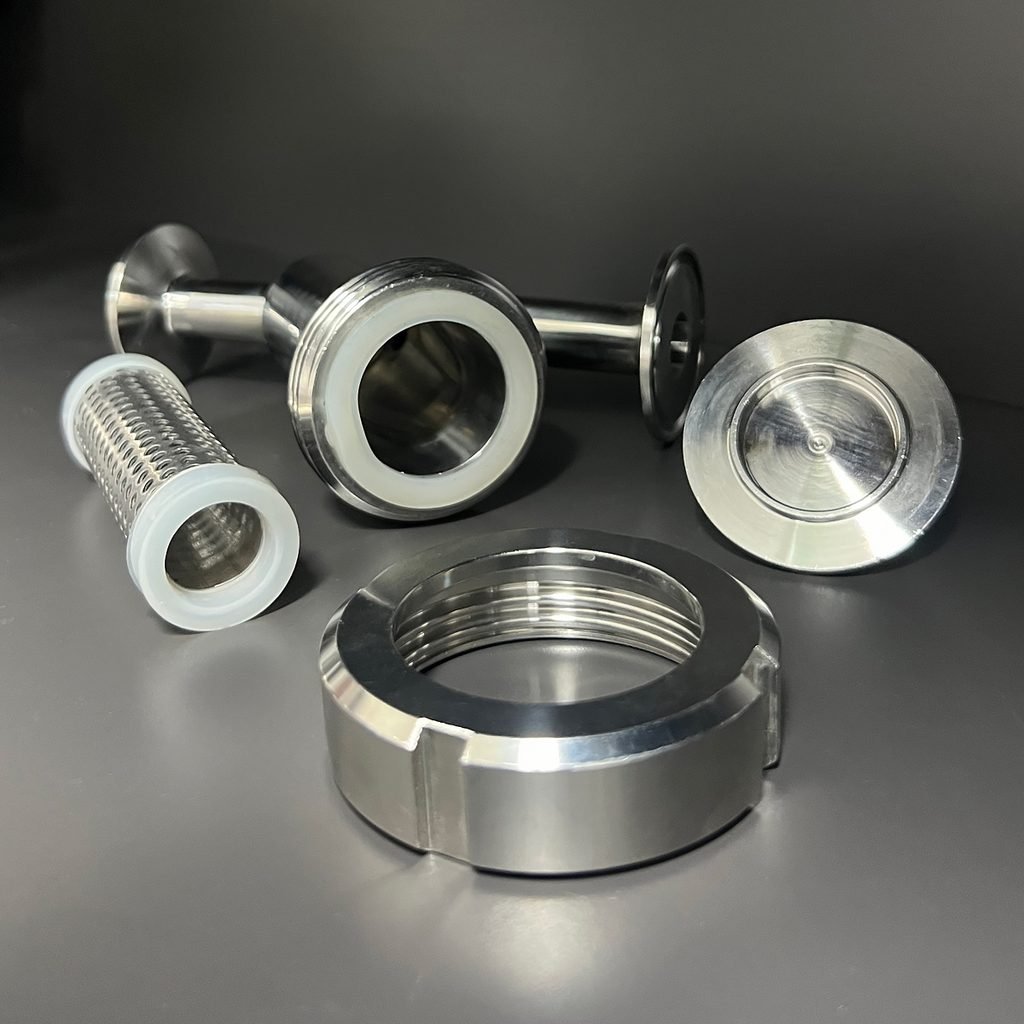
2. Sanitary Y-Strainers
A sanitary Y-strainer uses a Y-shaped body with a removable screen element.
The angled design provides a convenient location for the straining element and can be useful in applications where regular screen inspection or cleaning is required.
Y-strainers are commonly used for:
- Liquid processing pipelines
- Pump protection
- Valve protection
- Food and beverage processing
- Dairy processing
- Hygienic water and fluid systems
When selecting a Y-strainer, pay attention to the screen mesh size, connection standard and available installation space.
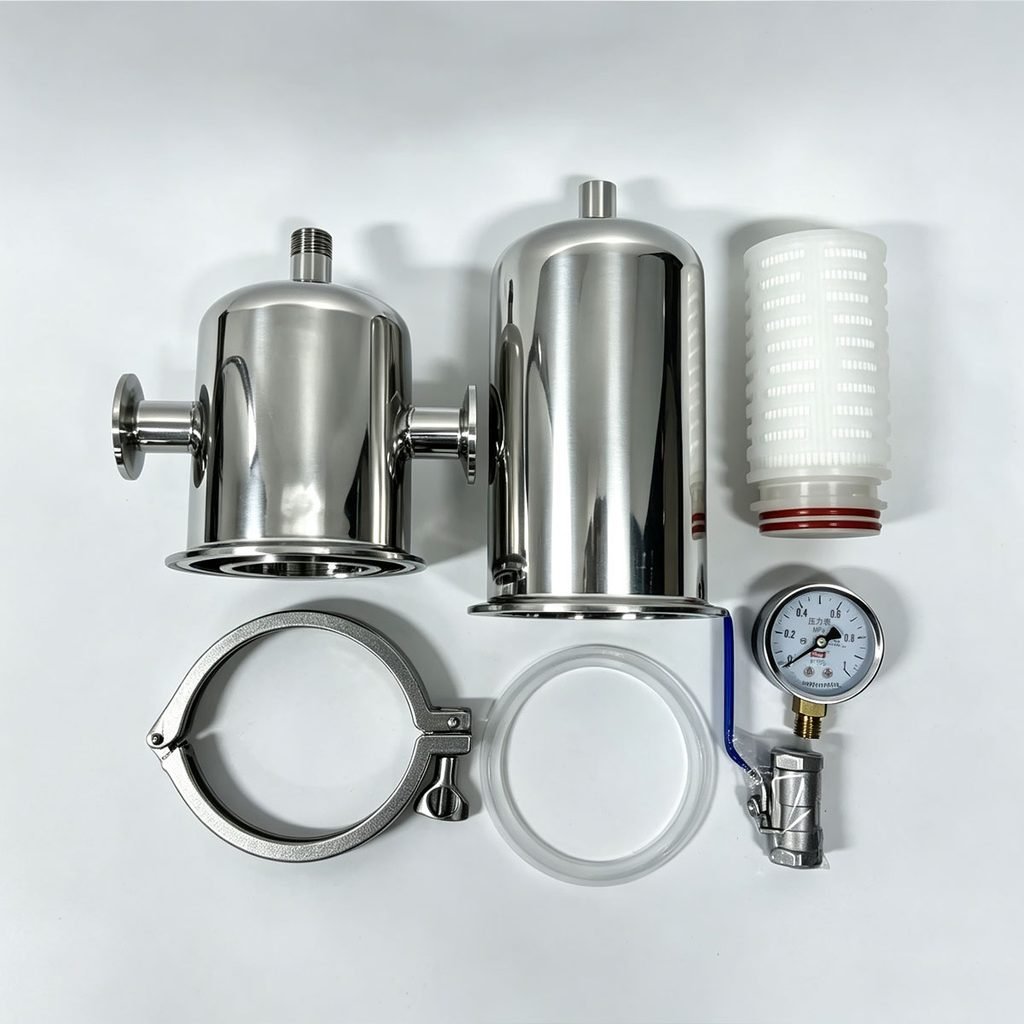
3. Sanitary Cartridge Filter Housings
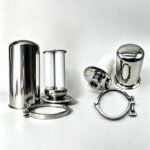
Cartridge filter housings are designed to hold replaceable filter cartridges.
Unlike a simple mesh strainer, a cartridge filter housing can be used when a finer or more controlled filtration process is required.
Typical applications include:
- Process liquid filtration
- Clean air and process gas filtration
- Pre-filtration
- Pharmaceutical processing
- Food and beverage processing
- Fermentation systems
The correct cartridge size, filtration rating and housing configuration should be selected according to the actual process requirements.
304 vs. 316L Stainless Steel
Material selection is another important consideration.
304 stainless steel is widely used for general sanitary processing applications because it provides good corrosion resistance, mechanical strength and cost efficiency.
316L stainless steel provides higher corrosion resistance and is often selected for applications involving more aggressive process fluids or where additional corrosion resistance is required.
The appropriate material depends on the process medium, temperature, cleaning chemicals and applicable industry requirements.
When in doubt, the process conditions should be reviewed before selecting the stainless steel grade.
Why Connection Type Matters
A sanitary filter or strainer is only useful when it can be properly integrated into the process piping system.
Tri-Clamp connections are commonly used in hygienic processing because they allow components to be connected and disconnected relatively quickly.
When choosing a sanitary filter or strainer, confirm:
- Tube outside diameter
- Connection standard
- Ferrule size
- Clamp size
- Gasket compatibility
- Installation direction
Incorrect connection dimensions can cause installation problems even when the filtration component itself is suitable.
How to Choose the Right Mesh Size
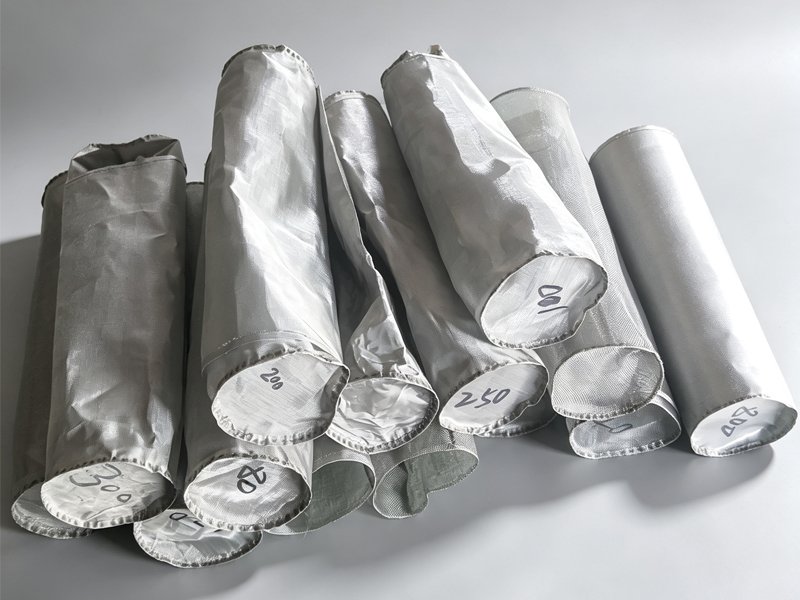
Mesh size is one of the most important specifications for a sanitary strainer.
A smaller opening provides finer particle retention, but it can also increase pressure drop and may require more frequent cleaning.
A larger opening allows higher flow with less resistance but provides less particle removal.
Therefore, the correct mesh size should not simply be chosen based on the smallest possible opening.
Consider:
- The size of particles that must be removed.
- Required flow rate.
- Allowable pressure drop.
- Expected amount of contamination.
- Cleaning frequency.
- Protection requirements for downstream equipment.
The goal is to achieve the required particle removal while maintaining suitable process performance.
Consider Cleaning and Maintenance
Sanitary processing equipment must be designed with cleaning and maintenance in mind.
A removable screen or filter element can make inspection and cleaning easier. The housing should also be suitable for the intended cleaning method and process conditions.
For systems using CIP, the compatibility of the component with the cleaning process should be considered before installation.
Regular inspection is particularly important when the strainer is protecting sensitive equipment such as pumps, valves or downstream filtration systems.
How to Select the Right Sanitary Filter or Strainer
Before ordering a sanitary filtration component, prepare the following information:
Process Medium
Specify whether the application involves water, food products, beverages, chemicals, air, gas or another process medium.
Required Filtration Level
Determine the approximate particle size that needs to be removed.
Flow Rate
The required flow rate helps determine the appropriate connection size and filtration configuration.
Stainless Steel Grade
Select 304 or 316L stainless steel according to the process environment and corrosion requirements.
Connection Type
Confirm whether the system uses Tri-Clamp or another sanitary connection standard.
Operating Conditions
Where applicable, provide:
- Operating pressure
- Operating temperature
- Cleaning temperature
- Cleaning chemicals
- Continuous or intermittent operation
Providing these details makes it easier to select a suitable configuration.

Final Considerations
Choosing a sanitary stainless steel filter or strainer is not simply a matter of selecting the smallest mesh size or the largest available connection.
A suitable component should match the process medium, filtration requirement, flow rate, connection standard, material and cleaning method.
For general particle removal and equipment protection, a sanitary inline strainer or Y-strainer may be appropriate. For finer filtration requirements, a sanitary cartridge filter housing may provide a more suitable solution.
Haoqintech supplies sanitary stainless steel filtration and straining components in 304 and 316L stainless steel for hygienic processing, including inline strainers, Y-strainers and cartridge filter housings.
For custom sizes, connections or configurations, contact Haoqintech with your process requirements and technical specifications.