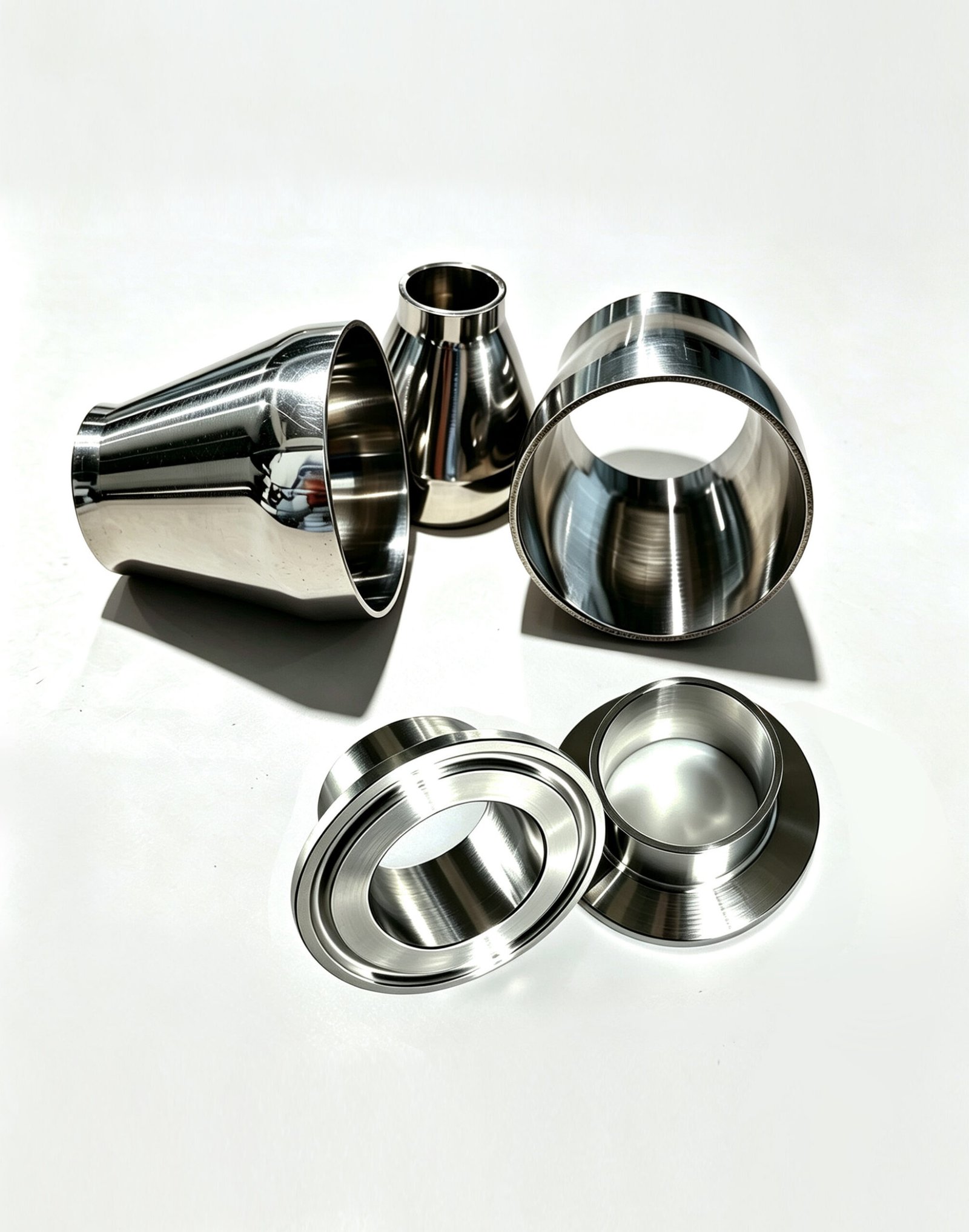
When designing a sanitary stainless steel piping system, different fittings are used to solve different engineering problems.
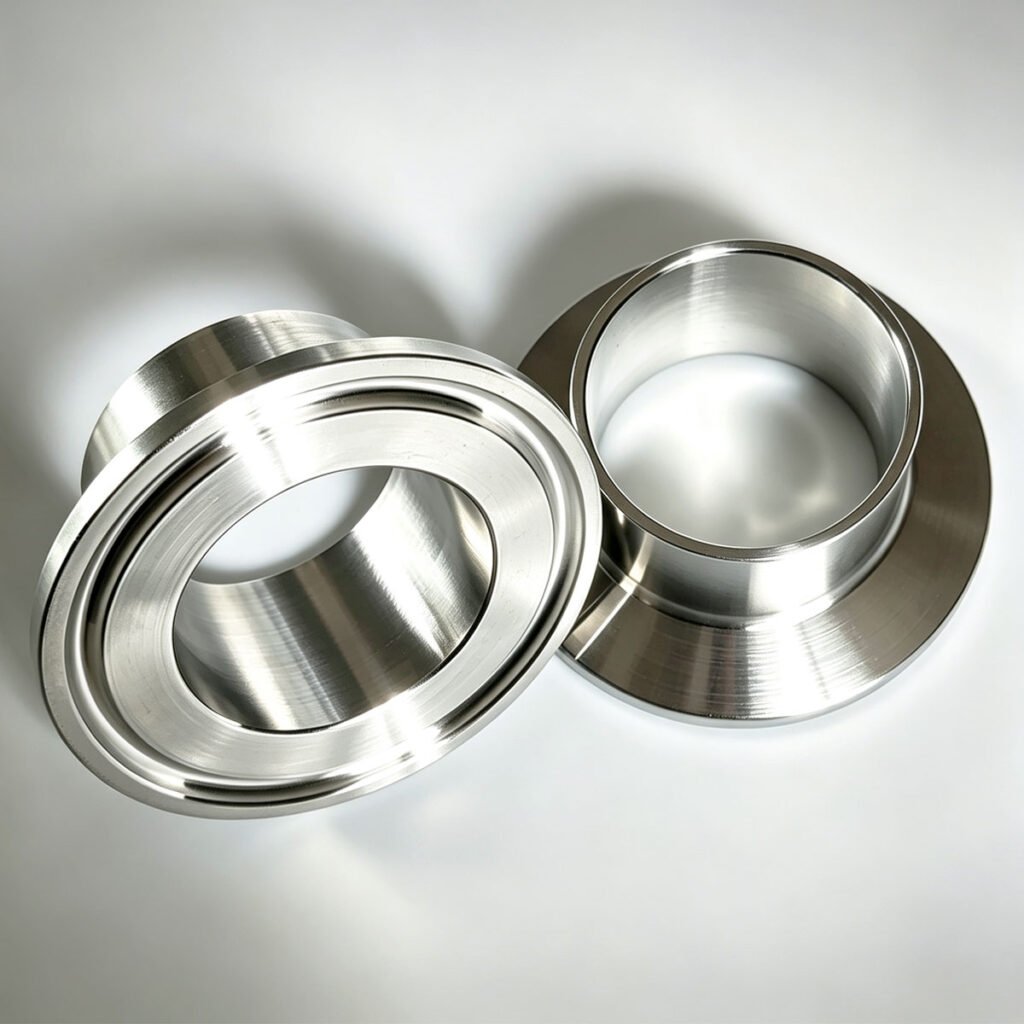
A sanitary weld ferrule is mainly used to create a hygienic, removable connection between piping and components such as valves, pumps, filters, tanks or other process equipment.
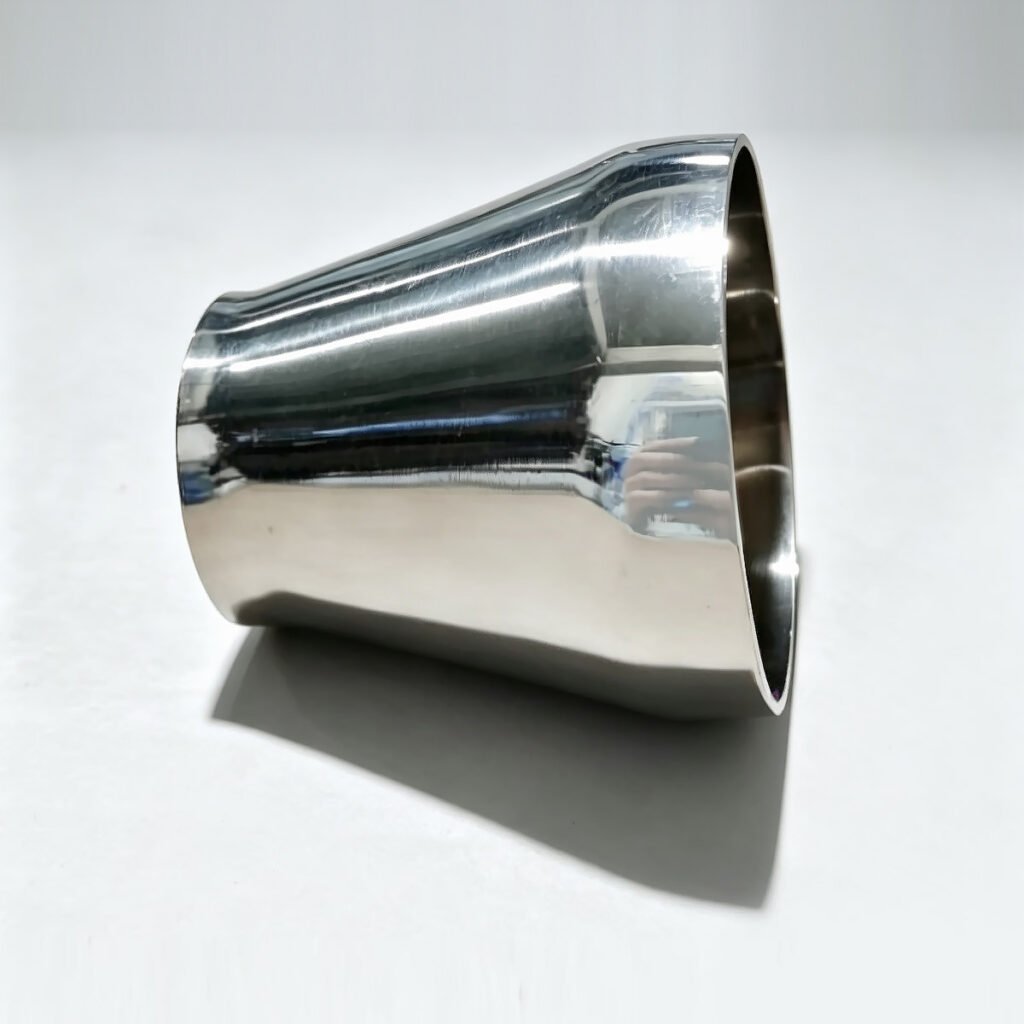
A concentric reducer, on the other hand, is used when the piping system needs to transition from one tube diameter to another while keeping the pipe centerline aligned.
Although both are commonly used in stainless steel sanitary piping systems, they serve different purposes.
Understanding when to use each fitting can help engineers, installers and equipment buyers select the appropriate component for their piping layout.
1. When Should You Use a Sanitary Weld Ferrule?
A sanitary weld ferrule is a good choice when the main requirement is to create a removable sanitary connection.
The ferrule is welded to the end of a stainless steel tube or process component. A compatible gasket and Tri-Clamp then create the final connection.
This configuration allows the connected equipment to be assembled and disassembled more easily than a permanently welded connection.
Typical applications include:
- Connecting sanitary pipes to valves
- Connecting pipes to pumps
- Connecting filter housings to process lines
- Connecting tanks to sanitary piping
- Creating removable equipment connections
- Applications requiring regular inspection or maintenance
- Food and beverage processing systems
- Dairy processing equipment
- Brewery and pilot processing systems
- Hygienic pharmaceutical or bioprocessing equipment
For example, if a sanitary valve needs to be removed for maintenance, a Tri-Clamp connection makes the process much easier.
The ferrule itself is welded to the pipe, while the Tri-Clamp connection allows the downstream component to be disconnected.
In simple terms:
Choose a sanitary weld ferrule when your main requirement is a removable sanitary connection.
Haoqintech’s 304 SS Sanitary Tri-Clamp Weld Ferrule is designed for sanitary piping and equipment connections and is available for different tube OD requirements. The product uses a butt-weld connection and can be used with compatible Tri-Clamp components.
[View the 304 SS Sanitary Tri-Clamp Weld Ferrule →]
2. When Should You Use a Sanitary Concentric Reducer?
A sanitary concentric reducer solves a different problem.
Instead of creating a removable connection point, its primary function is to connect two different tube diameters.
For example, a sanitary piping system may need to transition from a larger process line to a smaller line:
2″ tube → 1.5″ tube
or:
1.5″ tube → 1″ tube
A concentric reducer provides this transition while keeping the centerline of the two tubes aligned.
This can be useful when designing compact and organized sanitary piping layouts.
Typical applications include:
- Connecting two different sanitary tube sizes
- Reducing the diameter of a process line
- Connecting larger process piping to smaller equipment connections
- Creating a centered transition between pipe sizes
- Building welded sanitary piping assemblies
- Food and beverage processing systems
- Dairy and liquid processing equipment
- Hygienic fluid transfer systems
For example, imagine a process tank has a larger outlet, but the downstream process line uses a smaller tube.
In this situation, the problem is not how to make the connection removable.
The problem is:
How do I transition from one tube diameter to another?
A concentric reducer is designed for this type of application.
In simple terms:
Choose a sanitary concentric reducer when your main requirement is to change the tube diameter.
3. Weld Ferrule vs. Concentric Reducer: What’s the Difference?
The easiest way to understand the difference is to look at the problem each fitting solves.
| Requirement | Sanitary Weld Ferrule | Sanitary Concentric Reducer |
|---|---|---|
| Create a removable connection | Yes | Not the primary purpose |
| Connect different tube diameters | No | Yes |
| Used with Tri-Clamp connections | Yes | Depends on system design |
| Welded to sanitary tubing | Yes | Yes |
| Main function | Create a sanitary connection point | Change tube diameter |
| Typical use | Valve, pump, tank, filter connection | Pipe size transition |
| Centerline transition | Not applicable | Yes |
| Useful for maintenance access | Yes | Not its primary function |
The important point is that these fittings are not simply alternatives to each other.
They are designed for different jobs.
4. Choose a Weld Ferrule If You Need a Removable Connection
Ask yourself:
Will this connection need to be disconnected regularly?
If the answer is yes, a sanitary weld ferrule with a compatible Tri-Clamp connection may be appropriate.
For example:
Sanitary pipe → Weld Ferrule → Gasket → Clamp → Valve
This type of connection can make maintenance, cleaning, inspection and equipment replacement more convenient.
Tri-Clamp systems are particularly useful in sanitary processing because the connection can be released without cutting the pipe.
This makes them common around components that may need to be removed or serviced.
Typical examples
A weld ferrule may be appropriate when connecting:
- A sanitary valve
- A filter housing
- A pump
- A tank outlet
- A sampling point
- Other removable process equipment
Haoqintech’s current Weld Ferrule product page lists applications including sanitary piping systems, tank outlets, food processing pipelines, beverage transfer systems and dairy applications.
5. Choose a Concentric Reducer If You Need to Change Pipe Size
Now ask a different question:
Do I need to connect two different tube diameters?
If yes, a sanitary reducer is usually the type of fitting to consider.
For example:
Large tube → Concentric Reducer → Smaller tube
The reducer provides a gradual transition between the two tube sizes while maintaining a common centerline.
This is particularly useful when the upstream and downstream portions of a sanitary process system use different tube sizes.
Typical examples
A concentric reducer can be considered for:
- Process line size reduction
- Equipment outlet transitions
- Connecting different tube OD sizes
- Compact sanitary piping layouts
- Welded stainless steel process lines
The exact reducer size should be selected according to the actual tube outside diameters and the requirements of the process piping system.
6. Can You Use Both in the Same Sanitary Piping System?
Yes.
In fact, a sanitary piping system may use both types of fittings in different locations.
For example:
Tank outlet → Weld Ferrule → Tri-Clamp Valve → Sanitary Pipe → Concentric Reducer → Smaller Process Line
In this example, the two fittings perform completely different functions.
The weld ferrule provides a removable Tri-Clamp connection.
The concentric reducer changes the tube diameter.
This is why selecting sanitary fittings should be based on the function required at each connection point rather than simply choosing one type of fitting for the entire system.
7. A Simple Way to Choose the Right Fitting
When selecting between these two sanitary fittings, start with the actual requirement.
Choose a sanitary weld ferrule when:
- You need a removable connection
- The connection is used with a Tri-Clamp system
- The connected component may require maintenance
- You are connecting a pipe to a valve, pump, filter or tank
- Fast assembly and disassembly are important
Choose a concentric reducer when:
- You need to connect different tube diameters
- The piping system requires a diameter transition
- The two tubes should remain centered
- You are designing a welded sanitary piping assembly
- The main requirement is changing pipe size rather than creating a removable connection
If you need both functions, both fittings can be used in different sections of the same process system.
8. What Information Should You Confirm Before Ordering?
Before selecting a sanitary fitting, it is useful to confirm several basic details.
For a weld ferrule:
- Stainless steel grade
- Tube outside diameter
- Tri-Clamp size
- Connection standard
- Required surface finish
- Whether the fitting will be welded to tubing or equipment
- Application and process requirements
For a concentric reducer:
- Large tube outside diameter
- Small tube outside diameter
- Stainless steel grade
- Connection/welding requirements
- Required surface finish
- Process application
Providing these details can help avoid selecting a fitting with the wrong connection size.
9. Final Takeaway
A sanitary weld ferrule and a concentric reducer may both appear in the same stainless steel piping system, but they solve different problems.
Use a sanitary weld ferrule when you need a removable sanitary connection.
Use a concentric reducer when you need to transition between different tube diameters.
The choice becomes much easier when you first identify the actual function required at the connection point.
If you are unsure which sanitary fitting is suitable for your application, provide the tube OD, connection type, material requirement and application. Haoqintech can help confirm the appropriate fitting and size for your sanitary piping system.
Related Products
- 304 SS Sanitary Tri-Clamp Weld Ferrule
- 304 SS Sanitary Heavy-Duty Tri-Clamp
- 304 SS Sanitary Tri-Clamp Female Thread Adapter