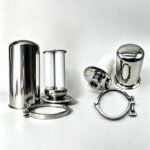
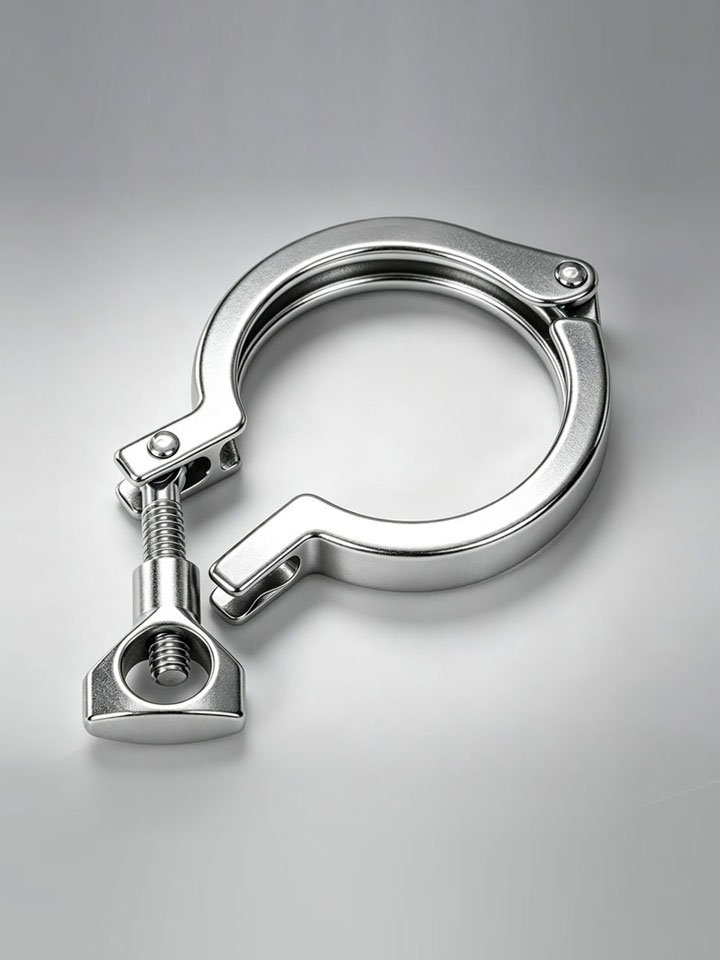
When building or maintaining a hygienic processing system, choosing the right sanitary Tri-Clamp is essential for maintaining a secure, leak-free and cleanable connection.
Tri-Clamps, also known as sanitary clamps or Tri-Clover-style clamps, are widely used in food, beverage, dairy, pharmaceutical, biotechnology and other hygienic processing applications.
Selecting the wrong clamp size, material, gasket or connection type can result in leakage, poor sealing, contamination risks and unnecessary maintenance or downtime.
This guide explains the key factors to consider when selecting a sanitary Tri-Clamp for your process system.
1. Understand the Basic Components of a Tri-Clamp Connection
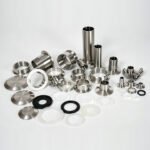
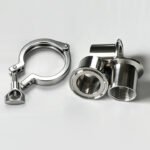
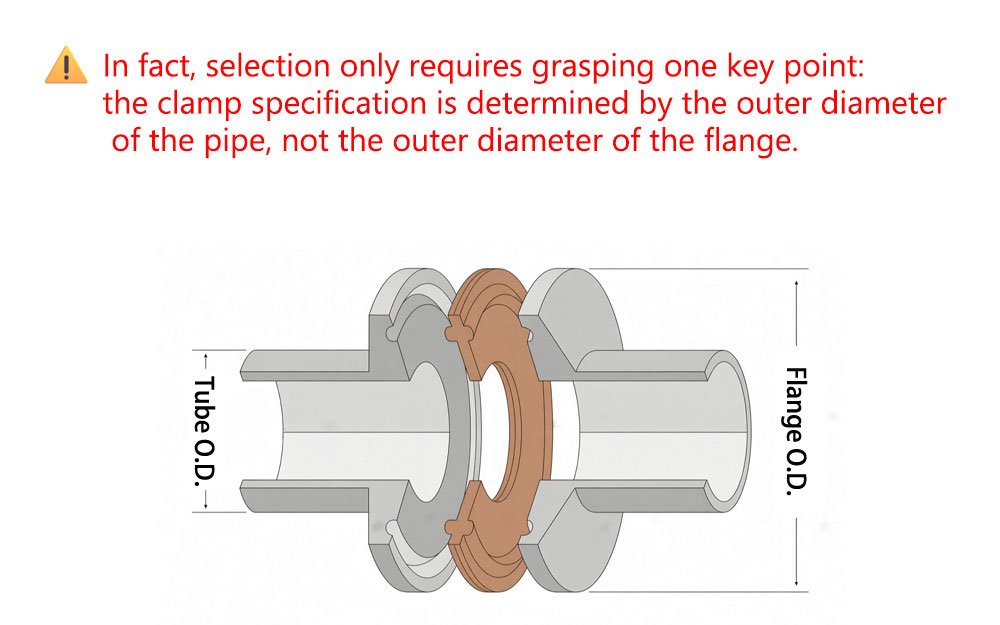
A typical Tri-Clamp connection consists of three main components:
- Two sanitary ferrules
- One sanitary gasket
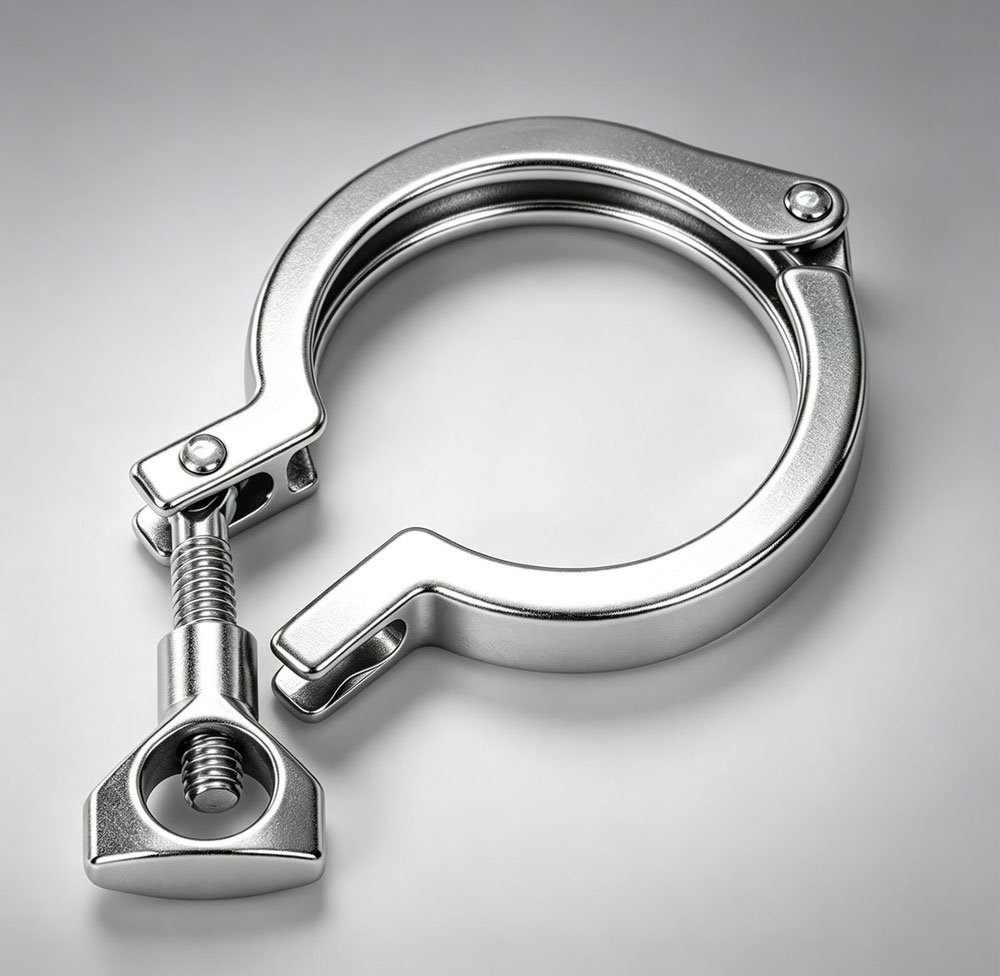
- One Tri-Clamp
The clamp applies compression to the gasket between the two ferrule faces, creating a secure and hygienic seal.
For reliable performance, all three components must be compatible in terms of size, connection standard, material and application requirements.
2. Choose the Correct Tri-Clamp Size
Sanitary Tri-Clamp sizes are commonly available in sizes such as:
| 1/2″ | 3/4″ | 1″ | 1.5″ | 2″ | 2.5″ | 3″ | 4″ |
However, selecting the correct size is not simply a matter of choosing the nominal tube size.
Before ordering, confirm the dimensions of your existing ferrules and tubing, including the applicable sanitary connection standard.
The clamp must match the ferrule flange dimensions correctly. A mismatched clamp can result in poor gasket compression, leakage or an unreliable connection.
Tip: If you are replacing an existing clamp, checking the ferrule dimensions is often the safest way to confirm the correct size.
3. Select the Right Stainless Steel Material
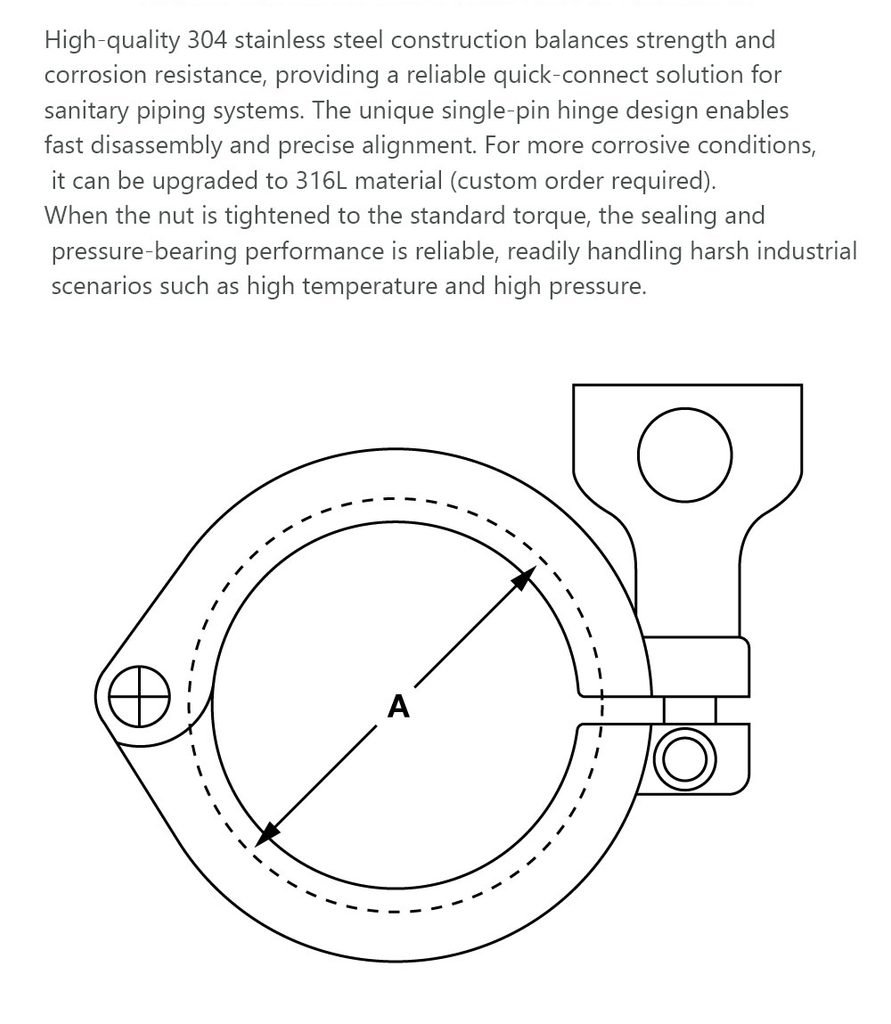
For hygienic processing systems, 304 and 316L stainless steel are the most common material choices.
304 Stainless Steel
304 stainless steel offers good corrosion resistance and is a cost-effective choice for many general food, beverage and sanitary processing applications.
It is commonly used where the process environment is relatively mild and extreme chemical or chloride resistance is not required.
316L Stainless Steel
316L stainless steel provides improved corrosion resistance, particularly in environments involving chlorides or more aggressive cleaning conditions.
It is commonly selected for pharmaceutical, biotechnology, high-purity and more demanding hygienic applications.
When choosing between 304 and 316L, consider the process media, cleaning chemicals, temperature and overall hygiene requirements.
4. Consider Pressure and Temperature Requirements
The clamp should be suitable for the operating conditions of your process system.
Before selecting a Tri-Clamp, consider:
- Maximum working pressure
- Operating temperature
- Cleaning temperature
- Steam or SIP conditions
- Gasket temperature limitations
- Frequency of connection and disconnection
Standard clamps may be suitable for many normal sanitary applications, while heavier-duty designs may be more appropriate for higher-pressure or demanding process conditions.
Always evaluate the complete connection system rather than the clamp alone, because the pressure and temperature capability also depends on the ferrule and gasket.
5. Choose the Correct Gasket Material
The gasket plays a critical role in maintaining a sanitary and leak-free connection.
Common sanitary gasket materials include:
- Silicone – commonly used for food and beverage applications and a wide temperature range
- EPDM – good resistance to water, steam and many cleaning conditions
- PTFE – excellent chemical resistance and suitable for demanding chemical environments
- FKM (Viton) – useful for applications requiring resistance to oils, chemicals and elevated temperatures
The correct gasket should be selected based on:
- Process media
- Operating temperature
- Cleaning chemicals
- Pressure
- Regulatory or hygienic requirements
A high-quality clamp cannot compensate for an incorrectly selected gasket.
6. Single-Pin, Double-Pin and High-Pressure Clamps
Different Tri-Clamp designs are available for different applications.
Single-Pin Tri-Clamps
Single-pin clamps are commonly used for standard sanitary connections where frequent assembly and disassembly are required.
They are simple, economical and suitable for many general food and beverage applications.
Double-Pin Tri-Clamps
Double-pin designs can provide more controlled and consistent compression and are often selected when additional connection reliability is required.
They may be suitable for more demanding process conditions or larger sanitary connections.
High-Pressure Tri-Clamps
Heavy-duty or high-pressure clamp designs are intended for applications where higher mechanical loads or pressure requirements must be considered.
The appropriate design should always be selected according to the actual operating conditions of the system.
7. Consider Surface Finish and Hygienic Design
Surface finish and hygienic design are important factors in food, dairy and pharmaceutical processing systems.
Look for sanitary clamps with:
- Smooth stainless steel surfaces
- Minimal crevices
- Easy-to-clean geometry
- Corrosion-resistant materials
- Properly matched sanitary components
A well-designed connection helps support effective cleaning and reduces areas where product residue or contaminants could accumulate.
8. Check the Connection Standard
Before ordering a Tri-Clamp, confirm that the clamp, ferrules and other components use the same connection standard.
Depending on the application and market, sanitary components may be manufactured according to different dimensional standards and requirements.
Common considerations include ASME BPE, 3-A sanitary requirements and other applicable sanitary standards.
Do not assume that two components with the same nominal size will automatically be interchangeable. Always verify the actual dimensions and standard before purchasing.
Final Tri-Clamp Selection Checklist
Before ordering a sanitary Tri-Clamp, confirm:
- Correct ferrule and clamp size
- Stainless steel material: 304 or 316L
- Applicable connection standard
- Maximum working pressure
- Operating and cleaning temperature
- Compatible gasket material
- Required clamp design
- Surface finish and hygienic requirements
- Application and regulatory requirements
If you are unsure which clamp, ferrule or gasket is suitable for your system, providing the tube size, connection dimensions, material requirements and operating conditions can help ensure the correct selection.
Need Help Selecting the Right Sanitary Tri-Clamp?
Haoqintech supplies sanitary stainless steel Tri-Clamps, ferrules, gaskets and related hygienic process components for food, beverage, dairy, pharmaceutical and industrial applications.
As a factory-direct supplier, we can help you select compatible components based on your system requirements, application and connection dimensions.
Contact our team for technical support, product recommendations or a factory-direct quotation.