Introduction
Liquid mushroom spawn production does not end when fermentation is completed. For commercial mushroom growers, one of the next important steps is transferring the prepared liquid culture into substrate bags.
This stage connects liquid spawn production with downstream mushroom cultivation. Before reaching the substrate bags, the culture needs to pass through a properly planned liquid spawn transfer system that supports consistent delivery and hygienic operation.
For farms planning to use liquid spawn on a commercial scale, the inoculation arrangement should be considered as part of the overall production system rather than as an isolated piece of equipment.
1. Understanding the Liquid Spawn Inoculation Process
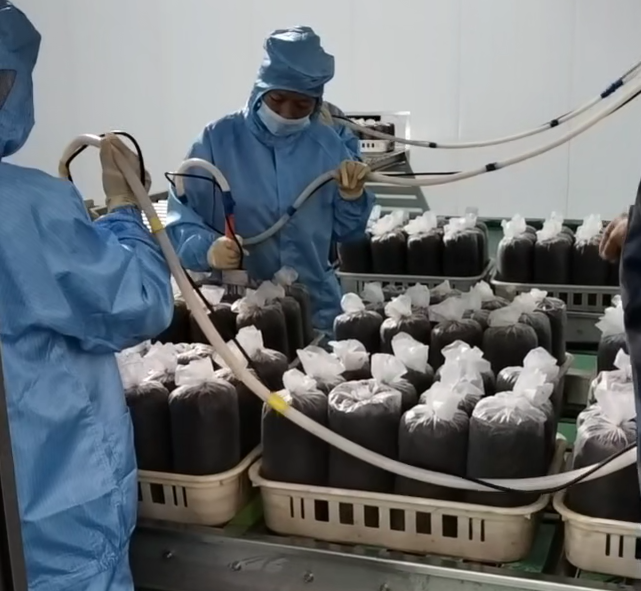
After fermentation, liquid mushroom spawn needs to be delivered to the prepared substrate bags or other suitable cultivation containers.
A typical process may involve:
- Completing the liquid culture production cycle.
- Confirming that the culture is suitable for the intended application.
- Preparing the transfer and dosing equipment.
- Connecting the liquid spawn supply to the inoculation station.
- Delivering a controlled quantity of liquid culture into each bag.
- Completing the bag closure and moving the inoculated bags to the next production stage.
The actual arrangement depends on mushroom species, substrate characteristics, production capacity and the selected inoculation method.
The objective is to maintain consistency between batches while reducing unnecessary manual handling.
2. Why Controlled Dosing Matters
The quantity of liquid spawn delivered to each substrate bag is an important process consideration.
If the dosing arrangement is inconsistent, different bags may receive different quantities of liquid culture. This can make subsequent cultivation results more difficult to compare and manage.
When planning a dosing system, several factors should be considered:
- Target dosing volume for the selected mushroom species and substrate.
- Consistency between individual bags.
- Repeatability during continuous or batch production.
- Compatibility with the liquid spawn transfer system.
- Ease of cleaning and preparation between production cycles.
The appropriate dosing quantity should be established through process trials and confirmed according to the cultivation requirements.
A dosing system should therefore provide sufficient adjustment flexibility rather than rely on one fixed setting for every application.
For projects requiring coordinated liquid culture production and delivery, the dosing arrangement should also be considered alongside the integrated liquid mushroom spawn fermentation system rather than selected as an independent component.
3. Choosing a Suitable Liquid Spawn Dosing Arrangement
The dosing arrangement should match the production scale and the way substrate bags are handled.
Manual or Semi-Automatic Dosing
For smaller production facilities, manual or semi-automatic arrangements may be suitable.
Operators can control the delivery process using a dedicated dosing device, provided that the working procedure is clearly defined and repeatable.
This approach may offer a relatively simple starting point for farms developing their liquid spawn production capability.
Controlled Dosing Systems
For larger or more consistent production requirements, a controlled dosing arrangement can help coordinate liquid delivery.
Important design considerations include:
- Adjustable dosing volume.
- Repeatable delivery cycles.
- Stable liquid supply.
- Suitable product-contact materials.
- Easy operation and cleaning.
- Compatibility with the inoculation station.
The system should be selected according to the required production rhythm rather than simply choosing the most automated equipment available.
4. Designing the Connection Between the Fermentation Tank and Inoculation Station
The connection between the fermentation tank and the inoculation equipment is an important engineering consideration.
A poorly planned transfer route may introduce unnecessary handling, difficult-to-clean sections or inconvenient connection points.
A practical arrangement should consider:
Transfer route
Keep the route as direct and accessible as the process allows. Avoid unnecessary bends and complicated connections.
Connection compatibility
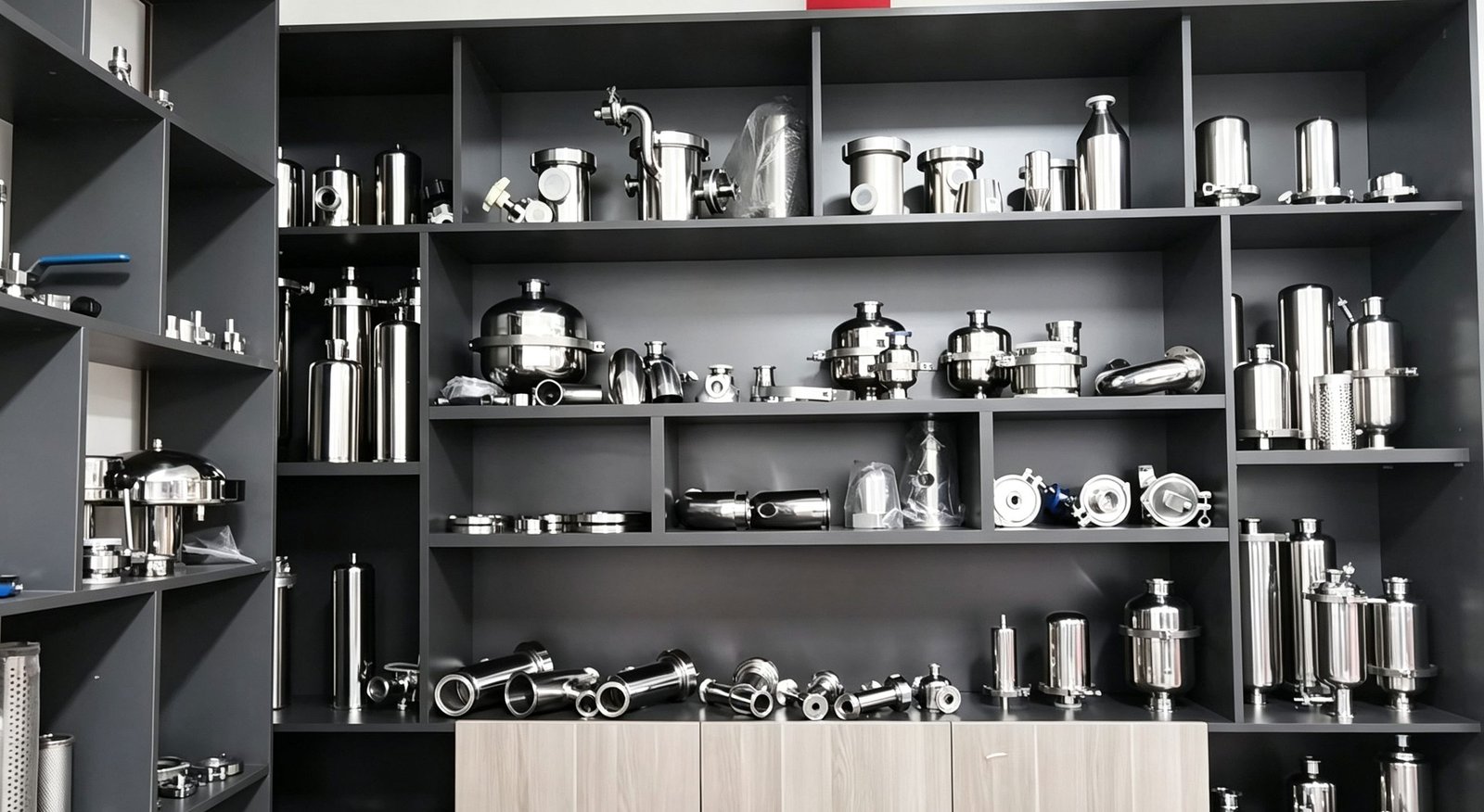
Confirm that the tank outlet, transfer hose, valves and dosing equipment use compatible connection dimensions and suitable product-contact materials.
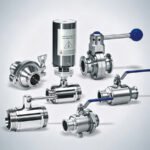
For hygienic piping applications, Tri-Clamp sanitary fittings are commonly considered where detachable connections are needed for inspection, cleaning and maintenance.
Hygienic operation
The transfer arrangement should be designed around the required cleaning, sterilization and protection procedures for the liquid culture.
Operator access
Operators should be able to inspect connections, prepare the system and carry out routine maintenance without unnecessary dismantling.
For systems using pressure-assisted transfer, the dosing equipment must also be compatible with the selected operating arrangement.
5. Coordinating Inoculation with Substrate Bag Preparation
Liquid spawn inoculation should not be planned independently of substrate preparation.
The substrate bags need to be ready for the inoculation stage, and their handling method should match the available inoculation equipment.
Several factors influence this coordination:
- Bag dimensions and filling consistency.
- Bag opening and closure arrangements.
- Positioning of bags during inoculation.
- Number of bags processed per production cycle.
- Operator movement and material handling.
- Transfer of completed bags to the incubation area.
For a growing facility, the objective is to avoid creating a bottleneck between substrate preparation, inoculation and subsequent cultivation.
The production layout should allow these stages to work together without unnecessary movement of materials.
These downstream operations should be considered during the initial mushroom spawn production process planning so that substrate preparation, sterilization, inoculation and subsequent cultivation can be coordinated effectively.
6. Contamination Control During Liquid Spawn Inoculation
Contamination control remains important after the fermentation stage.
Even when the liquid culture has been prepared under controlled conditions, the downstream transfer and inoculation process still requires appropriate hygienic management.
Potential risk points include:
- Unprotected transfer connections.
- Improperly prepared dosing equipment.
- Inadequate cleaning between production cycles.
- Unnecessary exposure of product-contact components.
- Poor handling of bag openings and connection interfaces.
A practical system should establish clear preparation, cleaning and operating procedures.
The objective is not simply to purchase sterile or stainless-steel equipment, but to ensure that the complete transfer and inoculation arrangement supports the required hygienic conditions.
7. Planning for Different Production Scales
Not every mushroom farm needs a fully automated inoculation line from the beginning.
A smaller facility may begin with a relatively simple dosing arrangement, while a larger operation may require more coordinated equipment and material handling.
When planning the system, consider:
| Planning factor | Engineering consideration |
|---|---|
| Production capacity | Bags processed per batch or production period |
| Spawn supply | Available liquid culture and delivery stability |
| Dosing requirements | Target volume and adjustment flexibility |
| Bag configuration | Dimensions, opening and closure method |
| Labor arrangement | Manual, semi-automatic or automated handling |
| Future expansion | Ability to increase capacity without redesigning the entire process |
The final configuration should be based on the actual production workflow and future development plans.
8. Integrating Liquid Spawn Production with Downstream Cultivation
A complete liquid mushroom spawn project should consider more than the fermentation tank.
The equipment arrangement should also follow a practical liquid mushroom spawn production facility layout, taking into account the relationship between fermentation, transfer, inoculation and downstream operations.
The system may involve laboratory culture preparation, liquid medium preparation, sterilization, fermentation, liquid transfer, dosing equipment and downstream cultivation arrangements.
These stages need to be coordinated during the planning process.
For example, the selected fermentation capacity should be considered alongside the expected substrate bag demand and the operating schedule of the inoculation station.
This helps prevent a situation where the fermentation system produces more liquid culture than the downstream process can handle, or where the inoculation equipment becomes a production bottleneck.
Conclusion
Liquid mushroom spawn inoculation into substrate bags is an important connection between liquid culture production and commercial mushroom cultivation.
A suitable system should provide controlled dosing, hygienic transfer, repeatable operation and effective coordination with substrate bag handling.
The best solution is not necessarily the most complicated one. It is the configuration that matches the mushroom species, production requirements, available facilities and future expansion plans.
Haoqintech supports liquid mushroom spawn projects through system planning, equipment configuration, installation, commissioning and technical guidance. Each project can be evaluated according to its intended production process and operating requirements.
For farms considering an in-house liquid mushroom spawn production system, the inoculation method and downstream bag handling arrangement should be discussed during the initial project planning stage.