In commercial liquid mushroom spawn production, compressed air is an important part of the fermentation process. However, supplying air to a fermentation tank involves more than selecting an air compressor.
Before entering the vessel, compressed air may need to pass through several treatment stages to control moisture, oil aerosols, particles and potential microbial contamination.
The complete arrangement should therefore be considered as an integrated compressed air treatment and filtration system.
This article explains the main equipment stages, filtration requirements, installation considerations and maintenance practices involved in preparing compressed air for liquid mushroom spawn fermentation.
1. Why Does Compressed Air Need Treatment Before Fermentation?
Compressed air can carry different types of contaminants depending on the compressor, air intake conditions, distribution pipeline and maintenance condition.
Potential contaminants include:
- Solid particles from the air intake, compressor or piping
- Water droplets and accumulated condensate
- Oil aerosols from certain compressor systems
- Microorganisms introduced through the surrounding environment or contaminated equipment
- Contamination from poorly maintained downstream pipelines and connections
If these contaminants reach the fermentation vessel, they may increase the risk of process contamination or affect the reliability of the air supply.
The purpose of compressed air treatment is to reduce these risks before the air reaches the final filtration stage.
It is important to distinguish between general compressed air filtration and sterile air filtration. Removing particles, moisture or oil aerosols does not automatically mean that the air is suitable for direct introduction into a controlled fermentation process.
The complete treatment arrangement must be selected according to the required air quality, operating conditions and fermentation system design.
2. Main Stages of Compressed Air Treatment
A compressed air system for liquid mushroom spawn production may include several treatment stages. The exact configuration depends on the compressor type, required airflow, air quality and equipment arrangement.
Stage 1: Air Compressor
The air compressor provides the pressure required to supply air to the fermentation equipment.
When selecting a compressor, consider:
- Required airflow during fermentation
- Operating pressure
- Number and capacity of fermentation tanks
- Continuous or intermittent air demand
- Compressor type and potential oil carryover
Oil-lubricated compressors may require additional treatment to control oil contamination. Oil-free compressors also require appropriate moisture and particle management.
The compressor should be selected according to the actual demand of the production line rather than the capacity of an individual fermentation tank alone.
Stage 2: Cooling and Moisture Removal
Compressed air can contain water vapor. When the air cools, part of this moisture may condense into liquid water.
Excessive moisture can affect downstream filters, pipelines and other air treatment equipment.
Depending on the system configuration, moisture management may involve:
- Aftercoolers
- Moisture separators
- Air receivers
- Automatic condensate drains
- Refrigerated or desiccant air dryers
An aftercooler helps reduce the temperature of compressed air, allowing some moisture to condense. A moisture separator and drain arrangement then help remove the collected liquid.
Air dryers perform a different function: they reduce the remaining moisture content to the required level.
The appropriate dryer type depends on the required pressure dew point and operating conditions. Condensate drainage and dryer performance should also be checked during routine maintenance.
Stage 3: Preliminary Filtration
Preliminary filtration helps remove particles and other contaminants before the air reaches the final filtration stage.
Depending on the compressor and treatment arrangement, different filter grades may be used to control:
- Larger solid particles
- Fine particles
- Oil aerosols
The purpose of preliminary filtration is to reduce the contaminant load on downstream equipment and protect the final filter.
However, a general compressed air filter should not automatically be treated as a sterile air filter. Its filtration function and performance requirements are different.
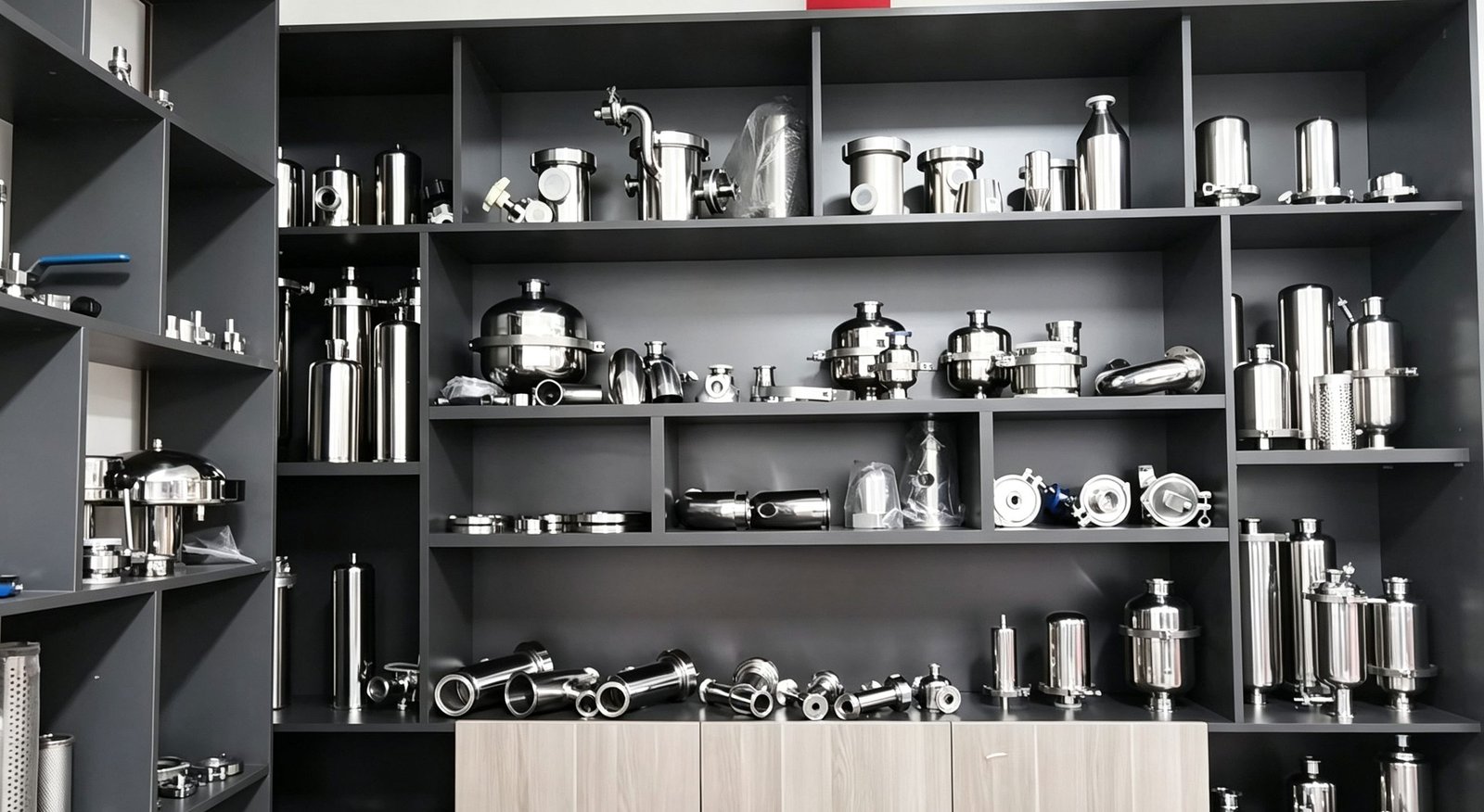
Stage 4: Final Sterile Air Filtration
The final sterile air filter provides the last filtration barrier before air enters the fermentation process.
This stage requires particular attention because the filter element, housing and installation arrangement must be suitable for the intended application.
Important selection considerations include:
- Required microbial-retention performance
- Airflow demand
- Operating pressure and temperature
- Compatibility with the intended sterilization method
- Filter housing and connection design
- Replacement and maintenance requirements
- Availability of suitable integrity-testing procedures
A filter should not be selected solely by its nominal pore size. Its suitability for the application should be supported by the manufacturer’s technical data and relevant validation information.
The housing, seals and filter element must also be compatible with the actual operating and sterilization conditions. Not every compressed air filter assembly is designed for in-place steam sterilization.
3. How Should the Final Sterile Air Filter Be Installed?
The installation position of the final filter affects system cleanliness, maintenance access and the condition of the downstream air supply.
In many fermentation applications, the final sterile filter is positioned downstream of the main compressed air treatment equipment and relatively close to the fermentation vessel.
This arrangement can help reduce the length of downstream piping that needs to be maintained under controlled hygienic conditions.
However, the exact location should be determined by the equipment layout, air treatment design and sterilization strategy.
Several points should be considered.
Keep downstream piping as short as practical.
Long pipelines create additional internal surfaces, joints and connections that must be considered when planning cleaning and sterilization.
Avoid unnecessary moisture accumulation.
The pipeline arrangement should consider drainage and avoid poorly designed low points where condensate may collect.
Provide sufficient maintenance access.
Operators should be able to inspect the housing, check connections and replace the filter element safely.
Confirm sterilization compatibility.
If steam sterilization is part of the process, the filter element, housing, seals and downstream piping must all be suitable for the specified conditions.
The installation arrangement should be reviewed before equipment fabrication and commissioning rather than decided only after the system has been assembled.
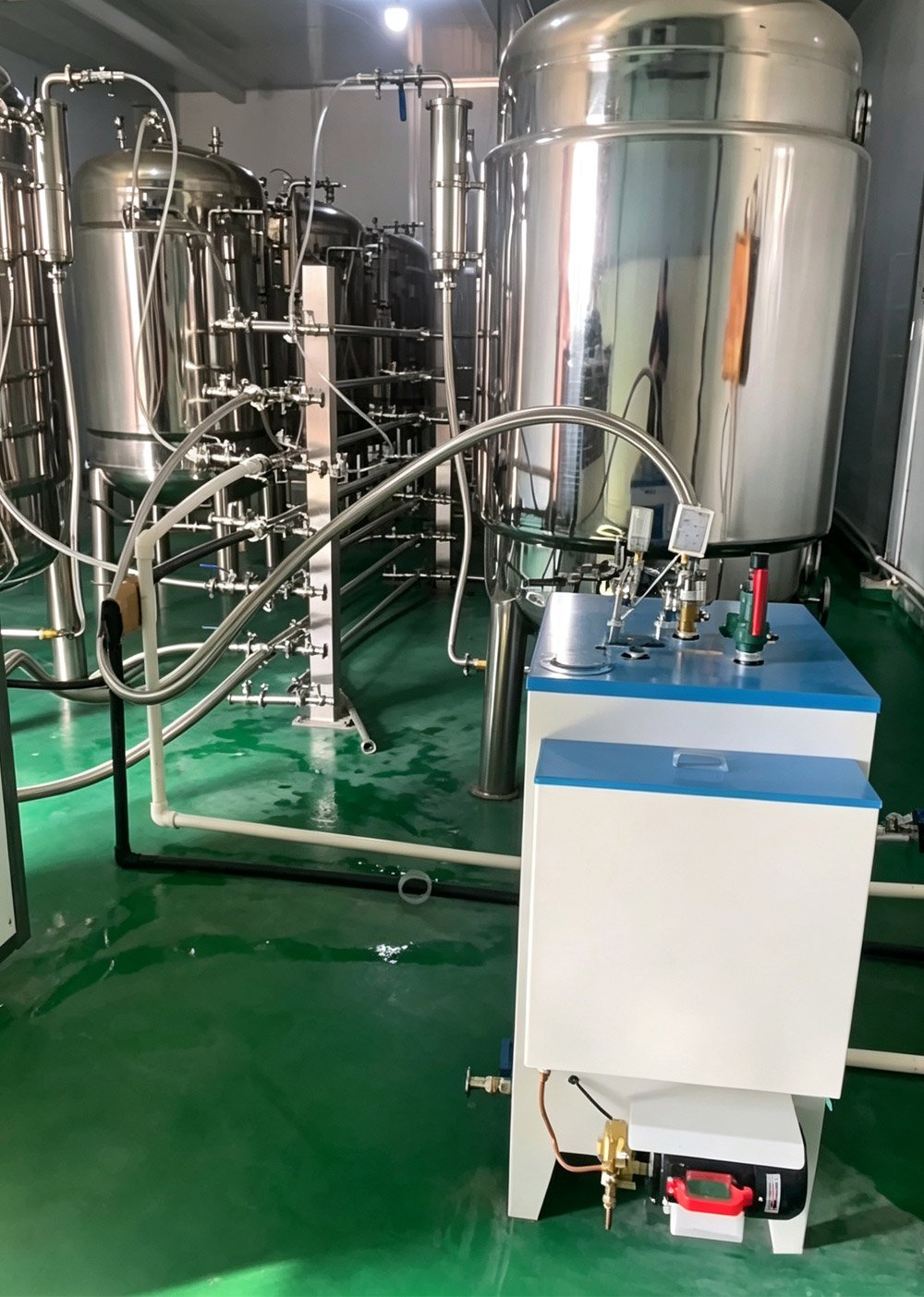
4. How Does the Air Filtration System Connect to the Fermentation Tank?
The compressed air treatment system and the fermentation tank are connected parts of the same process, but they perform different functions.
The air treatment system prepares the incoming air. The downstream air supply arrangement then delivers that air to the fermentation vessel.
A simplified process route may be represented as:
Air Compressor → Cooling and Moisture Removal → Preliminary Filtration → Air Drying and Further Treatment → Final Sterile Filtration → Air Supply Pipeline → Fermentation Tank
The actual order and combination of treatment equipment may vary depending on the compressor, required air quality and manufacturer’s recommendations.
For example, some systems may use different combinations of particulate and oil-removal filters before or after drying equipment.
The final arrangement should be confirmed through the complete system design.
It is also important to coordinate the air supply capacity with the fermentation process. A filter with suitable retention performance may still create an operational problem if its airflow capacity is insufficient for the required operating conditions.
For more information about how air is introduced into the fermentation vessel and supports liquid movement, see our guide to aeration in liquid mushroom spawn fermentation.
5. Common Problems in Compressed Air Filtration Systems
Even a properly selected filtration system can develop problems during operation.
Excessive Pressure Drop
A gradual increase in pressure drop may indicate filter loading, moisture accumulation or restrictions within the air supply system.
Operators should monitor pressure conditions according to the equipment manufacturer’s recommendations.
A sudden change may also indicate incorrect installation, a damaged element or another system fault. Pressure readings should therefore be evaluated together with operating conditions.
Moisture Reaching Downstream Filters
If condensate removal or air drying is inadequate, moisture may reach downstream filtration equipment.
This can affect filter performance and may shorten the service life of certain filter elements.
When repeated moisture problems occur, check the aftercooler, moisture separator, condensate drains and air dryer.
Incorrect Filter Installation
Incorrect installation can compromise sealing and filtration performance.
Before returning the system to service, confirm that:
- The correct filter element has been installed.
- Sealing components are properly positioned.
- Housing connections are secure.
- The airflow direction matches the equipment design.
- The assembly has been checked according to the manufacturer’s instructions.
Contamination After the Final Filter
A final filter cannot protect the process from contamination introduced downstream.
Poorly maintained pipelines, unsuitable connections, incorrect handling during filter replacement and inadequate sterilization procedures can all undermine the filtration barrier.
This is why downstream pipeline design and maintenance are just as important as filter selection.
6. Maintenance and Inspection Considerations
A compressed air treatment and sterile filtration system needs a planned inspection and maintenance routine.
The following items should be included in regular checks:
| Inspection item | What to check |
|---|---|
| Air compressor | Abnormal operation, oil carryover where applicable and air supply stability |
| Aftercooler and moisture separator | Cooling condition, condensate removal and drain function |
| Air dryer | Operating condition and moisture-control performance |
| Preliminary filters | Pressure drop and filter element condition |
| Final sterile filter | Operating pressure, integrity-testing requirements and replacement records |
| Filter housing | Seals, connections, corrosion and visible damage |
| Downstream pipeline | Leaks, accumulated moisture and connection condition |
Filter replacement should not be based only on a fixed calendar interval.
The replacement schedule should consider operating hours, pressure-drop trends, sterilization cycles, manufacturer recommendations and the results of any required integrity tests.
Where the final filter is intended to provide microbial retention, follow the manufacturer’s specified integrity-testing procedure and acceptance criteria.
After maintenance or filter replacement, the system should be returned to service using the established cleaning, sterilization and verification procedures.
7. Sterile Air Filtration vs. Tank Breather Filtration
Incoming sterile air filtration and tank breather filtration are related to contamination control, but they serve different functions.
Incoming sterile air filtration
- Treats compressed air before it enters the fermentation vessel.
- Forms part of the incoming air supply arrangement.
- Must be suitable for the required airflow and microbial-retention performance.
Tank breather filtration
- Is associated with the tank’s venting or exhaust arrangement.
- Supports controlled gas exchange as tank conditions change.
- Helps reduce the risk of external contamination entering through the vent.
These two systems should not be treated as interchangeable.
Their filter elements, housings, installation positions and operating requirements may differ.
For more information, see our article on tank breather filters in fermentation systems.
8. Planning Compressed Air Treatment for a Liquid Spawn Production Line
For a commercial liquid mushroom spawn production line, compressed air treatment should be planned together with the fermentation tanks, air supply arrangement and downstream process connections.
Before confirming the equipment configuration, project planners should review:
- The number and capacity of fermentation tanks
- Required airflow during operation
- Compressor type and air quality
- Moisture removal and drying requirements
- Preliminary and final filtration requirements
- Pipeline layout and connection design
- Sterilization and maintenance procedures
- Production scale and possible future expansion
A system designed around an individual filter may not provide the best result if the compressor, air treatment equipment, pipeline and fermentation vessels are not properly coordinated.
At Haoqintech, we support liquid mushroom spawn projects through equipment planning, fermentation system configuration, production line design, on-site installation, commissioning and technical guidance.
Our technical team can also assist with reviewing the compressed air supply and filtration arrangement as part of the complete fermentation system.
A reliable fermentation process starts with a properly coordinated air supply system—not just a single filter.
Frequently Asked Questions
Is a normal compressed air filter enough for liquid mushroom spawn fermentation?
Not necessarily. General compressed air filters may remove particles, moisture or oil aerosols, but they should not automatically be considered sterile filters. The final filtration stage must be suitable for the required microbial-retention performance.
Should the sterile air filter be installed before or after the air dryer?
The arrangement depends on the compressed air treatment design and the characteristics of the selected filter. Moisture removal is generally required before the final sterile filtration stage so that excessive condensate does not reach the final filter. The complete configuration should follow the equipment manufacturer’s recommendations.
Can a sterile air filter be sterilized with steam?
Only if the filter element, housing, seals and complete assembly are specifically designed for the intended steam sterilization conditions. Always follow the manufacturer’s temperature, pressure, duration and operating instructions.
Is a tank breather filter the same as an inlet sterile air filter?
No. An inlet sterile air filter treats compressed air supplied to the fermentation tank. A tank breather filter is used in the vessel’s venting arrangement. They perform different functions and should be selected separately.
How often should a sterile air filter be replaced?
There is no universal replacement interval. The schedule should be based on manufacturer recommendations, operating conditions, pressure-drop trends, sterilization cycles and integrity-test results where applicable.
Conclusion
Compressed air treatment is an important part of liquid mushroom spawn fermentation system design.
A reliable arrangement requires more than selecting a final filter. Compressor selection, moisture removal, preliminary filtration, final sterile filtration, downstream pipeline design, sterilization compatibility and maintenance procedures all need to be considered together.
When these elements are planned as one coordinated system, producers can better manage contamination risks and maintain a more reliable air supply for fermentation.