Aeration is an important part of liquid mushroom spawn production. During fermentation, the culture requires an appropriate oxygen supply and suitable conditions for the growth of mycelium. The way air is prepared, introduced, and distributed inside the fermentation tank can therefore influence the operation of the entire production system.
In a liquid mushroom spawn fermentation system, compressed air is not simply supplied directly to the tank. It first passes through a high-temperature air sterilization unit before entering the bottom of the fermentation vessel.
Once inside the tank, the rising air bubbles help move the culture liquid while supplying oxygen. This creates an air-driven mixing process without requiring a conventional mechanical agitator.
Understanding this arrangement helps buyers evaluate the relationship between the fermentation tank, air treatment equipment, and the supporting systems required for reliable liquid spawn production.
1. Why Is Aeration Important in Liquid Mushroom Spawn Fermentation?
Liquid mushroom spawn is produced by cultivating fungal mycelium in a liquid nutrient medium under controlled conditions.
Unlike solid spawn production, liquid culture relies on a liquid environment in which oxygen availability and the movement of the culture medium are important considerations.
Aeration serves two main purposes.
Oxygen supply
The air introduced into the fermentation tank provides oxygen to the culture. Adequate oxygen availability is an important consideration for aerobic fungal growth.
Liquid movement
As air bubbles rise through the culture medium, they create movement within the liquid. This helps distribute air through the vessel and contributes to the movement of the culture.
These functions are related, but they are not identical. Supplying air does not automatically guarantee that oxygen transfer and liquid movement will be suitable under every operating condition.
The air supply arrangement should therefore be considered as part of the overall fermentation system rather than as an isolated accessory.
2. Why Must Compressed Air Be Treated Before Entering the Tank?
Air entering a fermentation vessel must be considered from both an operational and contamination-control perspective.
Compressed air may carry unwanted particles or microorganisms depending on its source and treatment. Introducing untreated air into a sterile fermentation environment can create a contamination risk.
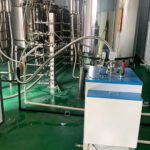
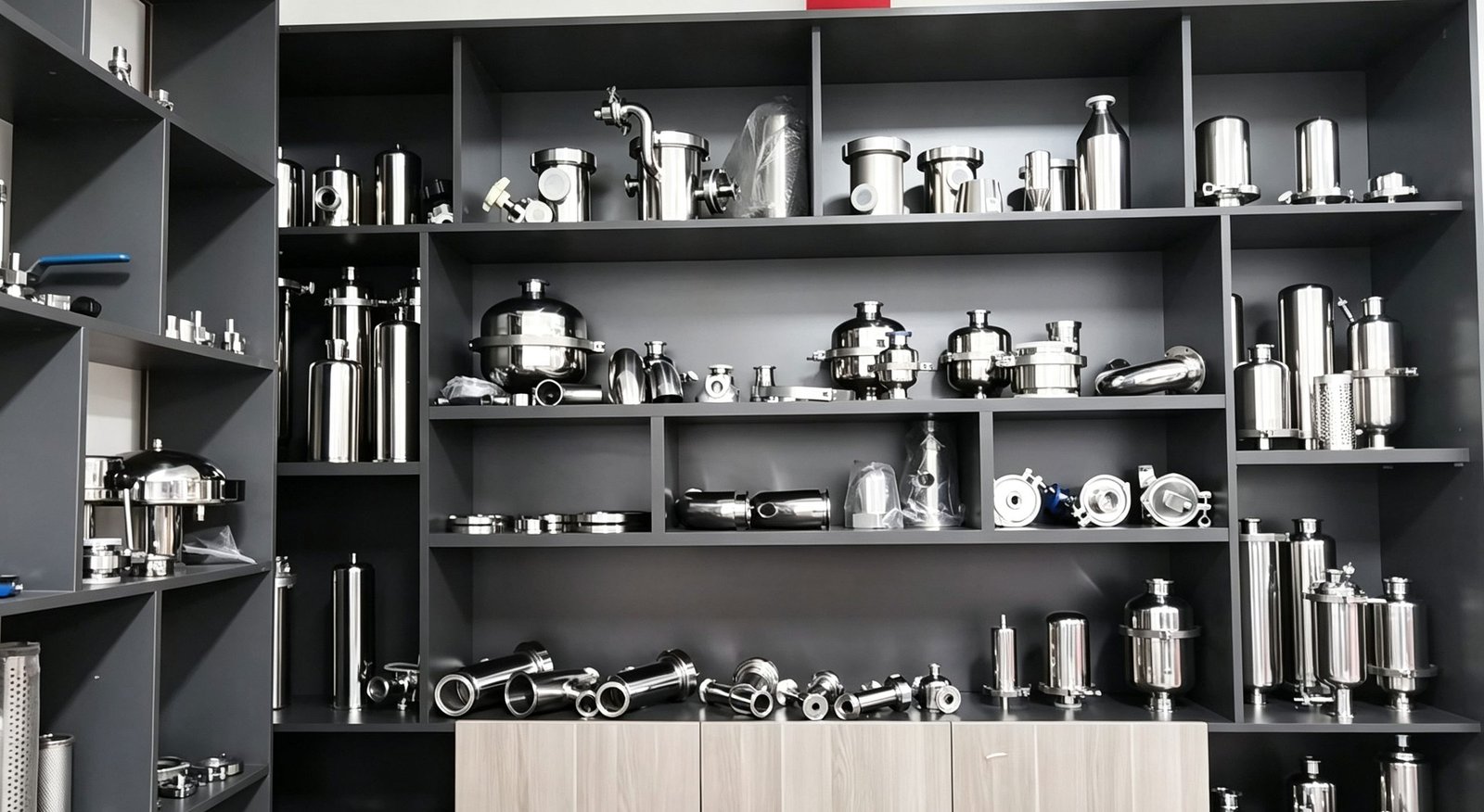
In the system arrangement used for our liquid spawn projects, compressed air passes through a high-temperature air sterilization unit before being introduced into the fermentation tank.
This treatment step is intended to reduce the risk of introducing unwanted microorganisms through the air supply.
The air treatment equipment is therefore an important part of the supporting system. It should be planned together with the fermentation vessel and its air supply arrangement.
It is also important to distinguish air treatment from the sterilization of the culture medium and fermentation vessel. These are separate parts of the overall production process and should not be treated as interchangeable operations.
3. How Does Compressed Air Enter a Liquid Spawn Fermentation Tank?
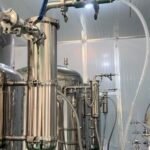
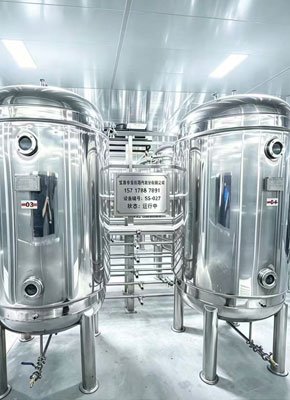
In the fermentation tank arrangement discussed here, compressed air enters through the bottom of the vessel.
After the treated air reaches the tank, it moves upward through the liquid culture medium.
As the bubbles rise, they create movement within the liquid. This movement contributes to the distribution of air and helps prevent the culture medium from remaining completely static.
The basic operating sequence can be understood as follows:
- Compressed air is supplied by the air source.
- The air passes through the high-temperature air sterilization unit.
- The treated air is introduced into the bottom of the fermentation tank.
- Air bubbles rise through the culture medium.
- The rising air contributes to oxygen supply and liquid movement.
This arrangement allows aeration and air-driven mixing to take place within the same fermentation vessel.
The exact performance of the process depends on the equipment configuration and operating conditions. It should not be assumed that all fermentation tanks will achieve identical results simply by using the same air supply method.
4. How Does Air-Driven Mixing Work Without a Mechanical Agitator?
Not every liquid mushroom spawn fermentation tank uses a mechanical stirring device.
In the system configuration described in this article, the tank does not rely on a conventional mechanical agitator. Instead, the movement of the culture liquid is generated by the rising air bubbles.
As air enters the bottom of the vessel, the bubbles travel upward through the liquid. Their movement creates circulation and helps move the surrounding culture medium.
This is commonly described as air-driven mixing.
It is important to understand the difference between air-driven mixing and mechanical agitation.
Air-driven mixing
- Uses rising air bubbles to create liquid movement.
- Combines aeration with air-induced circulation.
- Does not require a conventional mechanical stirring shaft and impeller.
Mechanical agitation
- Uses a mechanical device to move the culture medium.
- Relies on components such as a motor, shaft, and impeller.
- Provides a different approach to controlling liquid movement.
Neither arrangement should automatically be considered suitable for every fermentation process.
The choice depends on the culture requirements, vessel configuration, production scale, and overall process design.
For buyers evaluating a liquid spawn system, it is more useful to understand how the selected equipment actually operates than to assume that every fermentation tank must have mechanical agitation.
5. Why Is Air Treatment an Important Part of Contamination Control?
Contamination control in liquid mushroom spawn production cannot rely on only one piece of equipment.
The culture medium, fermentation vessel, air supply, transfer connections, and downstream inoculation process all need to be considered.
Air treatment is particularly important because the air supply creates a direct connection between the external environment and the fermentation process.
If the air supply is not properly prepared, it may become a potential contamination route.
For this reason, the high-temperature air sterilization unit should be considered as part of the complete fermentation arrangement.
However, air treatment alone does not guarantee a contamination-free process. Proper vessel sterilization, medium preparation, hygienic connections, operating procedures, and equipment maintenance remain important.
A reliable production system depends on how these elements work together.
6. What Should Be Considered When Planning a Fermentation Air Supply System?
When planning an air supply arrangement for a liquid mushroom spawn project, buyers should consider more than the compressor itself.
Several aspects need to be evaluated.
1. Production capacity
The air supply arrangement should be considered in relation to the size and number of fermentation tanks, as well as the intended production schedule.
2. Air treatment
The method used to treat the compressed air should be included in the system design. The high-temperature air sterilization unit must be considered as part of the overall air supply arrangement.
3. Tank configuration
The way air enters the fermentation vessel affects how it moves through the culture medium. The air supply arrangement should therefore be coordinated with the tank design.
4. Supporting equipment
Air supply equipment should be considered alongside other supporting systems, including temperature management and fermentation vessel configuration.
5. Operation and maintenance
Operators need to understand the purpose of the air treatment equipment and the importance of maintaining the supporting air supply system.
These considerations are especially important when several fermentation tanks operate within the same production facility.
7. Aeration Should Be Planned as Part of the Complete Liquid Spawn Production Line
A fermentation tank does not operate independently of the rest of a liquid mushroom spawn production facility.
The air supply system is only one part of a larger process that may include:
- Mushroom strain and culture preparation
- Liquid culture medium preparation
- Medium sterilization
- Fermentation
- Temperature management
- Air treatment and supply
- Liquid spawn transfer
- Inoculation into cultivation bags or other production substrates
The arrangement of these systems should be considered during the early project planning stage.
For example, the air treatment equipment needs to be coordinated with the fermentation tank configuration. Similarly, the temperature-control system, transfer arrangement, and downstream inoculation equipment need to match the intended production process.
At Haoqintech, we support liquid mushroom spawn projects through equipment planning, system configuration, installation coordination, commissioning, technical guidance, and after-sales support.
Our approach is to consider the complete production arrangement rather than treating the fermentation tank as a standalone product.Aeration should be planned together with the other major equipment systems. Learn more about [integrating temperature control, aeration, and liquid transfer in a complete liquid mushroom spawn fermentation system].
8. Frequently Asked Questions
Does a liquid mushroom spawn fermentation tank always need mechanical agitation?
Not necessarily. Some systems use air-driven mixing, in which rising air bubbles create movement within the culture medium. The appropriate arrangement depends on the process requirements and equipment design.
Why is compressed air treated before entering the fermentation tank?
Air treatment helps reduce the risk of introducing unwanted microorganisms through the air supply. In the system arrangement described here, compressed air passes through a high-temperature air sterilization unit before entering the tank.
Where does the air enter the fermentation tank?
In the arrangement discussed in this article, treated compressed air enters through the bottom of the fermentation vessel and rises through the liquid culture medium.
Does aeration only provide oxygen?
No. In addition to supplying oxygen, rising air bubbles create movement within the culture medium. This contributes to air-driven mixing.
Does air sterilization replace the sterilization of the culture medium?
No. Air treatment and culture medium sterilization are separate operations. Both need to be considered within the overall production process.
Can the air supply system be planned separately from the fermentation tank?
The equipment can be evaluated individually, but the air supply arrangement should be coordinated with the tank configuration, production capacity, and other supporting systems.
Conclusion
Aeration is more than simply introducing air into a fermentation tank. It involves air preparation, contamination control, oxygen supply, and the movement of the culture medium.
In the liquid mushroom spawn system described here, compressed air is treated by a high-temperature air sterilization unit before entering the bottom of the fermentation tank. The rising bubbles then contribute to oxygen supply and air-driven mixing without requiring a conventional mechanical agitator.
For buyers planning a liquid mushroom spawn production facility, understanding these relationships can help them evaluate equipment configurations and avoid treating the fermentation vessel as an isolated piece of machinery.
If you are planning a liquid mushroom spawn project, Haoqintech can help discuss the fermentation tank configuration, air treatment arrangement, temperature management, and supporting equipment required for your production line.
Contact Haoqintech to discuss your liquid mushroom spawn production project.