Choosing the right tank breather filter size is important for maintaining proper air exchange and protecting hygienic process tanks from unwanted airborne contamination.
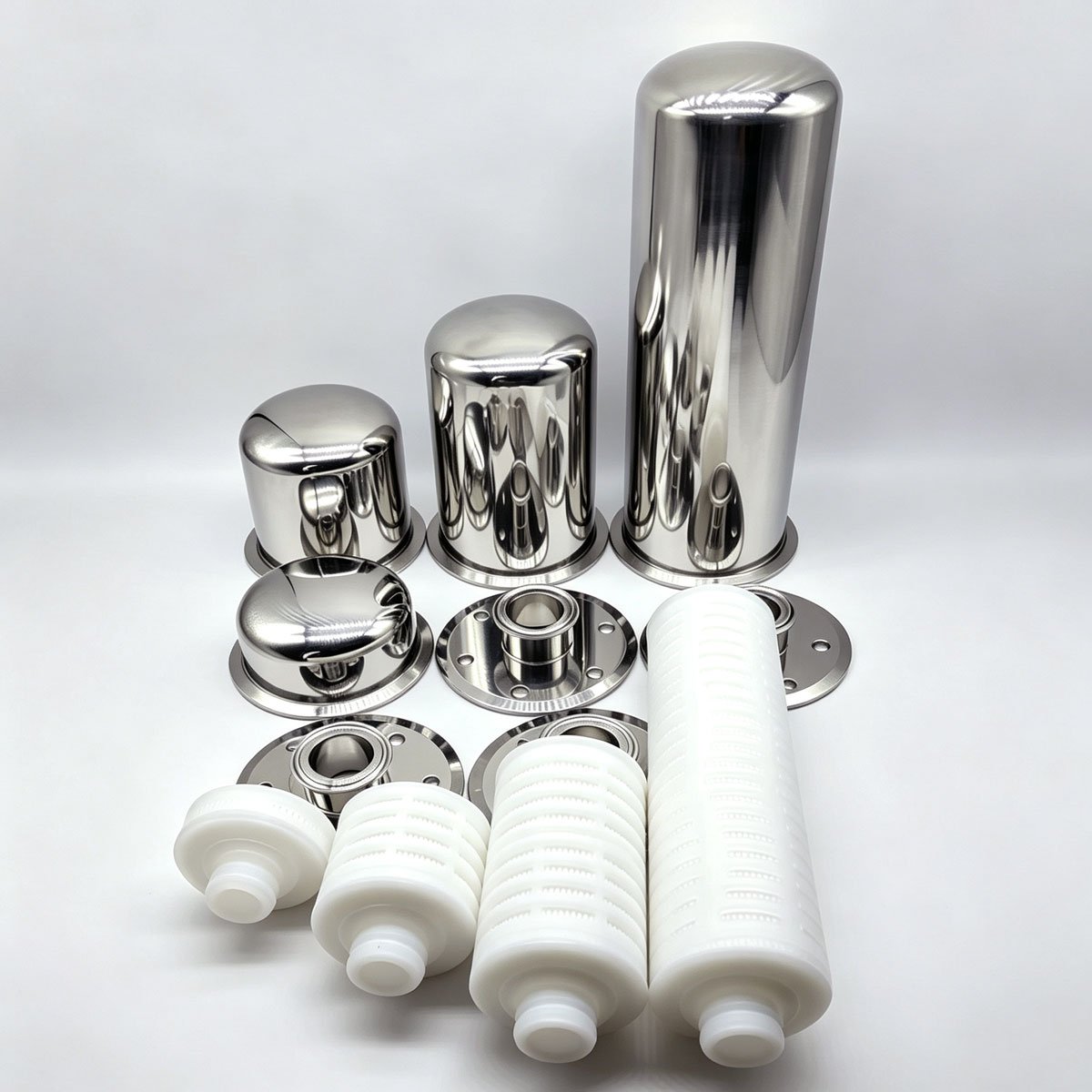
For sanitary applications, tank breather filters are commonly available in different filter lengths, including 5″, 10″ and 20″. However, filter length should not be selected simply according to the physical size of the tank.
The correct configuration depends on factors such as required airflow, tank operating conditions, filling and discharge rates, filtration requirements, and available installation space.
In this guide, we compare 5″, 10″ and 20″ sanitary tank breather filters and explain what to consider when selecting the appropriate size for your process.
What Determines Tank Breather Filter Size?
A tank breather filter allows air to enter or leave a tank as the internal volume or pressure changes.
For example, when liquid is added to a tank, air may need to leave the tank. When liquid is discharged, air needs to enter the tank to prevent excessive vacuum conditions.
Therefore, the breather filter must provide sufficient airflow while maintaining the required level of filtration.
Several factors should be considered when selecting the filter length:
1. Required Airflow
Airflow is one of the most important factors in breather filter selection.
A tank with a high filling or discharge rate may require greater air exchange than a tank operating at a lower flow rate.
The required airflow should therefore be considered together with the filter element type, filtration rating and operating conditions.
2. Tank Filling and Discharge Rate
The faster a tank is filled or emptied, the faster air may need to enter or leave the vessel.
For this reason, two tanks with similar volumes may require different breather filter configurations if their operating flow rates are significantly different.
3. Filtration Requirements
The purpose of a tank breather filter is not only to allow air exchange but also to help prevent unwanted particles and contaminants from entering the tank.
Different processes may have different requirements for air filtration.
Food, beverage, pharmaceutical and other hygienic applications may require a higher level of protection than general industrial processes.
4. Operating Conditions
Temperature, pressure, vacuum conditions, humidity and the characteristics of the process should also be considered.
If the tank operates under specific pressure or vacuum conditions, the breather filter should be selected according to the actual process requirements rather than filter length alone.
5. Installation Space
The available installation space can also affect the choice between a 2.5″, 5″ and 10″ configuration.
The filter should be installed in a position that allows sufficient clearance for inspection, element replacement and maintenance.
2.5″ Sanitary Tank Breather Filter
A 2.5″ configuration is one of the available compact options for sanitary tank vent filtration.
Its shorter filter length can be useful where installation space is limited or where the process airflow and filtration requirements can be met by a smaller configuration.
The appropriate application should always be determined from actual process conditions rather than tank size alone.
Product: [2.5″ 304 SS Sanitary Tri-Clamp Tank Breather Filter]
5″ Sanitary Tank Breather Filter
A 5″ configuration provides a longer filter element than the 2.5″ version and may be selected when the process requires a different filtration area or airflow capacity.
For sanitary processing systems, the final selection should consider airflow requirements, filtration rating, tank operating conditions and installation configuration.
Product: [5″ 304 SS Sanitary Tri-Clamp Tank Breather Filter]
10″ Sanitary Tank Breather Filter
A 10″ configuration provides a longer filtration element and can be considered for applications where the required airflow or filtration area calls for a larger configuration.
As with the other sizes, the correct selection should be based on actual process requirements.
A 10″ filter should not automatically be assumed to be suitable only for large tanks. Tank volume is just one of several factors that influence breather filter selection.
Product: [10″ 304 SS Sanitary Tri-Clamp Tank Breather Filter]
2.5″ vs. 5″ vs. 10″: What Should You Consider?
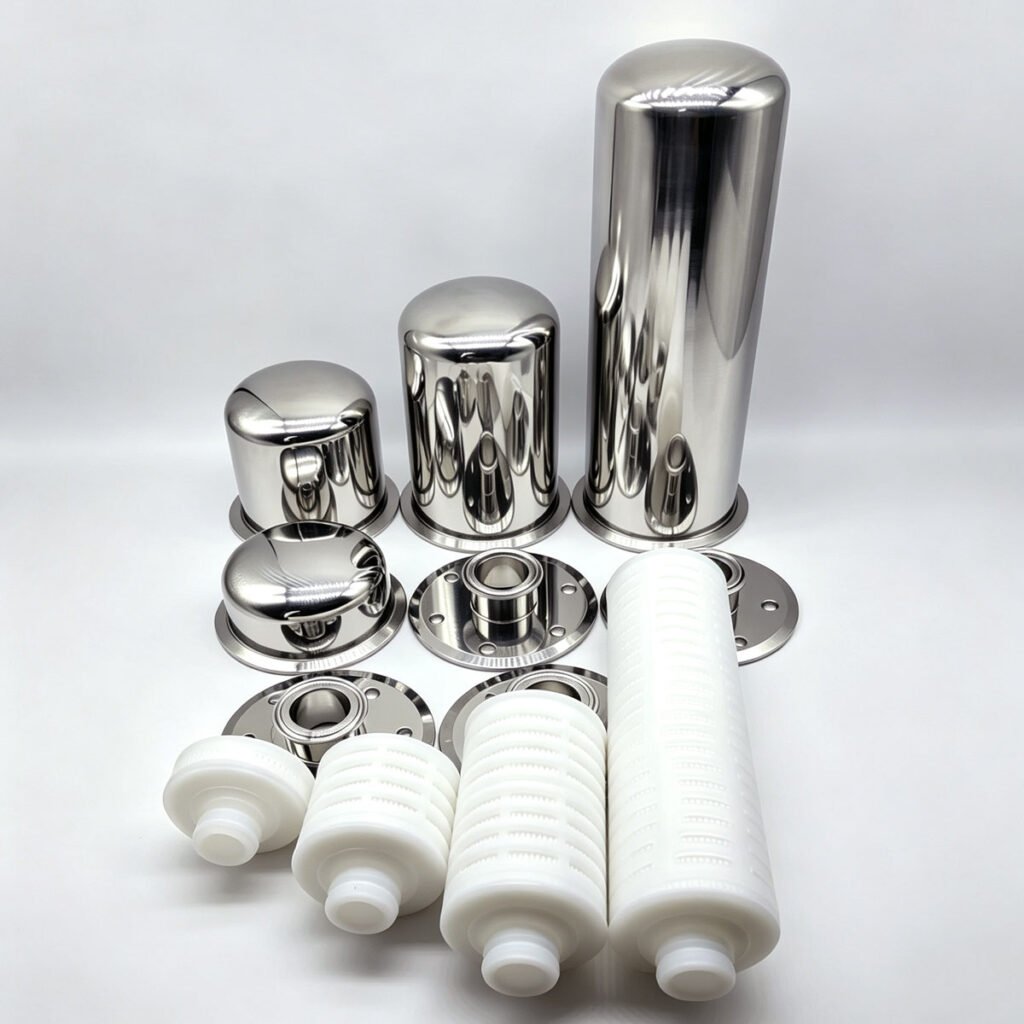
The three configurations share the same basic purpose: providing filtered air exchange for sanitary tanks and process vessels.
The main difference is the available filter length and filtration area.
| Filter Length | Main Consideration | Typical Selection Factor |
|---|---|---|
| 2.5″ | Compact configuration | Airflow, filtration and installation space |
| 5″ | Intermediate configuration | Airflow, filtration area and process conditions |
| 10″ | Longer filtration configuration | Higher filtration area or airflow requirements |
This table should be used as a starting point rather than a fixed application rule.
For example, selecting a 10″ filter simply because a tank is physically large may not be appropriate if the actual air exchange requirement is low. Likewise, a smaller tank may still require a larger filtration configuration if the filling and discharge rates are high.
How to Select the Right Tank Breather Filter
Before ordering a sanitary tank breather filter, it is useful to collect the following information:
- Tank volume
- Maximum filling rate
- Maximum discharge rate
- Required airflow
- Operating pressure and vacuum conditions
- Required filtration rating
- Process temperature
- Connection type
- Available installation space
- Cleaning and maintenance requirements
With this information, the appropriate filter configuration can be selected more accurately.
For hygienic processing applications, the filter housing material, connection design and filter element should also be compatible with the process environment.
Why Filter Length Is Only One Part of the Selection
It is important to understand that 2.5″, 5″ and 10″ refer primarily to the filter length configuration.
They do not independently define the complete performance of a tank breather system.
Actual performance depends on the complete configuration, including the filter element, filtration rating, airflow requirements, connection size and operating conditions.
For this reason, filter length should be considered together with the rest of the system rather than used as the only selection criterion.
Tank Breather Filter or Breather Valve?
A tank breather filter and a breather valve can perform related but different functions.
A breather filter primarily provides filtered air exchange and helps protect the tank from airborne contaminants.
A breather valve is designed to control pressure and vacuum conditions within the vessel.
Some process systems may use a breather filter, a breather valve, or a combination of components depending on the tank design and process requirements.
For a detailed comparison, see:
[Tank Breather Filter vs. Breather Valve: What’s the Difference?]
Related Sanitary Tank Breather Products
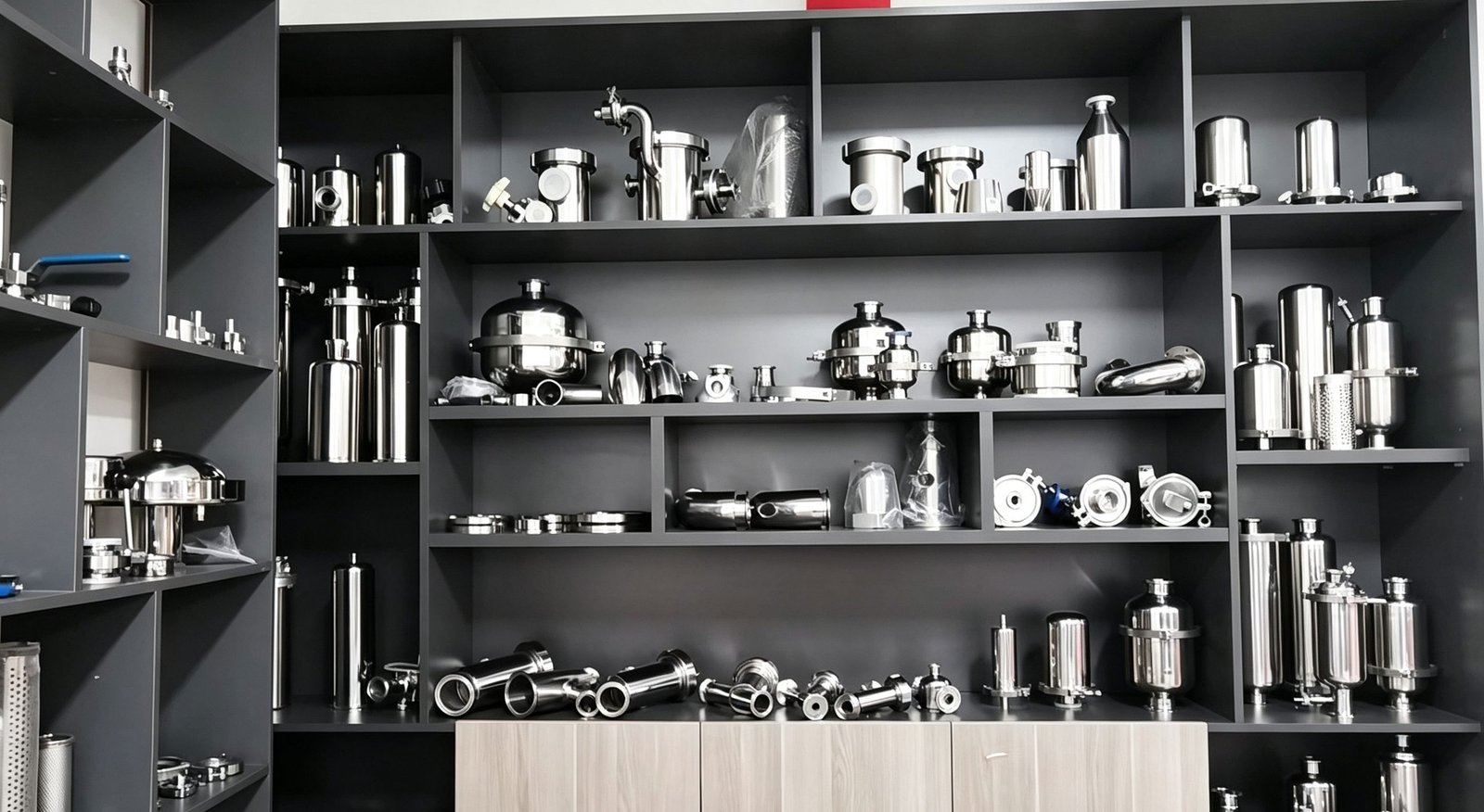
Haoqintech provides sanitary stainless steel tank breather and air filtration components for hygienic processing applications.
Explore the available configurations:
- [2.5″ 304 SS Sanitary Tri-Clamp Tank Breather Filter]
- [5″ 304 SS Sanitary Tri-Clamp Tank Breather Filter]
- [10″ 304 SS Sanitary Tri-Clamp Tank Breather Filter]
- [304 Sanitary Breather Filter Housing with 226 Cartridge]
- [304 SS Sanitary Breather Valve with Flame Arrestor]
For applications with specific airflow, filtration or installation requirements, contact Haoqintech to discuss the appropriate configuration.
Conclusion
Selecting the right tank breather filter size involves more than choosing between 2.5″, 5″ and 10″ based on tank dimensions.
Airflow requirements, filling and discharge rates, filtration requirements, operating conditions and installation space should all be considered.
The 2.5″, 5″ and 10″ sanitary tank breather filter configurations provide different filter lengths and filtration areas, allowing the system to be configured according to the actual process requirements.
For hygienic food, beverage, pharmaceutical and other sanitary processing applications, selecting the complete breather filter configuration based on real operating conditions can help provide reliable air exchange and contamination protection.