
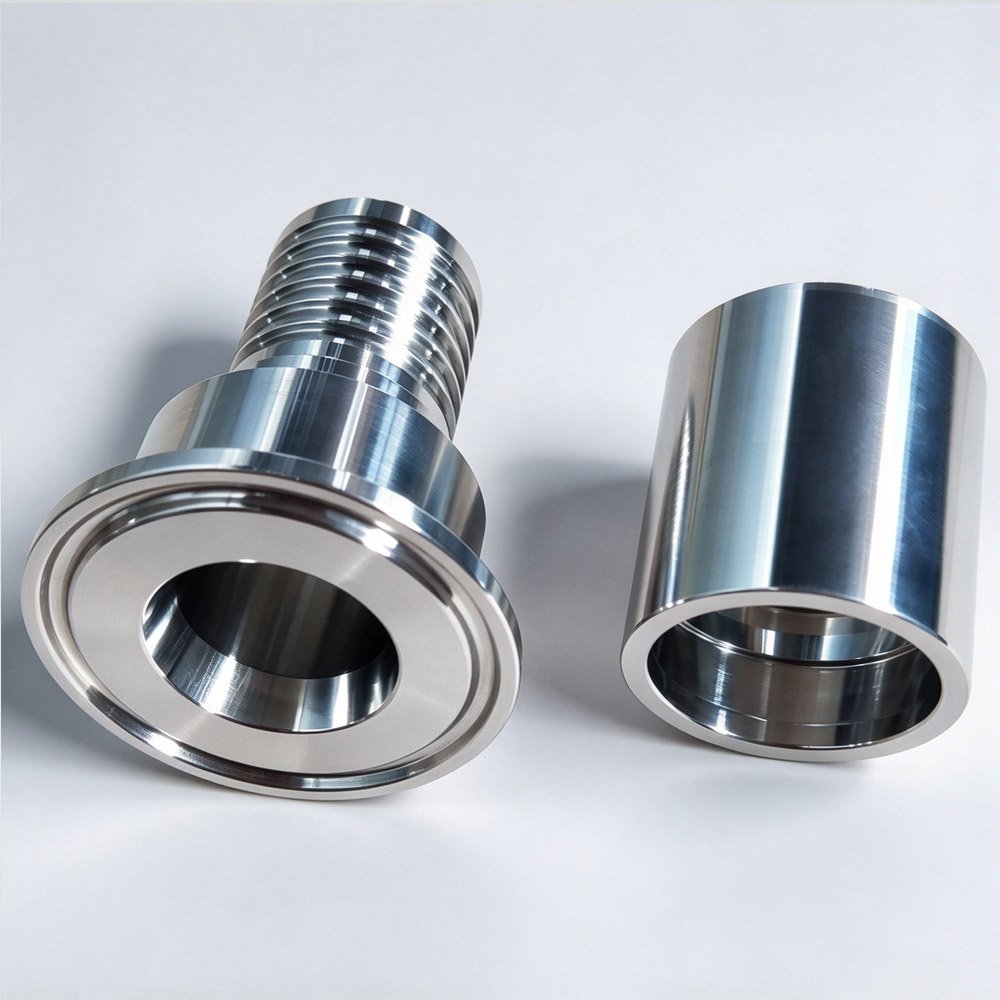
When selecting a sanitary hose fitting, matching the connection end is only part of the job. The sleeve dimensions must also suit the hose assembly. A fitting may have the correct Tri-Clamp connection but still be unsuitable if its sleeve inner diameter or length does not match the hose requirements.
For purchasing teams, equipment integrators, and maintenance engineers, confirming these dimensions before ordering can help reduce mismatches, unnecessary rework, and installation delays.
Three Dimensions to Confirm Before Ordering
1. Tri-Clamp Connection Size
Start by identifying the connection standard and the dimensions of the mating components. A Tri-Clamp connection normally uses compatible ferrule ends, a gasket, and a clamp to form the assembled joint.
Do not select a fitting based on the nominal pipe size alone. Confirm the actual connection dimensions against the mating ferrule or the equipment drawing. The measurements required can vary with the connection standard and fitting design.
For background on the components involved, see our guide to Tri-Clamp fittings: ferrules, clamps, and gaskets.
2. Sleeve Inner Diameter
The sleeve inner diameter is an important dimension when matching a fitting to a hose assembly. The required size depends on the hose construction and the intended assembly method.
Before selecting a sleeve, confirm:
- The hose’s relevant outside or inside diameter, as required by the assembly design.
- The sleeve’s specified inner diameter.
- Whether the hose and fitting are intended to be joined using the same assembly method.
- Whether the supplier has confirmed compatibility between the hose and sleeve.
Do not assume that a sleeve with a similar nominal size will fit correctly. Hose dimensions, wall thickness, reinforcement, and assembly methods can differ between products.
3. Sleeve Length
Sleeve length is another dimension to confirm before ordering. Different lengths may be available for the same or similar inner diameters.
The correct length depends on the fitting design and the requirements of the hose assembly. Check the supplier’s dimensional information or drawing rather than estimating the required length from a product photograph.
If you are replacing an existing fitting, measuring the original component and comparing it with the replacement specification can help identify differences before installation.
Example: Available Sleeve Options
Haoqintech’s 304 stainless steel sanitary Tri-Clamp hose fitting is offered in multiple sleeve configurations. The current options include the following sleeve inner diameters and lengths:
| Sleeve inner diameter | Available sleeve lengths |
|---|---|
| 38 mm | 60 mm and 67 mm |
| 39 mm | 60 mm and 67 mm |
| 40 mm | 60 mm |
| 41 mm | 60 mm and 67 mm |
| 42 mm | 60 mm and 67 mm |
| 43.5 mm | 60 mm and 67 mm |
| 45 mm | 60 mm and 67 mm |
| 46 mm | 60 mm and 67 mm |
| 48 mm | 60 mm |
| 50.5 mm | 60 mm |
The available combinations depend on the selected connection configuration. Not every sleeve dimension is available with every connection-end option, so confirm the exact combination when requesting a quotation.
The product options also include connection-end dimensions listed as 50.5 mm and 64 mm. Confirm the applicable connection standard and mating dimensions with the supplier before ordering.
Why the Complete Specification Matters
A fitting should be selected as part of the complete hose assembly, rather than as an isolated component. Even when the connection end appears correct, a mismatch in sleeve dimensions or assembly requirements can prevent the parts from fitting together as intended.
For repeat orders, keep a record of the approved fitting configuration, including the connection-end specification, sleeve inner diameter, sleeve length, material, and any relevant drawing or sample reference. This makes it easier to communicate requirements consistently between purchasing, engineering, and the supplier.
If your system uses different connection types, our article on Tri-Clamp vs. threaded connections explains some of the differences to consider when choosing a sanitary connection.
Information to Send When Requesting a Quote
To help the supplier identify the appropriate configuration, provide as much of the following information as possible:
- Material: 304 stainless steel, or another grade if required.
- Connection-end specification: the required Tri-Clamp size and applicable standard.
- Sleeve inner diameter: the required dimension in millimetres.
- Sleeve length: the required dimension in millimetres.
- Hose information: relevant dimensions and construction details.
- Reference information: an existing sample, dimensional drawing, or clear photograph with measurements, if available.
- Quantity: the number of fittings required for the project or replacement order.
If any dimension is uncertain, ask the supplier to confirm the measurement definition and compatibility before placing the order.
Choose the Fitting by Dimensions, Not Appearance Alone
A sanitary Tri-Clamp hose fitting needs to match both the connection interface and the requirements of the hose assembly. Confirming the connection-end dimensions, sleeve inner diameter, and sleeve length provides a clearer basis for selection than relying on nominal size or appearance alone.
Haoqintech offers a 304 stainless steel sanitary Tri-Clamp hose fitting with multiple sleeve configurations. Contact us with your required dimensions or reference information to confirm the available option for your application.