

In sanitary piping systems, not every connection needs to remain open or connected to another piece of equipment. Some ports are reserved for future expansion, while others may need to be closed during equipment operation, maintenance, or system reconfiguration.
A sanitary Tri-Clamp blank cap provides a simple way to close these connections. However, selecting the correct cap involves more than matching a nominal pipe size. The clamp connection, ferrule dimensions, gasket, and operating conditions should all be considered.
This guide explains how Tri-Clamp blank caps are used, how to select the correct size, and what to check before installation or ordering.
1. What Is a Sanitary Tri-Clamp Blank Cap?
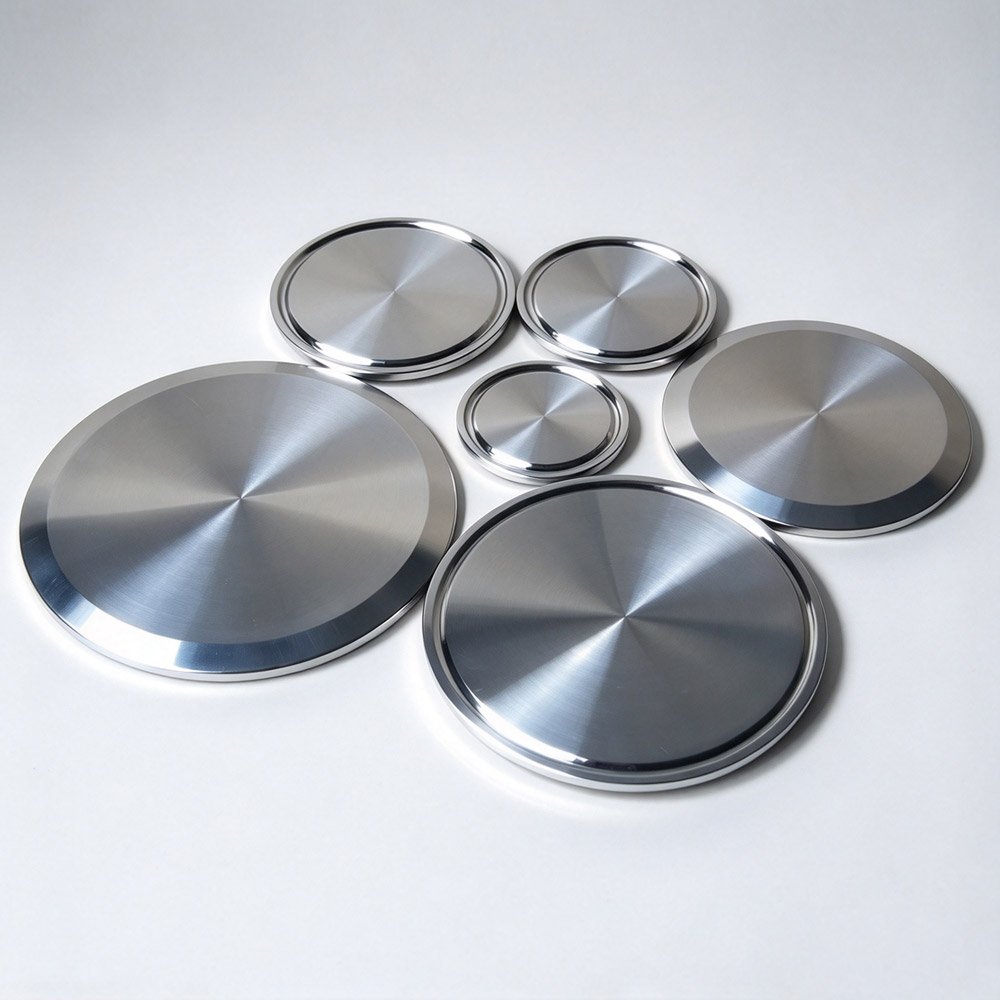
A sanitary Tri-Clamp blank cap is a stainless steel component used to close an open Tri-Clamp connection on a pipe, tank, vessel, or processing machine.
Unlike a valve, a blank cap does not control or redirect fluid flow. Its purpose is to close an unused connection by forming a sealed assembly with a compatible gasket and clamp.
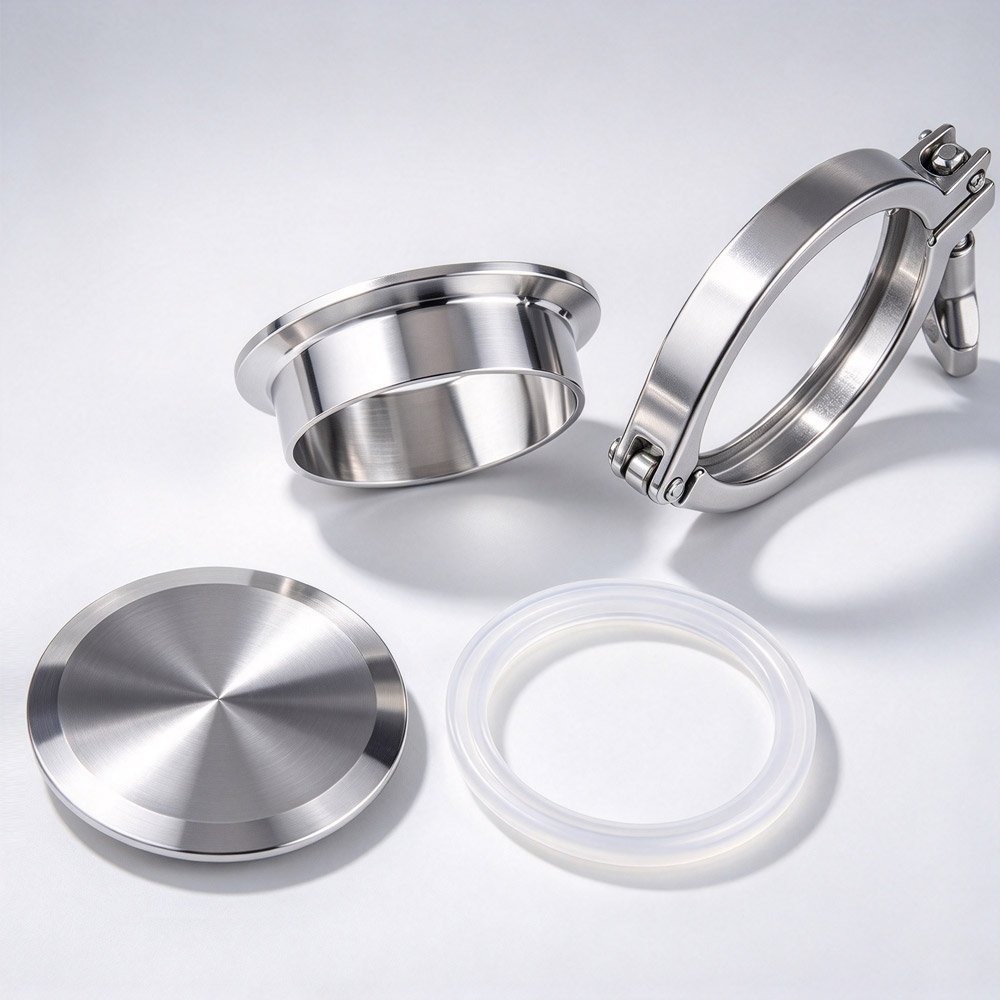
The basic connection consists of three components:
- Blank cap: Covers the open connection.
- Gasket: Sits between the mating sealing surfaces.
- Tri-Clamp: Holds the assembly together.
This arrangement allows the connection to be opened again when access is needed, without cutting or permanently modifying the pipe.
2. When Is a Tri-Clamp Blank Cap Used?
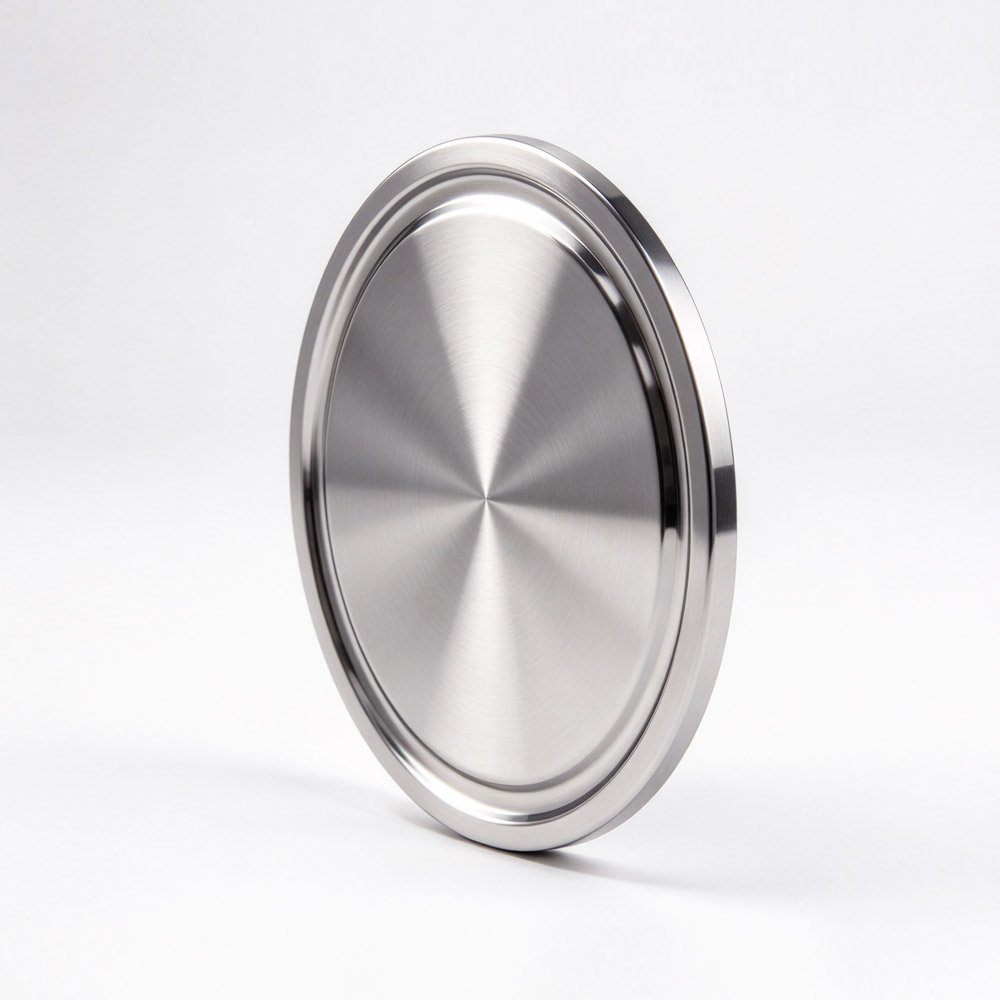
Blank caps are commonly used in sanitary processing systems where connections may need to be closed temporarily or kept available for future use.
Closing Unused Equipment Ports
Tanks, vessels, and processing equipment may have spare connections that are not required for the current production setup. A blank cap can close these ports while keeping the connection available for later use.
Closing Pipe Ends
During piping installation or system modification, some pipe ends may remain unused. A compatible blank cap can close these connections without requiring permanent welding.
Maintenance and Equipment Reconfiguration
When equipment arrangements change, certain connections may no longer be needed. A removable cap provides a practical way to close the unused connection.
Providing Access for Future Expansion
Some processing systems are designed with additional ports for future instruments, pipelines, or equipment. These connections can remain closed until they are needed.
The appropriate closure method depends on the system design and operating conditions. A blank cap should not be assumed suitable for every pressure or vacuum application without confirming its compatibility with the complete connection assembly.
3. How Does a Blank Cap Work with a Ferrule, Clamp and Gasket?
A Tri-Clamp blank cap works as part of a connection assembly rather than as an independent sealing component.
The blank cap is positioned against the mating ferrule, with a compatible gasket between the two sealing faces. A Tri-Clamp then holds the components together.
Before installation, check the following:
- The blank cap matches the ferrule connection size.
- The gasket matches the connection and is suitable for the process medium.
- The clamp is compatible with the connection dimensions.
- The sealing surfaces are clean and free from visible damage.
- The clamp is installed and tightened according to the equipment and connection manufacturer’s instructions.
A mismatch between these components can result in an unreliable connection, even if the blank cap itself is the correct nominal size.
4. How to Choose the Correct Tri-Clamp Blank Cap Size
Size selection is one of the most important steps when ordering a replacement or new blank cap.
One common source of confusion is the difference between the clamp connection dimension and the tube outside diameter.
For example, a clamp size of 50.5 mm may correspond to a tube outside diameter of 38 mm in a particular connection standard. Therefore, selecting a blank cap based only on the pipe diameter can lead to an incorrect match.
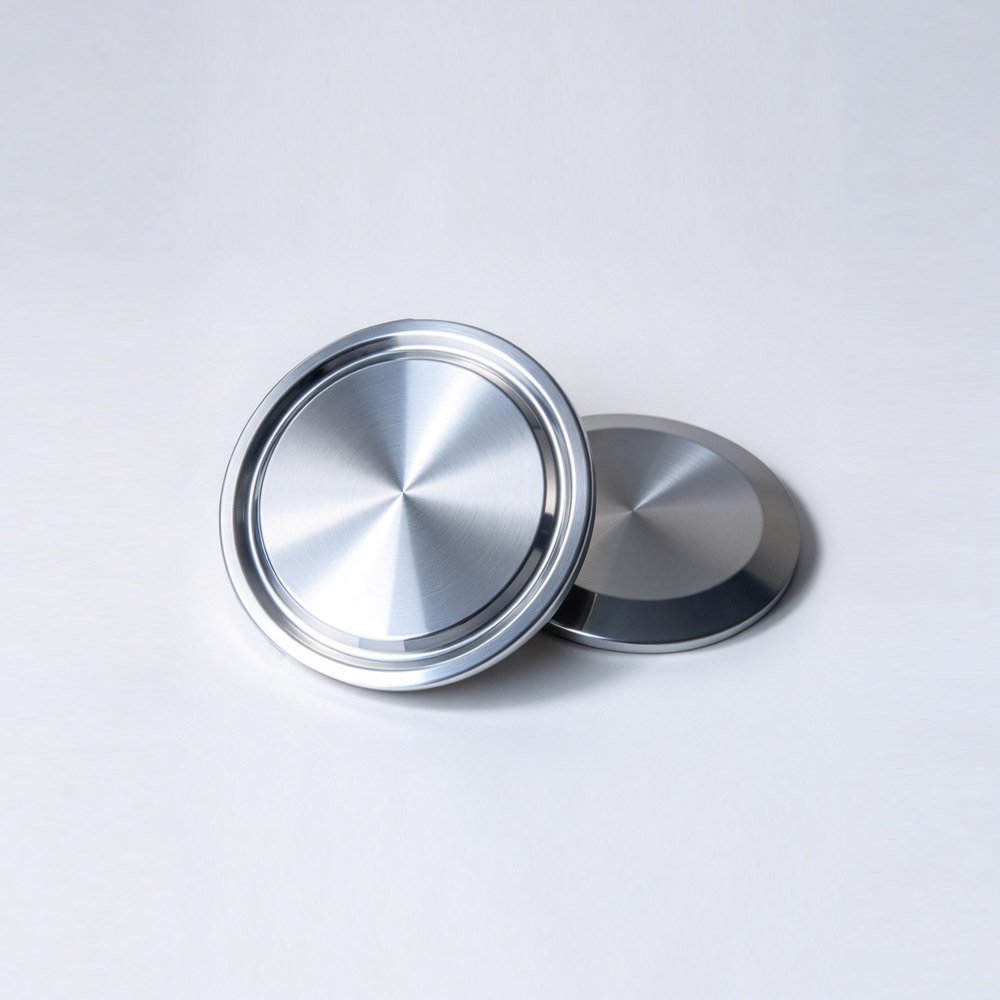
Before ordering, confirm:
- The clamp or ferrule connection dimension.
- The corresponding tube outside diameter.
- The connection standard used by the existing equipment.
- Whether the cap needs to fit an existing ferrule or a new assembly.
If the connection standard is uncertain, providing a photograph and measurements of the existing ferrule can help confirm the required size.
5. 304 vs. 316L Stainless Steel: What Should You Consider?
Stainless steel grade is another consideration when selecting a sanitary blank cap.
304 stainless steel is commonly used in general food, beverage, dairy, brewing, and sanitary processing environments. It offers good general corrosion resistance and is suitable for many standard applications.
316L stainless steel may be considered where the process medium, cleaning chemicals, or operating environment requires greater corrosion resistance.
The correct material depends on the actual process conditions. When specifying a blank cap, confirm the material grade required by your equipment or project rather than selecting it based on appearance alone.
6. Blank Cap vs. Sanitary Valve: What Is the Difference?
Although both components can be used at a connection point, they serve different purposes.
| Comparison | Tri-Clamp Blank Cap | Sanitary Valve |
|---|---|---|
| Main function | Closes an unused connection | Controls fluid flow |
| Flow control | No | Yes |
| Operation | Removed when access is required | Opened or closed during operation |
| Typical use | Closing spare ports or unused pipe ends | Flow isolation or routing |
| Connection | Compatible Tri-Clamp assembly | Depends on valve design |
If a connection only needs to remain closed, a blank cap may be a straightforward solution.
If operators need to open, close, or regulate the flow without removing a component, a suitable sanitary valve is generally more appropriate.
7. What Should You Confirm Before Ordering?
To reduce sizing mistakes and unnecessary replacement, prepare the following information before requesting a quotation:
- Material: 304, 316L, or another specified grade.
- Clamp size: The actual Tri-Clamp connection dimension.
- Tube outside diameter: The corresponding pipe or ferrule dimension.
- Connection standard: Confirm the standard used by the existing system.
- Quantity: The number of blank caps required.
- Application: Tank port, pipeline end, equipment connection, or another use.
- Operating conditions: Relevant pressure, vacuum, temperature, and process medium requirements.
If you are replacing an existing cap, clear photographs of the cap and mating ferrule, together with measured dimensions, are useful for checking compatibility.
8. Frequently Asked Questions
Q1: Can a Tri-Clamp blank cap be removed and reused?
Yes. The removable Tri-Clamp design allows the connection to be opened when required. Before reuse, inspect the cap, gasket, clamp, and sealing surfaces for damage or wear.
Q2: Does a blank cap come with a clamp and gasket?
The blank cap is designed to work with a compatible clamp and gasket. Whether these accessories are included depends on the quotation and supply configuration. Confirm the scope before ordering.
Q3: Can I choose a blank cap based only on the pipe outside diameter?
Not always. The clamp connection dimension and corresponding tube outside diameter must both be checked because different connection dimensions may be associated with different tube sizes.
Q4: Is a 304 stainless steel blank cap suitable for every sanitary application?
No single material is suitable for every process. Material selection should consider the process medium, cleaning chemicals, and operating environment. Some applications may require 316L stainless steel or another specified material.
Q5: Can a blank cap be used on a pressurized tank?
Suitability depends on the design and pressure rating of the complete connection assembly, including the cap, ferrule, gasket, and clamp. Confirm the allowable operating conditions with the equipment or component supplier before use.
Conclusion
A sanitary Tri-Clamp blank cap is a practical component for closing unused connections in hygienic piping and processing equipment. Correct selection depends on matching the connection dimensions, confirming the material, and checking compatibility with the gasket and clamp.
When ordering, providing both the clamp size and corresponding tube outside diameter can help avoid sizing errors. For existing installations, photographs and measured connection dimensions are useful for confirming the correct configuration.
Looking for a 304 stainless steel sanitary Tri-Clamp blank cap? Haoqintech offers multiple connection sizes for different sanitary piping and equipment requirements. Contact us with your required dimensions and application details to confirm compatibility and request a quotation.