When selecting a sanitary tank cleaning nozzle for a CIP system, one of the first decisions is whether to use a rotary spray ball or a fixed spray ball.
Both types are used for cleaning tanks and process vessels, but their operating principles and application considerations are different. The right choice depends on the tank design, cleaning requirements, connection method, process conditions, and how the cleaning system is maintained.
For food, beverage, dairy, pharmaceutical, brewing, fermentation, and liquid culture equipment, understanding this difference can help engineers select a suitable sanitary tank cleaning solution without unnecessarily complicating the CIP system.
What Is a Sanitary Spray Ball?
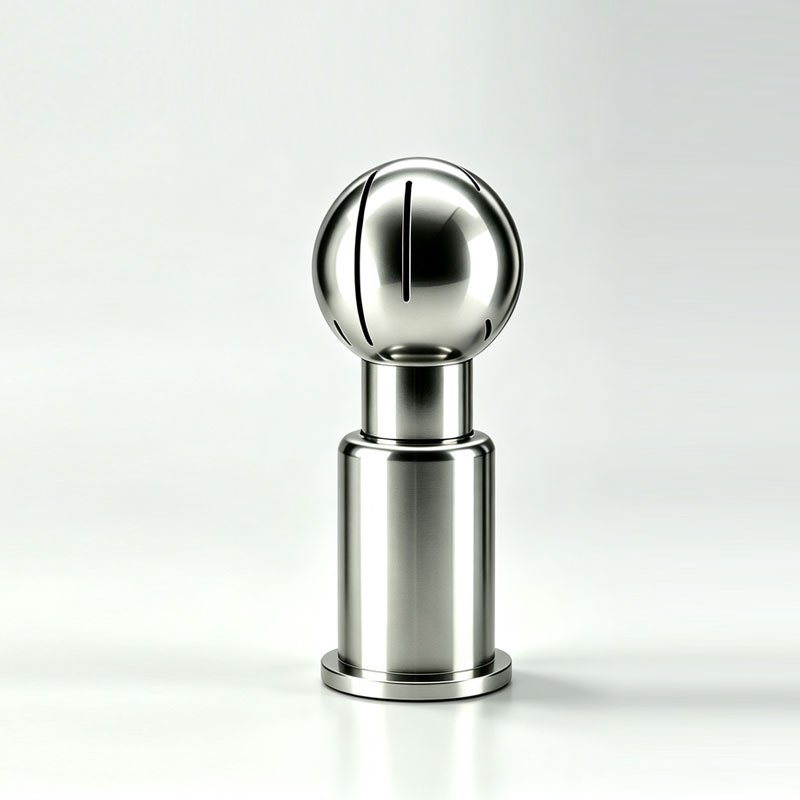
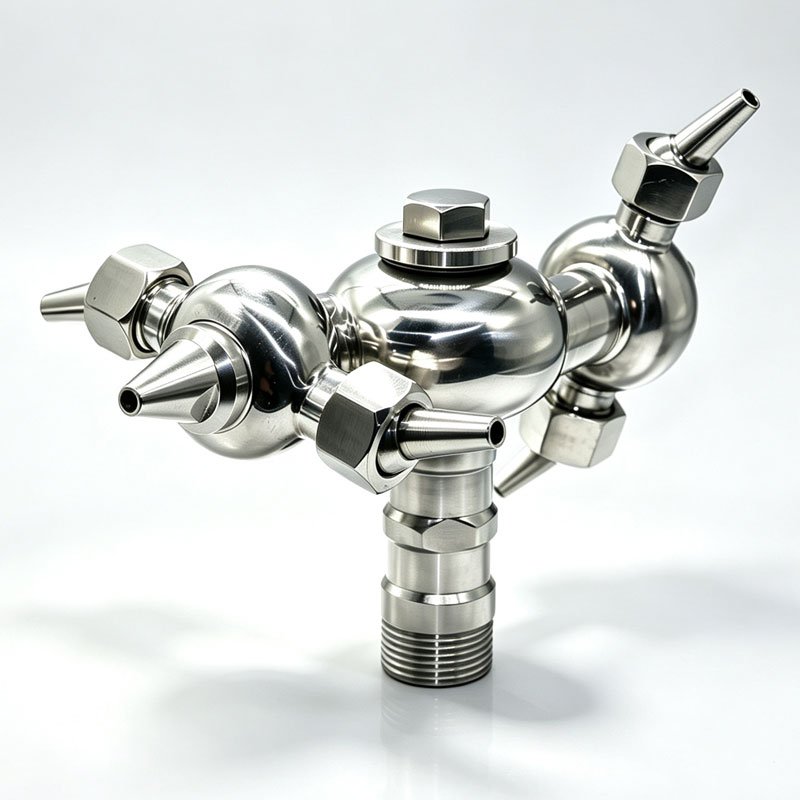
A sanitary spray ball is a tank cleaning nozzle installed inside a process vessel or storage tank. During cleaning, the cleaning liquid is distributed through openings in the spray ball to contact the internal surfaces of the vessel.
Spray balls are commonly used in CIP systems for tanks, vessels, mixing equipment, fermentation equipment, and other sanitary process systems.
The two basic configurations are:
- Fixed spray ball
- Rotary spray ball
The main difference is whether the spray ball remains stationary or rotates during cleaning.
What Is a Fixed Spray Ball?
A fixed spray ball is installed in a fixed position inside the tank. The spray ball itself does not rotate during operation.
Cleaning liquid enters the spray ball and is distributed through its openings according to the nozzle’s design.
Advantages of a Fixed Spray Ball
A fixed spray ball has a relatively simple construction and can be suitable for applications where the tank geometry and cleaning requirements are well understood.
Typical considerations include:
- Simple mechanical construction
- No rotating mechanism
- Straightforward installation
- Easy integration into some fixed CIP arrangements
- Suitable for established tank cleaning configurations
Because the spray ball remains stationary, its effectiveness depends strongly on the relationship between the spray pattern, nozzle location, tank geometry, and cleaning conditions.
A fixed spray ball can therefore be a practical choice when the tank design and cleaning process are already well defined.
What Is a Rotary Spray Ball?
A rotary spray ball is designed to rotate as cleaning liquid passes through the unit.
Instead of maintaining a stationary spray pattern, the rotating mechanism changes the spray direction during operation.
This creates a dynamic cleaning pattern that can help distribute cleaning liquid over a wider range of internal tank surfaces.
Rotary spray balls are often considered when the tank geometry or cleaning requirements call for more dynamic spray coverage.
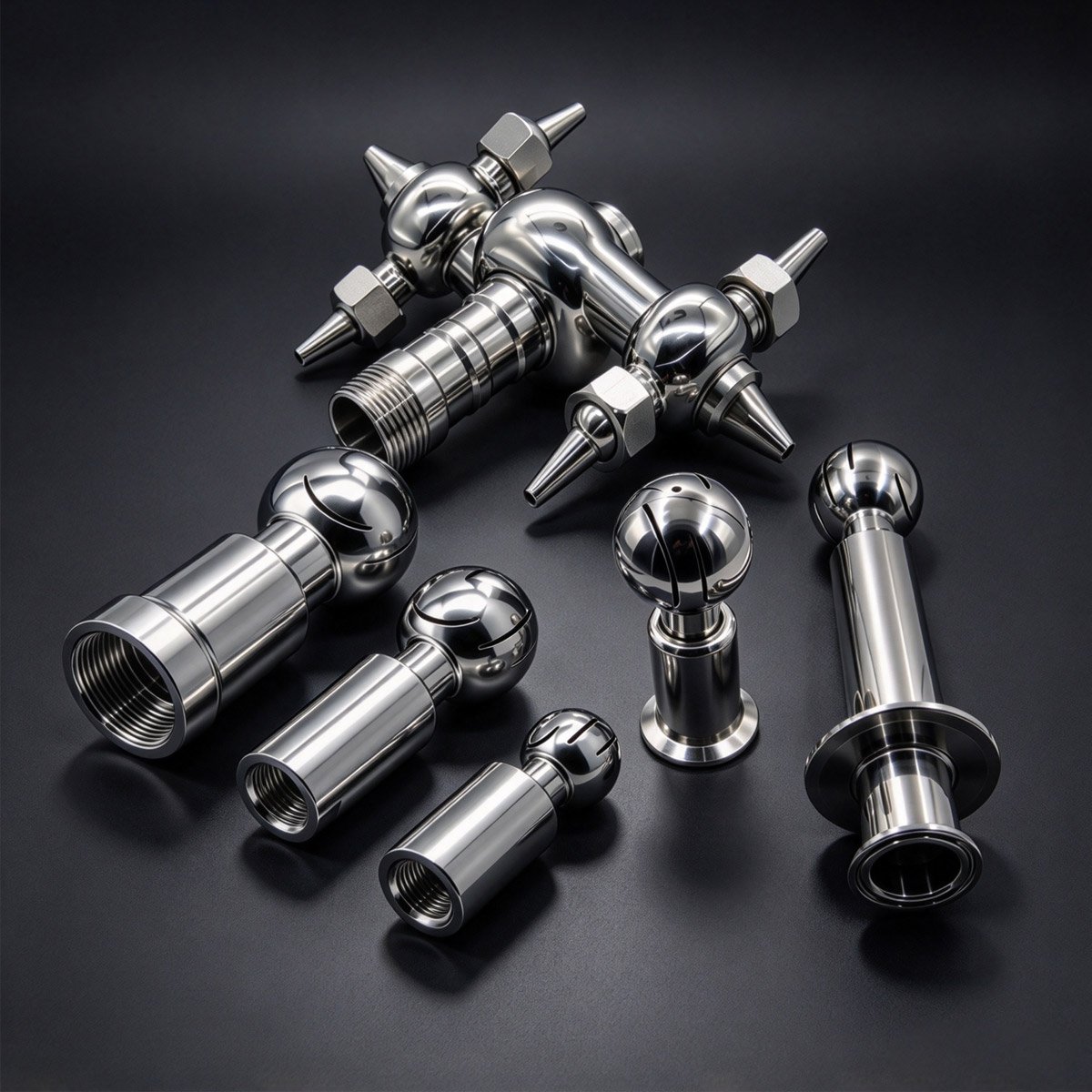
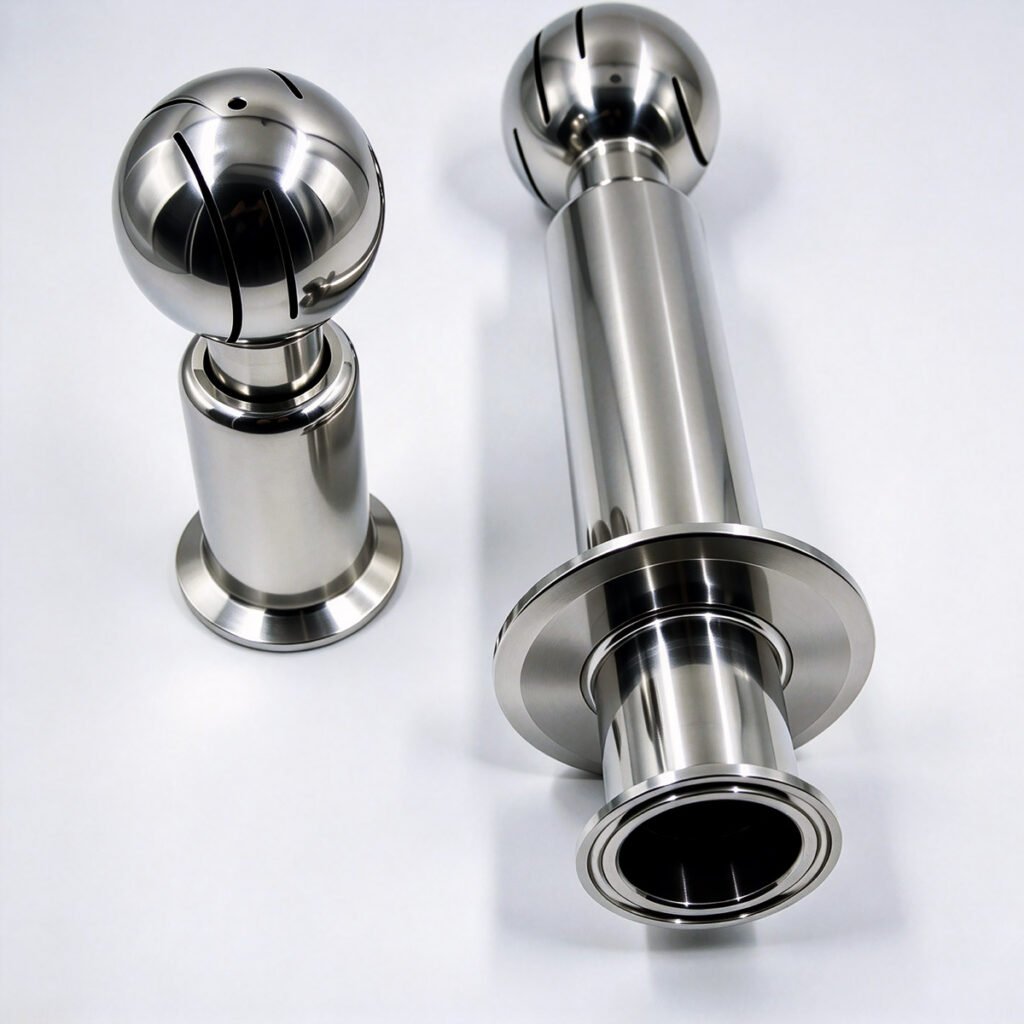
Haoqintech supplies sanitary rotary spray balls in different connection configurations, including threaded and Tri-Clamp versions.
Rotary vs. Fixed Spray Balls: Key Differences
The most useful way to compare the two configurations is to look at how they fit into the overall tank cleaning system.
| Factor | Rotary Spray Ball | Fixed Spray Ball |
|---|---|---|
| Movement | Rotates during cleaning | Stationary |
| Spray pattern | Dynamic | Fixed |
| Mechanical design | Includes a rotating mechanism | Simpler fixed construction |
| Installation | Depends on tank and connection design | Depends on tank and connection design |
| Cleaning approach | Dynamic spray distribution | Fixed spray distribution |
| Maintenance | Consider rotating components | Generally simpler mechanical construction |
| Typical selection consideration | Tank geometry and dynamic coverage | Tank geometry and established spray pattern |
| Connection options | Tri-Clamp or threaded configurations may be available | Tri-Clamp or welded configurations may be available |
This table should be used as a starting point rather than a substitute for actual CIP validation. The appropriate nozzle depends on the complete cleaning system, not simply whether the spray ball is rotary or fixed.
When Should You Choose a Rotary Spray Ball?
A rotary spray ball may be worth considering when dynamic spray coverage is useful for the tank cleaning application.
Typical applications include:
Food and Beverage Tanks
Food and beverage processing equipment often requires repeatable cleaning between production cycles.
A rotary spray ball can be integrated into a sanitary tank cleaning system where dynamic spray distribution is appropriate for the vessel design.
Dairy Processing Equipment
Dairy systems can contain tanks, vessels, and processing equipment that require regular cleaning.
The spray ball configuration should be selected according to the vessel geometry, cleaning procedure, and connection arrangement.
Fermentation and Liquid Culture Systems
Fermentation tanks and liquid culture equipment can have different internal configurations depending on the process.
For these applications, the tank cleaning nozzle should be considered together with the vessel dimensions, internal components, CIP piping, and cleaning procedure.
Pharmaceutical and Hygienic Processing
Pharmaceutical and other hygienic processing equipment can have stricter requirements for cleaning system design.
In these applications, engineers should evaluate the complete CIP system rather than selecting a spray ball based only on its connection size or appearance.
When Should You Choose a Fixed Spray Ball?
A fixed spray ball can be appropriate when a stationary spray pattern is sufficient for the tank cleaning requirement.
It may be considered for:
- Tanks with a relatively straightforward internal geometry
- Established CIP systems
- Applications where a fixed spray pattern is appropriate
- Systems where simple mechanical construction is preferred
- Installations where the spray ball position has already been established through the cleaning process
The important point is that a fixed spray ball should be selected according to the actual tank geometry and cleaning procedure.
A larger spray ball does not automatically mean better cleaning, and a rotary spray ball is not automatically required for every CIP tank.
Connection Type Also Matters
After deciding between rotary and fixed construction, the next consideration is the connection method.
For sanitary processing equipment, common connection approaches include:
- Tri-Clamp connection
- Threaded connection
- Welded connection
The connection should match the tank nozzle, CIP piping, available installation space, and sanitary requirements of the process.
For example, a Tri-Clamp rotary spray ball can be useful when a removable sanitary connection is preferred.
Haoqintech’s 304 Stainless Steel Sanitary Tri-Clamp Rotary Spray Ball is designed with a Tri-Clamp connection for sanitary tank cleaning applications.
For applications using a threaded connection, Haoqintech also offers a 304 Stainless Steel Sanitary Female Thread Rotary Spray Ball.
This allows the connection configuration to be considered separately from the rotary or fixed spray mechanism.
Rotary Spray Ball or Fixed Spray Ball: A Practical Selection Process
A simple selection process can help narrow down the appropriate configuration.
Step 1: Check the Tank Geometry
Start with the internal dimensions and configuration of the tank.
Consider:
- Tank diameter
- Tank height
- Internal fittings
- Agitators
- Dip tubes
- Baffles
- Other components that may affect spray distribution
Step 2: Define the Cleaning Requirement
Determine what the CIP process needs to remove.
For example:
- Product residue
- Organic deposits
- Fermentation residue
- Process contamination
- Other material remaining after production
The cleaning procedure should define the required cleaning conditions.
Step 3: Choose Rotary or Fixed Construction
If a stationary spray pattern is suitable for the tank and cleaning process, a fixed spray ball may be appropriate.
If dynamic spray distribution is beneficial for the vessel configuration, a rotary spray ball may be considered.
Step 4: Select the Connection
Match the spray ball connection with the tank or CIP piping.
For sanitary systems, this may include:
- Tri-Clamp
- Threaded
- Welded
Step 5: Confirm the Complete CIP System
The spray ball should not be evaluated as an isolated component.
The final selection should consider the complete cleaning system, including the CIP supply, piping, tank geometry, nozzle position, cleaning procedure, and process requirements.
Rotary and Fixed Spray Balls Can Form a Product Family
For equipment suppliers and system integrators, it can be useful to think of spray balls as a small product family rather than a single product.
A typical product structure can look like:
Sanitary Tank Cleaning & CIP
→ Rotary Spray Balls
→ Fixed Spray Balls
Within the rotary group:
→ Female Thread Rotary Spray Ball
→ Tri-Clamp Rotary Spray Ball
Within the fixed group:
→ Tri-Clamp Fixed Spray Ball
→ Welded Fixed Spray Ball
This approach allows engineers to select the cleaning nozzle according to both spray mechanism and connection configuration.
How Haoqintech Approaches Sanitary Tank Cleaning Components
Haoqintech supplies sanitary stainless steel components for food, beverage, dairy, pharmaceutical, fermentation, liquid culture, and other fluid-processing applications.
For tank cleaning projects, spray ball selection can be coordinated with the tank connection and CIP piping configuration.
Our current sanitary spray ball range includes rotary configurations with different connection options, with additional fixed spray ball configurations available for different installation requirements.
For project-based requirements, customers can provide the tank dimensions, connection requirements, and application information so the appropriate configuration can be evaluated.
Frequently Asked Questions
What is the main difference between a rotary and fixed spray ball?
A fixed spray ball remains stationary during cleaning, while a rotary spray ball rotates as cleaning liquid passes through the unit.
Is a rotary spray ball always better than a fixed spray ball?
Not necessarily. The appropriate choice depends on the tank geometry, cleaning requirements, CIP system, and installation conditions.
Can a rotary spray ball be used with a Tri-Clamp connection?
Yes. Tri-Clamp rotary spray ball configurations are commonly used in sanitary tank cleaning systems.
What connection should I choose for a sanitary spray ball?
The connection should match the tank nozzle or CIP piping and the requirements of the installation. Tri-Clamp, threaded, and welded configurations may be used depending on the system.
Can I use the same spray ball for every tank?
Not necessarily. Tank dimensions, internal components, cleaning requirements, and CIP conditions can vary significantly. Spray ball selection should therefore be based on the specific vessel and cleaning process.
Related Tank Cleaning & CIP Equipment
For more information about sanitary tank cleaning equipment, see:
- 304 Stainless Steel Sanitary Female Thread Rotary Spray Ball
- 304 Stainless Steel Sanitary Tri-Clamp Rotary Spray Ball
- SS304 Sanitary Rotary Spray Ball 360° Tank Cleaning Nozzle
- How to Choose the Right Tank Cleaning Nozzle for CIP Systems
If you are planning a sanitary tank cleaning or CIP project and are unsure whether a rotary or fixed spray ball is appropriate, contact Haoqintech with your tank dimensions, connection requirements, and application details.
Conclusion
Rotary and fixed spray balls are both useful sanitary tank cleaning solutions, but they serve different equipment and process requirements.
A fixed spray ball provides a stationary spray pattern and can be suitable for straightforward, established CIP configurations.
A rotary spray ball provides dynamic spray distribution and may be considered when the tank geometry and cleaning process benefit from a moving spray pattern.
The final selection should consider the complete CIP system rather than one specification alone. Tank geometry, internal components, connection type, cleaning procedure, and process requirements should all be evaluated before selecting the spray ball configuration.