Effective tank cleaning is essential in food and beverage, dairy, pharmaceutical, brewing and other hygienic processing industries.
A poorly cleaned tank can leave behind product residue, microorganisms or other contaminants that may affect the next production batch. For applications where cross-contamination and hygienic control are critical, an effective Clean-in-Place (CIP) system is an important part of the process.
However, a CIP system is only as effective as its cleaning equipment. Selecting the right tank cleaning nozzle or rotary spray head requires more than simply choosing a nozzle based on tank size.
Tank diameter, internal geometry, soil type, flow rate, operating pressure, cleaning temperature and required coverage should all be considered.
This guide explains the main types of tank cleaning devices and the key factors to consider when selecting one for your process.
Why Tank Cleaning Matters
In hygienic processing, tank cleaning directly affects product quality, production efficiency and contamination control.
For example:
- Food and beverage tanks may contain sugars, proteins, oils or product residues.
- Dairy equipment may require effective removal of milk and protein deposits.
- Fermentation vessels may contain biological residues and microorganisms.
- Pharmaceutical and high-purity applications may require strict control of cross-contamination.
- Chemical processing tanks may contain more difficult or aggressive residues.
A properly selected CIP cleaning device helps deliver the mechanical action required to remove these residues from the internal surfaces of the vessel.
Three Common Types of Tank Cleaning Devices
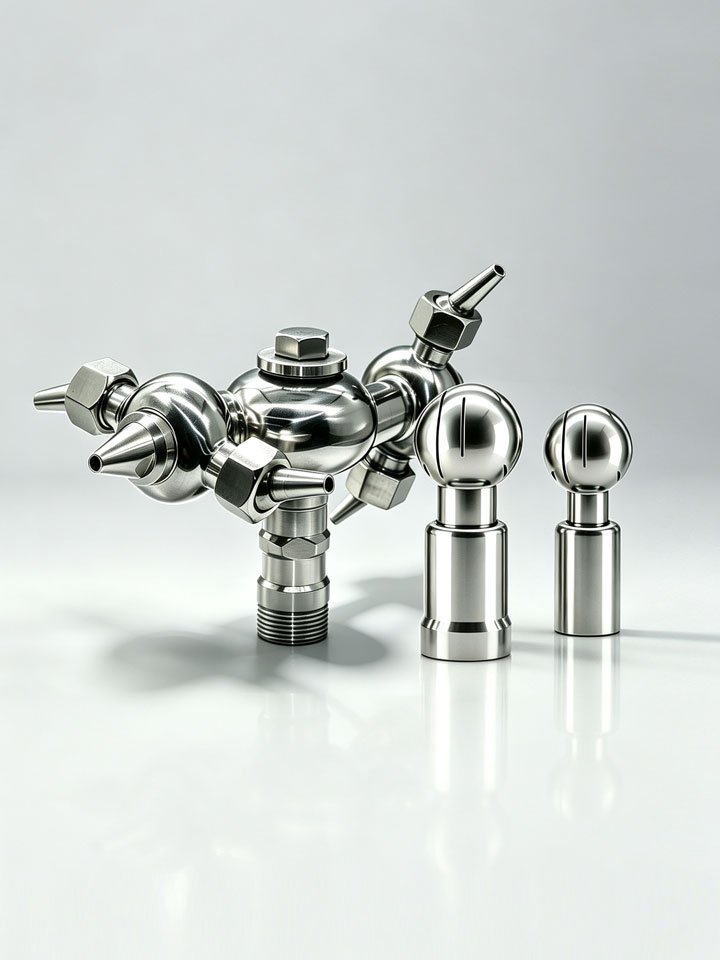
Tank cleaning equipment can generally be divided into three categories: static spray balls, rotary spray heads and high-impact rotary jet cleaners.
The right choice depends on the tank design and cleaning requirements.
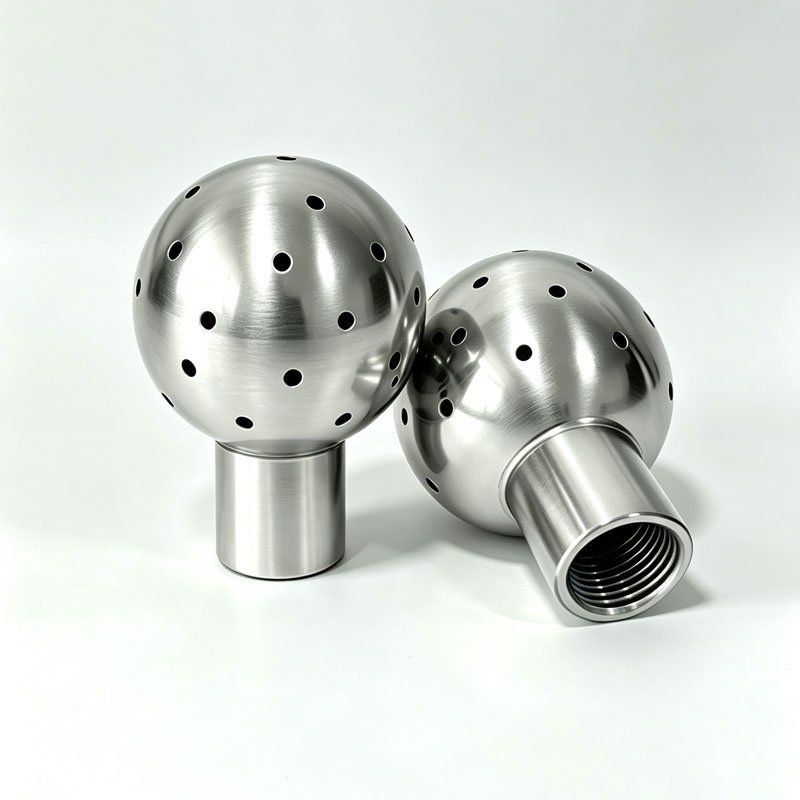
1. Static Spray Balls
Static spray balls have no moving parts. Cleaning liquid exits through fixed openings to create a spray pattern over the internal tank surface.
Typical applications include:
- Small and medium vessels
- Simple tank geometries
- Light or easily removable soils
- Applications where simple construction and low maintenance are priorities
Advantages:
- Simple construction
- No moving parts
- Low maintenance requirements
- Cost-effective for suitable applications
Limitations:
- Lower mechanical impact than dynamic cleaning devices
- Coverage can be affected by internal tank components
- May require greater chemical action or longer cleaning cycles for difficult soils
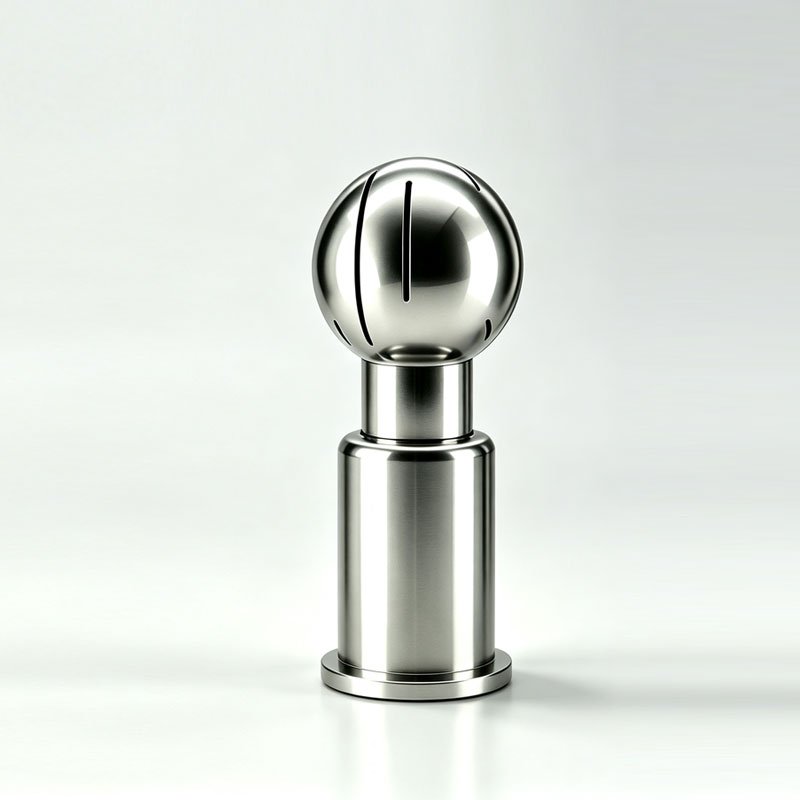
2. Rotary Spray Heads
Rotary spray heads use the force of the cleaning fluid to rotate the spray mechanism.
As the head rotates, the spray pattern moves across the internal surface of the tank, providing more dynamic coverage than a static spray ball.
Typical applications include:
- Food and beverage processing tanks
- Dairy vessels
- Brewing equipment
- Fermentation tanks
- Moderate soil conditions
- Tanks where improved mechanical cleaning is required
Advantages:
- Dynamic spray coverage
- Greater mechanical action than many static spray devices
- Can help improve cleaning efficiency
- Available in different flow rates and connection configurations
Limitations:
- Requires suitable flow and pressure
- Performance depends on nozzle design and operating conditions
- Incorrect flow or pressure can reduce rotation and coverage
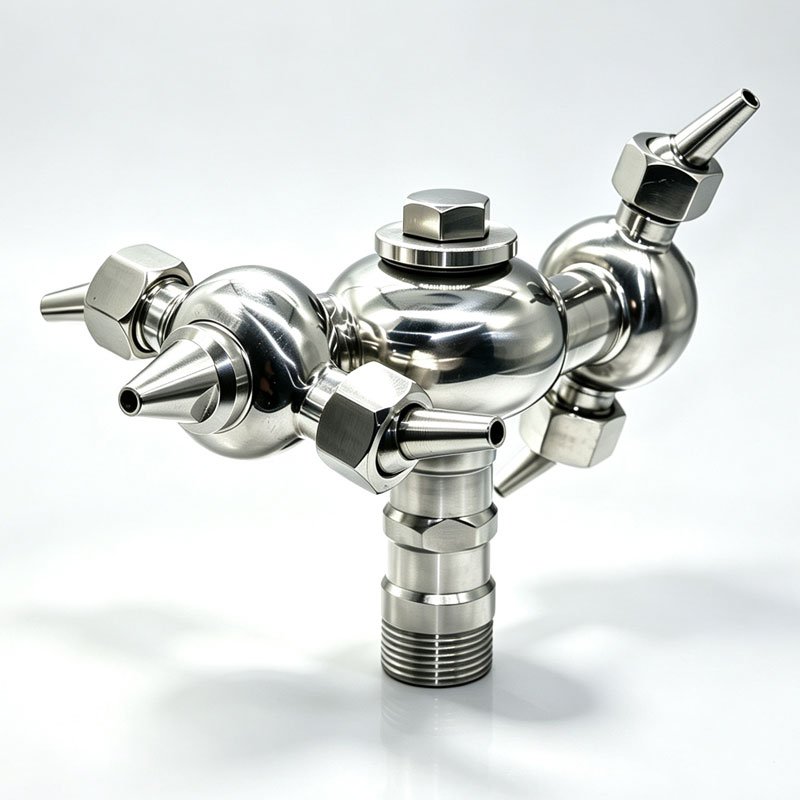
3. High-Impact Rotary Jet Cleaners
High-impact rotary jet cleaners use one or more directed jets to deliver greater mechanical force to tank surfaces.
They are commonly considered for larger vessels, difficult soils and applications where stronger mechanical action is required.
Typical applications include:
- Large process vessels
- Storage tanks
- Fermentation vessels
- Heavy or sticky product residues
- Difficult-to-clean process equipment
Advantages:
- High mechanical impact
- Dynamic coverage
- Suitable for demanding cleaning applications
- Can reduce reliance on chemical cleaning action when properly selected
Limitations:
- Higher equipment and system requirements
- Requires sufficient flow and pressure
- Correct sizing and installation are important for effective coverage
Tank Cleaning Nozzle Comparison
| Feature | Static Spray Ball | Rotary Spray Head | Rotary Jet Cleaner |
|---|
| Moving Parts | No | Yes | Yes |
| Mechanical Action | Low | Moderate to High | High |
| Spray Pattern | Fixed | Dynamic | Dynamic / Directed |
| Typical Soil | Light | Light to Moderate | Moderate to Heavy |
| Flow Requirement | Generally Lower | Application Dependent | Generally Higher |
| Maintenance | Low | Moderate | Application Dependent |
| Typical Use | Simple vessels | Hygienic process tanks | Larger or difficult-to-clean vessels |
The table provides general guidance only. Actual performance depends on the specific cleaning device, tank geometry and CIP system.
1. What Is the Tank Size and Internal Geometry?
Tank diameter is important, but it is not the only consideration.
You should also evaluate:
- Tank height
- Tank diameter
- Internal surfaces
- Agitators
- Baffles
- Heating coils
- Dip tubes
- Other internal components
Internal equipment can create spray shadows and prevent cleaning fluid from reaching certain surfaces.
For complex vessels, a different cleaning device or multiple cleaning points may be required.
2. What Type of Soil Are You Removing?
The type of residue has a major influence on the required cleaning mechanism.
Light soils may include water-soluble residues and easily rinsed liquids.
Moderate soils may include dairy residues, syrups, sauces and other materials that require additional mechanical action.
Heavy soils may include sticky, baked-on or difficult-to-remove deposits that require stronger mechanical cleaning.
The cleaning device should be selected together with the appropriate combination of:
- Mechanical action
- Chemical concentration
- Cleaning temperature
- Contact time
- Flow rate
This is sometimes referred to as the basic principle behind effective CIP cleaning.
3. What Flow Rate and Pressure Can Your CIP System Provide?
Every tank cleaning device has an operating range specified by its design.
If the CIP pump cannot provide sufficient flow or pressure, a rotary cleaning device may not rotate correctly or may not provide the required spray coverage.
Before selecting a nozzle, confirm:
- Available flow rate
- Operating pressure
- Pump capacity
- Cleaning temperature
- CIP supply line size
Important: Do not select a nozzle based only on its maximum cleaning capability. It must also be compatible with the actual performance of your CIP system.
Always refer to the manufacturer’s technical data for the recommended operating conditions of the specific cleaning device.
Installation Considerations
Even a well-designed tank cleaning device may perform poorly if it is incorrectly installed.
Proper Positioning
Where possible, position the cleaning device to provide the intended coverage of the vessel.
For top-mounted equipment, the tank centerline is often an important reference point, but the final position should be determined by the tank geometry and the cleaning device’s spray pattern.
Avoid Spray Shadows
Agitators, baffles, heating coils and other internal components can block cleaning spray.
For complex vessels, the cleaning system may require different mounting positions or multiple cleaning devices.
Consider Drainage
Effective CIP cleaning also depends on proper drainage.
The vessel and drainage system should allow cleaning liquid to leave the tank efficiently rather than accumulating in areas that reduce cleaning effectiveness.
Why 304 and 316L Stainless Steel Matter
Material selection is important for tank cleaning equipment used in hygienic environments.
304 Stainless Steel
304 stainless steel is widely used for general food, beverage and sanitary processing applications because it provides good corrosion resistance and cost-effectiveness.
316L Stainless Steel
316L stainless steel provides higher corrosion resistance in demanding environments, including applications involving chlorides or more aggressive cleaning conditions.
For pharmaceutical, high-purity or particularly demanding applications, 316L is often considered where the process requirements justify it.
Sanitary Connections for Tank Cleaning Devices
Tank cleaning equipment can be supplied with different connection configurations depending on the process system.
Common options include:
- Tri-Clamp connections
- Threaded connections
- Weld connections
- Other application-specific sanitary connections
When selecting a replacement or new cleaning device, make sure the connection dimensions and standard are compatible with the existing CIP system.
Final Checklist Before Selecting a Tank Cleaning Nozzle
Before ordering a tank cleaning device, confirm:
- Tank diameter and height
- Internal tank geometry
- Type of soil or residue
- Required cleaning coverage
- Available flow rate
- Operating pressure
- Cleaning temperature
- CIP pump capacity
- Stainless steel material
- Connection type
- Required surface finish
- Applicable hygienic or industry requirements
Selecting the correct cleaning device based on these factors can help improve cleaning consistency and avoid problems caused by insufficient flow, pressure or spray coverage.
Haoqintech Tank Cleaning Solutions
Haoqintech supplies sanitary stainless steel tank cleaning equipment, including static spray balls, rotary spray heads and other tank cleaning solutions for hygienic processing applications.
Our tank cleaning products are available in different sizes, materials and connection configurations to meet different vessel and CIP system requirements.
For a more accurate product recommendation, provide your:
- Tank diameter and height
- Tank type and application
- Internal equipment
- Cleaning medium
- Available flow rate
- Operating pressure
- Connection requirements
Our team can help identify a suitable tank cleaning solution based on your process conditions.
Explore Haoqintech Tank Cleaning Products
Contact Haoqintech for Technical Support or a Factory-Direct Quotation