Sanitary Y-Strainer vs. Inline Strainer: Which One Should You Choose?
In sanitary liquid processing systems, strainers are commonly used to remove unwanted particles before they reach pumps, valves, filling equipment or other downstream components.
Two common options are Y-strainers and inline strainers. Although both use a removable screen or mesh element for particle removal, their designs and installation requirements are different.
Choosing between them depends on the available space, piping configuration, cleaning requirements, flow direction and the overall design of the processing system.
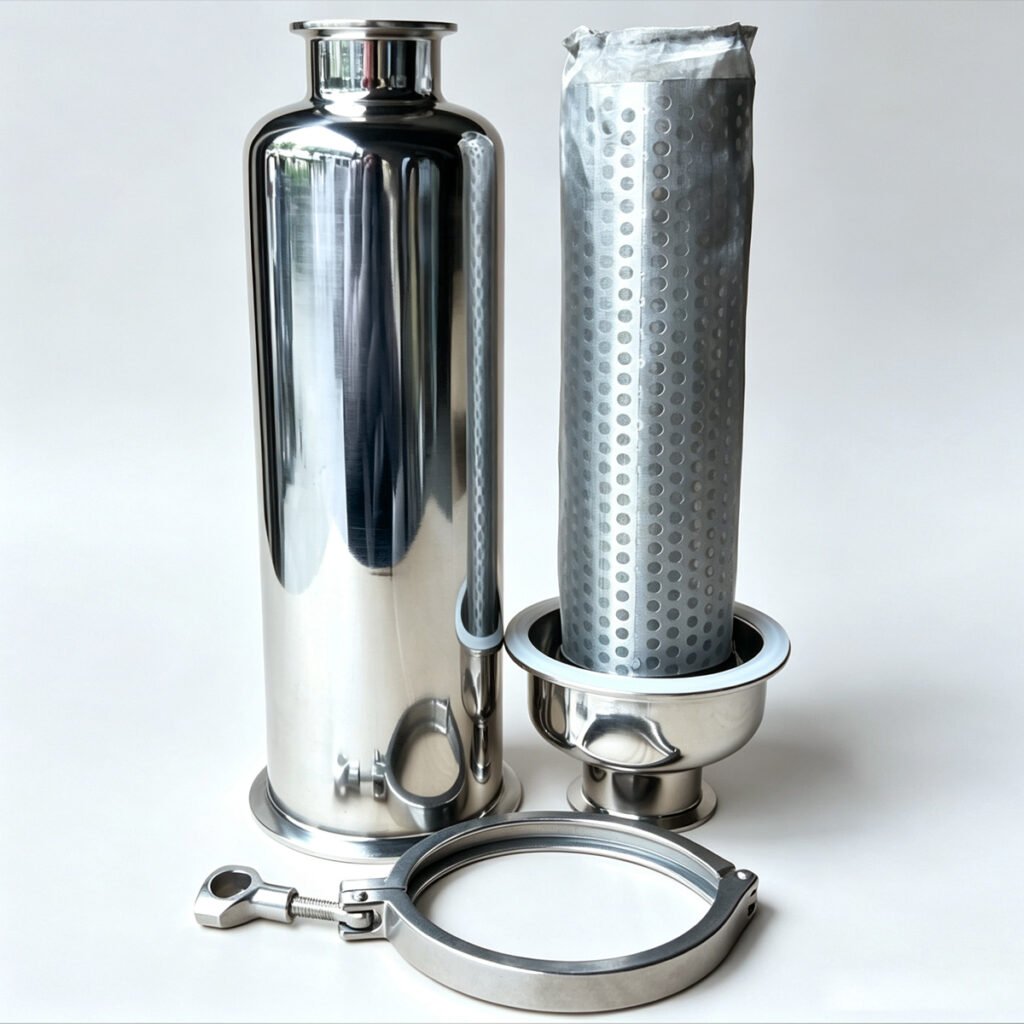
Y-Strainer vs. Inline Strainer at a Glance
| Feature | Sanitary Y-Strainer | Sanitary Inline Strainer |
|---|---|---|
| Design | Y-shaped body | Straight-through body |
| Flow path | Changes direction toward the screen chamber | Straight flow path |
| Installation | Often installed horizontally or vertically depending on design | Usually installed directly in the pipeline |
| Screen access | Screen is accessed through the branch section | Screen is accessed through the housing |
| Space requirement | Requires additional space around the screen chamber | More compact in many installations |
| Typical use | General pipeline protection and particle removal | Compact sanitary piping and inline filtration |
| Maintenance | Screen can be removed for cleaning | Screen can be removed for cleaning |
The exact performance depends on the specific product design, screen size, mesh and operating conditions.
What Is a Sanitary Y-Strainer?
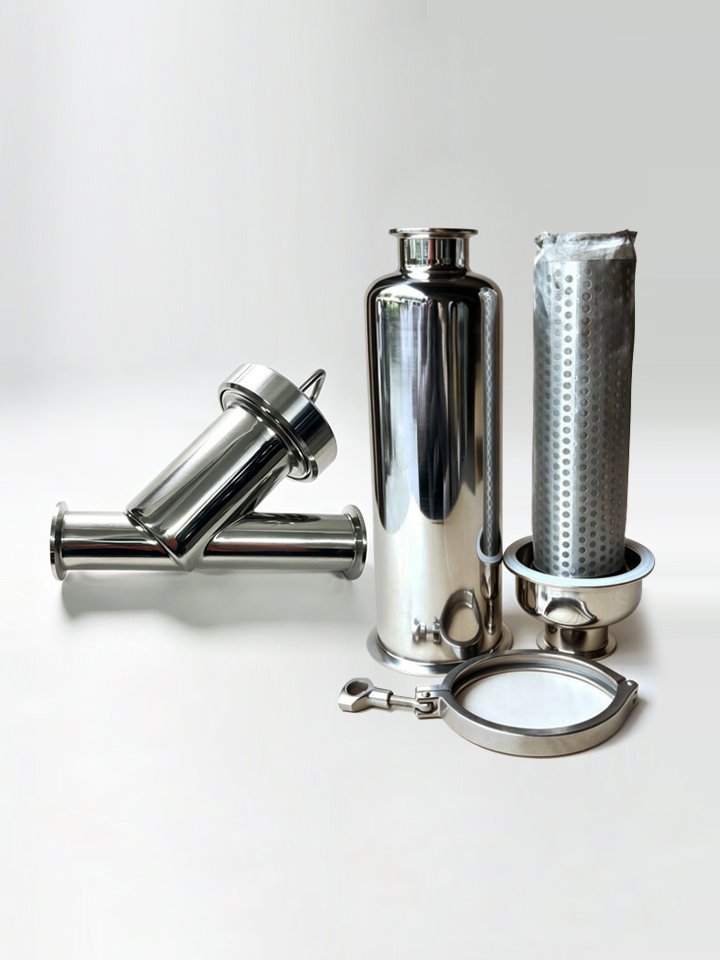
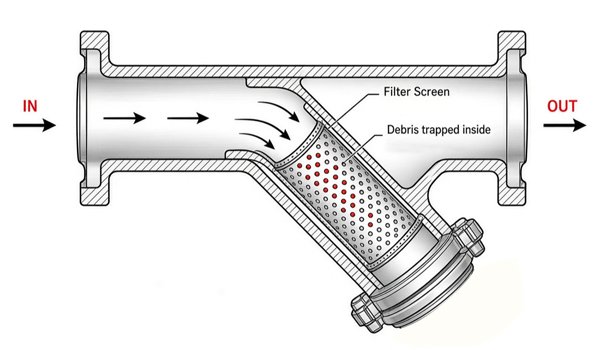
A sanitary Y-strainer uses a Y-shaped housing with a removable mesh screen installed in the branch section.
As the process fluid passes through the strainer, larger particles are retained by the screen. The screen can then be removed for cleaning or replacement.
Y-strainers are often useful when pipeline protection is an important consideration, particularly upstream of pumps, valves and other equipment that may be affected by solid particles.
For hygienic processing systems, stainless steel construction and sanitary connections such as Tri-Clamp can make the strainer easier to integrate into sanitary piping.
Haoqintech supplies 304 stainless steel sanitary Y-strainers with removable mesh screens for hygienic piping and liquid processing applications.
What Is a Sanitary Inline Strainer?
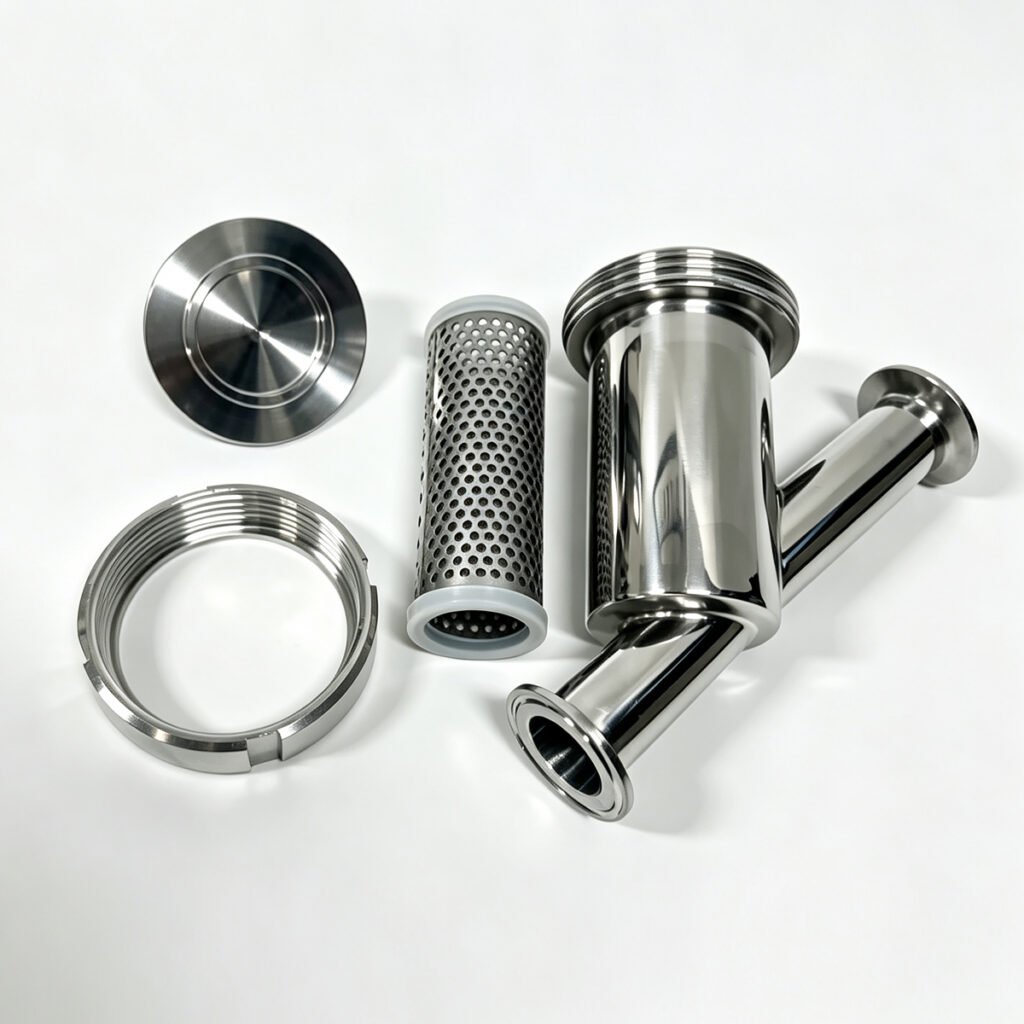
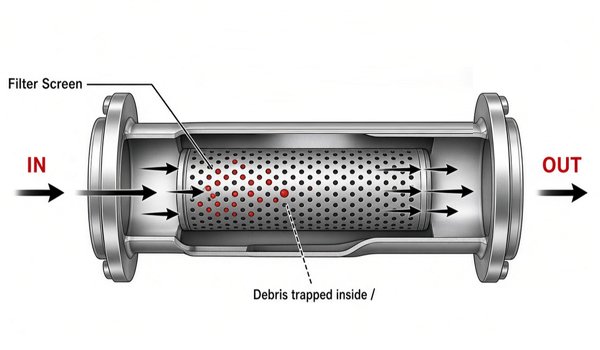
An inline strainer is designed with a straight-through flow path. The strainer is installed directly into the process pipeline, allowing the fluid to enter and leave through aligned connections.
This design can be useful where installation space is limited or where a straightforward pipeline configuration is preferred.
Haoqintech’s sanitary inline strainers use a replaceable stainless steel mesh screen and are available in different lengths and mesh options depending on the product configuration.
For systems using sanitary Tri-Clamp connections, an inline strainer can be installed directly between other sanitary components in the process line.
Key Difference: Flow Path and Installation
One of the main differences between the two designs is the way the strainer is integrated into the pipeline.
A Y-strainer has a branch section that houses the screen. This creates a more compact straining chamber but requires sufficient space around the branch for screen removal and maintenance.
An inline strainer uses a straight-through body. This can simplify installation in a sanitary pipeline and may be advantageous when the available installation space is limited.
When selecting a strainer, consider not only the pipe diameter but also the space required to remove the screen during maintenance.
Which Is Easier to Clean?
Both types can be designed with removable screens, allowing the screen to be cleaned or replaced.
The more important consideration is accessibility.
Before selecting a strainer, check:
- Can the screen be removed without dismantling a large section of piping?
- Is there enough clearance around the housing?
- How frequently will the screen need to be cleaned?
- Does the process require regular inspection?
- Is the screen reusable or replaceable?
For hygienic processing applications, easy access can reduce maintenance time and help keep the system operating efficiently.
How Does Mesh Size Affect Strainer Selection?
Mesh size is one of the most important specifications when selecting a sanitary strainer.
A finer mesh can retain smaller particles, but it can also increase flow resistance and may require more frequent cleaning.
A coarser mesh allows greater flow capacity while removing larger particles.
The correct mesh size should therefore be selected based on:
- Particle size
- Required level of particle removal
- Process flow rate
- Fluid viscosity
- Acceptable pressure drop
- Cleaning frequency
There is no single mesh size that is suitable for every process.
For applications where you need to remove larger particles while protecting downstream equipment, a sanitary strainer may be a practical solution.
Y-Strainer or Inline Strainer: Which One Should You Choose?
Choose a Y-Strainer when:
- Pipeline protection is a priority
- You have enough space for screen access
- The Y-shaped configuration fits the piping layout
- You need a removable screen for routine cleaning
- The strainer will be installed upstream of sensitive equipment
Choose an Inline Strainer when:
- A straight-through pipeline configuration is preferred
- Installation space is limited
- You want the strainer to integrate directly into the sanitary pipeline
- Easy inline installation is important
- The application requires a compact sanitary strainer design
The final choice should always be based on the actual process conditions and equipment layout.
What About 304 vs. 316L Stainless Steel?
Both 304 and 316L stainless steel are widely used in sanitary processing equipment.
304 stainless steel is commonly used for general hygienic processing applications and offers a good balance of corrosion resistance and cost.
316L stainless steel provides improved corrosion resistance in more demanding environments, particularly where exposure to chlorides or aggressive cleaning conditions is a concern.
The appropriate material depends on the process medium, cleaning chemicals, temperature and applicable sanitary requirements.
Consider the Connection Type
Connection compatibility is another important factor.
For sanitary processing systems, Tri-Clamp connections are widely used because they allow components to be assembled and disassembled relatively easily.
When selecting a Y-strainer or inline strainer, make sure the connection size and type match the existing pipeline and other sanitary components.
Haoqintech supplies sanitary stainless steel components with different connection configurations depending on product design and customer requirements.
Final Selection Checklist
Before ordering a sanitary Y-strainer or inline strainer, confirm:
1. Process medium
What liquid will pass through the strainer?
2. Pipe size
What is the existing pipeline diameter?
3. Mesh size
What particle size needs to be removed?
4. Flow rate
What flow rate is required?
5. Material
Is 304 stainless steel suitable, or is 316L preferred?
6. Connection
Does the strainer match the existing Tri-Clamp or other sanitary connection?
7. Maintenance access
Is there enough space to remove and clean the screen?
8. Operating conditions
Are temperature, pressure and cleaning conditions compatible with the selected configuration?
Conclusion
There is no universal answer to whether a sanitary Y-strainer or inline strainer is better.
A Y-strainer can be a good choice when pipeline protection and a removable screen chamber are priorities. An inline strainer can be more suitable when a straight-through configuration and compact installation are preferred.
The right choice depends on your piping layout, process requirements, mesh size, flow rate, material and maintenance requirements.
Haoqintech manufactures sanitary stainless steel filters, strainers, fittings and fluid processing components for hygienic processing applications. If you have a specific piping configuration or product requirement, contact us for a suitable configuration and quotation.