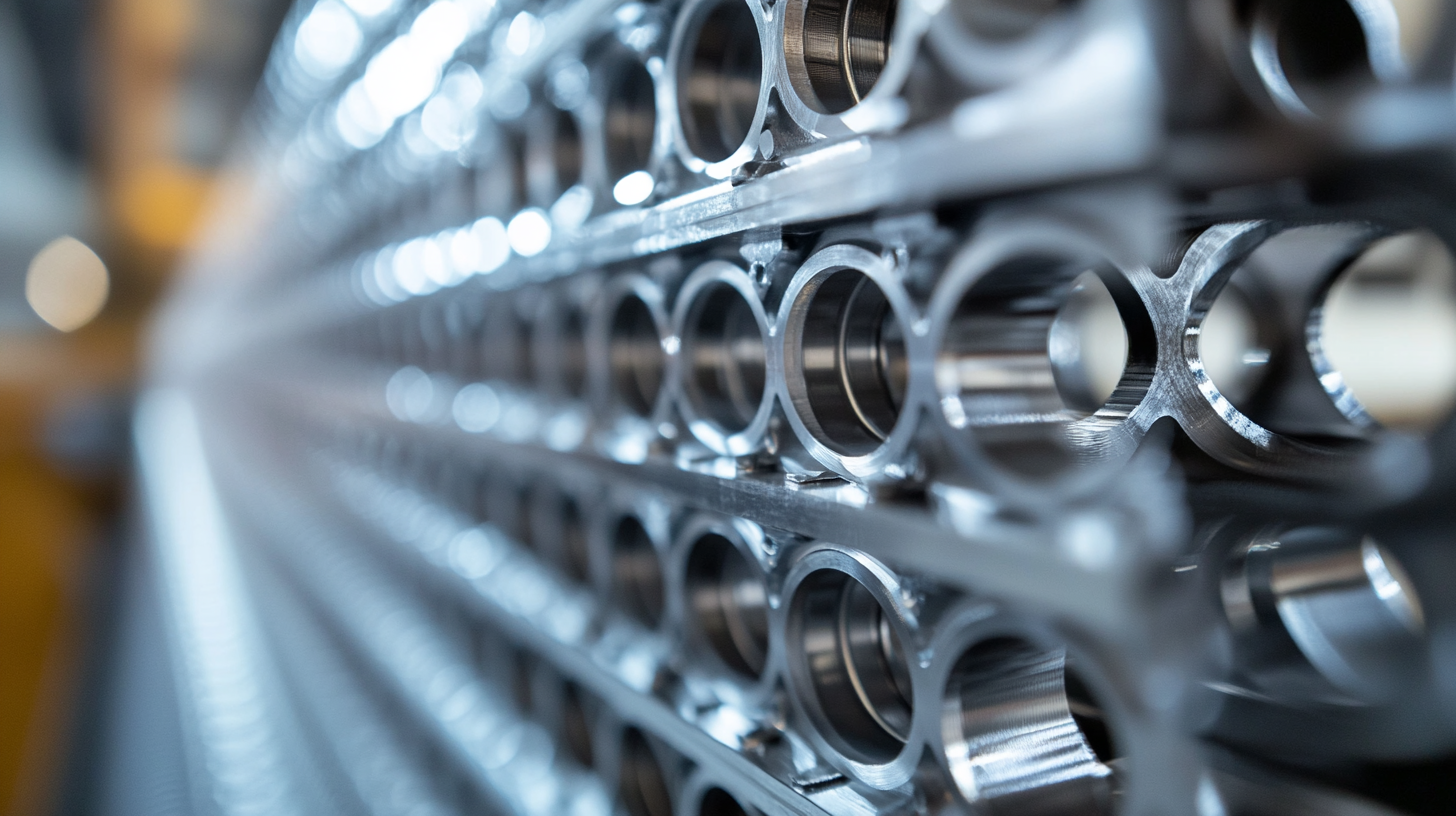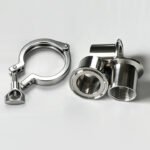
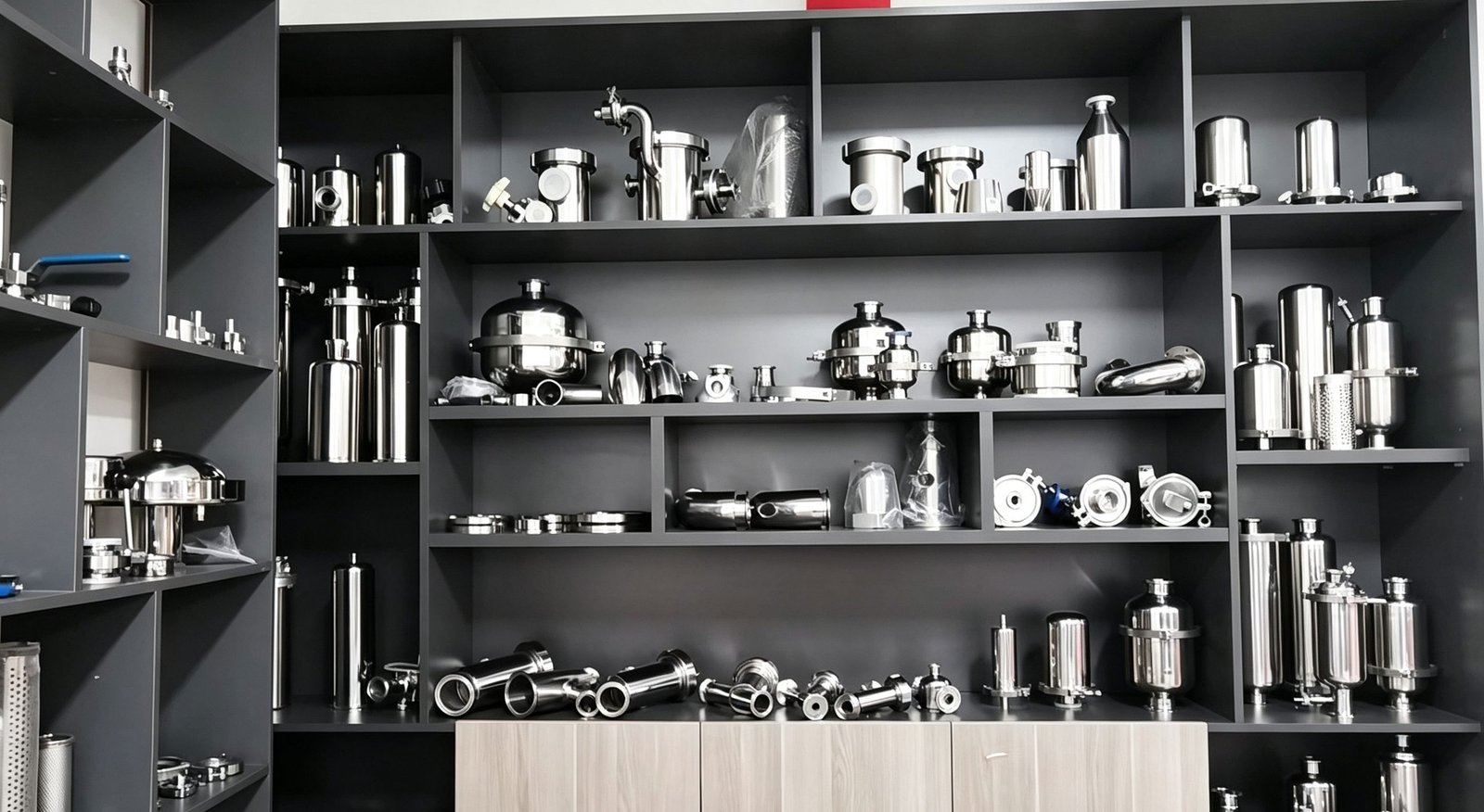
Stainless steel is a family of iron-based alloys known for their corrosion resistance, strength, durability and clean appearance.
It is widely used in everyday products such as kitchen equipment and appliances, but stainless steel is also an important material for industrial applications, including food processing, beverage production, pharmaceutical manufacturing, fermentation and hygienic fluid-processing systems.
For sanitary equipment, the choice of stainless steel grade can affect corrosion resistance, cleanability, durability and overall service life.
What Makes Stainless Steel “Stainless”?
The key to stainless steel’s corrosion resistance is chromium.
Most stainless steels contain at least approximately 10.5% chromium. When exposed to oxygen, chromium helps form a very thin passive oxide layer on the surface.
This passive layer helps protect the underlying metal from corrosion.
If the surface is damaged, the passive layer can naturally reform in the presence of oxygen. This is one of the main reasons stainless steel performs well in many demanding environments.
However, stainless steel is not completely immune to corrosion.
Its resistance depends on the specific grade, surface condition, environment, temperature, chemicals, chlorides and maintenance conditions.
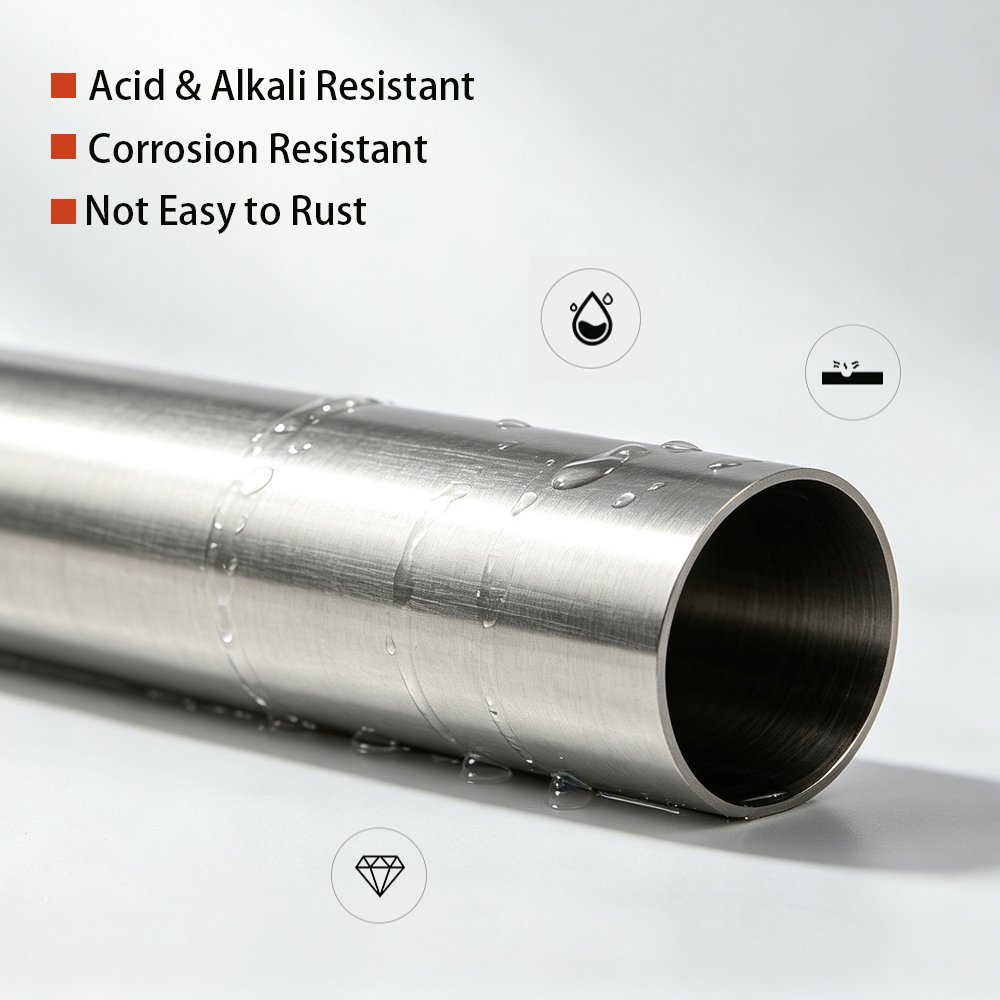
Key Properties of Stainless Steel
1. Corrosion Resistance
Corrosion resistance is one of the most important characteristics of stainless steel.
Different grades provide different levels of corrosion resistance.
For example, 316L stainless steel generally provides better resistance to chloride-containing environments than 304 stainless steel because it contains molybdenum.
This makes grade selection particularly important for demanding process environments.
2. Strength and Durability
Stainless steel provides a useful combination of strength and durability.
It can be fabricated into pipes, tanks, valves, fittings, filters and other process components while maintaining good mechanical performance.
The exact mechanical properties depend on the alloy grade and manufacturing condition.
3. Cleanability
Stainless steel is widely used in hygienic applications because properly finished stainless steel surfaces can be cleaned effectively and do not absorb liquids like porous materials.
For sanitary processing equipment, surface finish, weld quality, geometry and equipment design are all important factors.
A suitable stainless steel grade alone does not automatically make a component sanitary.
4. Temperature Performance
Many stainless steel grades maintain useful mechanical and corrosion-resistant properties across a relatively wide temperature range.
This makes stainless steel suitable for many food processing, beverage, fermentation and industrial applications.
Actual operating limits depend on the material grade, equipment design and process conditions.
5. Appearance and Surface Finish
Stainless steel can be manufactured with different surface finishes, from functional industrial finishes to highly polished surfaces.
For sanitary equipment, a smooth and appropriate surface finish can support cleaning and help reduce areas where process residue may accumulate.
Main Families of Stainless Steel
Stainless steels are commonly divided into several major families.
| Stainless Steel Family | General Characteristics | Typical Applications |
|---|
| Austenitic | Excellent corrosion resistance, good formability; many common grades are non-magnetic or weakly magnetic | Food processing, beverage equipment, pharmaceutical equipment, kitchen equipment |
| Ferritic | Good corrosion resistance, magnetic, generally lower nickel content | Appliances, automotive components, architectural applications |
| Martensitic | Can be hardened by heat treatment; generally magnetic | Cutlery, tools, wear-resistant components |
| Duplex | Combination of austenitic and ferritic structures; high strength and good corrosion resistance | Chemical, marine, oil and gas applications |
| Precipitation-Hardening | High strength after appropriate heat treatment | Aerospace and high-performance components |
For sanitary food and beverage equipment, austenitic stainless steels, particularly 304 and 316L, are among the most commonly encountered grades.
304 Stainless Steel
304 stainless steel is one of the most widely used austenitic stainless steel grades.
It provides a practical combination of:
- Corrosion resistance
- Strength
- Formability
- Weldability
- Availability
- Cost-effectiveness
For many food, beverage and general sanitary applications, 304 stainless steel provides a suitable balance of performance and cost.
It is commonly used for sanitary fittings, valves, tanks, piping and other processing equipment.
However, the suitability of 304 depends on the specific process environment.
316L Stainless Steel
316L stainless steel is another important grade for hygienic and process equipment.
Compared with 304, 316L contains molybdenum, which generally improves resistance to localized corrosion, particularly in chloride-containing environments.
The low-carbon “L” version also provides advantages for welded components where corrosion resistance around weld areas is important.
316L is commonly considered when the process involves:
- Chloride exposure
- More aggressive cleaning conditions
- Pharmaceutical or bioprocessing applications
- Demanding chemical environments
- Applications requiring higher corrosion resistance
The appropriate grade should always be selected based on the actual process conditions rather than assuming that 316L is automatically required for every application.
304 vs. 316L: Which Should You Choose?
For sanitary processing equipment, 304 and 316L are often compared.
| Factor | 304 Stainless Steel | 316L Stainless Steel |
|---|
| Corrosion resistance | Good for many applications | Generally higher |
| Chloride resistance | More limited | Better |
| Molybdenum | No intentional addition | Yes |
| Cost | Generally lower | Generally higher |
| Common applications | Food, beverage, general sanitary equipment | Pharmaceutical, bioprocessing, demanding hygienic applications |
The right choice depends on the process medium, cleaning chemicals, temperature, chloride exposure, required service life and budget.
Why Stainless Steel Is Important in Sanitary Processing
Sanitary processing equipment must meet requirements that go beyond simply transporting a fluid.
Equipment should be designed to support:
- Hygienic operation
- Effective cleaning
- Appropriate drainage
- Suitable material compatibility
- Reliable connections
- Maintenance and inspection
This is why stainless steel is widely used in:
- Food processing
- Dairy processing
- Beverage production
- Brewery and wine processing
- Pharmaceutical manufacturing
- Bioprocessing
- Fermentation
- Liquid mushroom culture
- Other hygienic fluid-processing applications
Components such as sanitary valves, Tri-Clamp fittings, filters, strainers and tank-cleaning equipment are frequently manufactured from stainless steel.
Stainless Steel in Haoqintech Sanitary Equipment
At Haoqintech, stainless steel is the foundation of many of our sanitary products and processing solutions.
Our product range includes stainless steel:
- Tri-Clamp fittings
- Butterfly valves
- Ball valves
- Filters
- Y-strainers
- Tank-cleaning spray balls and nozzles
- Breathers and process components
- Custom stainless steel components
The material grade and configuration can be selected according to the application and customer requirements.
For example, a food or beverage application may use 304 stainless steel where the process conditions are suitable, while more demanding applications may require 316L.
The selection should be based on the actual operating environment rather than simply choosing the highest-grade material available.
Stainless Steel Surface Finish Also Matters
When selecting sanitary stainless steel equipment, material grade is only one consideration.
Surface finish is also important.
A suitable sanitary surface should support cleaning and minimize areas where product residue can accumulate.
Other factors include:
- Weld quality
- Internal geometry
- Connection design
- Gasket selection
- Drainability
- Dead-leg reduction
- Cleaning method
This is why sanitary equipment should be evaluated as a complete design rather than based only on the stainless steel grade.
Common Applications of Stainless Steel
Stainless steel is used across many industries.
Typical applications include:
- Food and beverage processing equipment
- Dairy processing systems
- Fermentation tanks
- Pharmaceutical and bioprocessing equipment
- Sanitary piping
- Valves and fittings
- Filters and strainers
- Tank-cleaning equipment
- Kitchen equipment
- Architectural structures
- Chemical processing equipment
- Marine equipment
- Automotive components
Its combination of corrosion resistance, durability, cleanability and manufacturing flexibility makes it suitable for a wide range of applications.
Conclusion
Stainless steel is not a single material but a large family of alloys with different properties and applications.
For sanitary processing, 304 and 316L stainless steel are two of the most important grades to understand.
304 provides a practical combination of corrosion resistance, durability and cost for many food, beverage and general sanitary applications.
316L offers higher corrosion resistance in more demanding environments, particularly where chlorides or aggressive process conditions are involved.
However, choosing the right stainless steel is only one part of sanitary equipment design.
Material grade, surface finish, welding, connection design, cleanability, drainage and the overall process environment all need to be considered together.
Understanding these differences can help buyers and engineers make better decisions when selecting sanitary stainless steel equipment and components.