n hygienic processing systems, taking a representative product sample is an important part of quality control, process monitoring, and production management.
A sanitary sampling valve provides a controlled point for collecting samples from process equipment, pipelines, storage tanks, or fermentation systems. When properly selected and installed, it can help operators obtain samples while maintaining the hygiene requirements of the process.
However, not all sampling valves are designed for the same application. The right choice depends on the product being sampled, the sampling method, cleaning and sterilization requirements, connection dimensions, and operating conditions.
This guide explains the main types of sanitary sampling valves, their common applications, and the information buyers should confirm before selecting a suitable configuration.
What Is a Sanitary Sampling Valve?
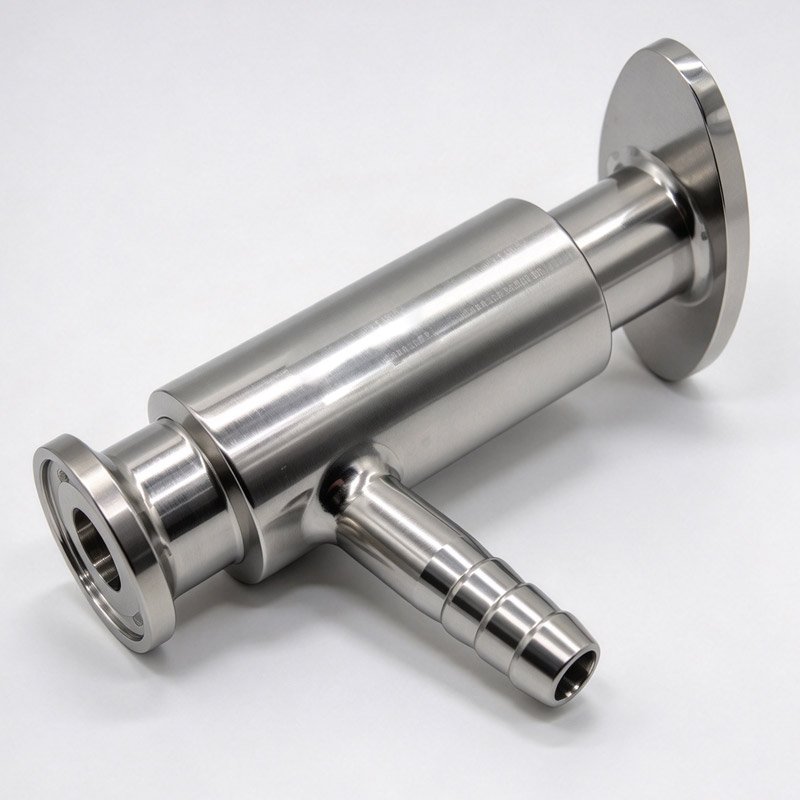
A sanitary sampling valve is a process component designed to allow operators to collect samples from a hygienic production system.
Unlike a general-purpose industrial valve, a sanitary sampling valve must be evaluated in the context of product contact, cleanability, contamination control, and the requirements of the specific process.
Sampling points may be installed on process pipelines, storage tanks, mixing vessels, or fermentation equipment. Depending on the design, a sampling valve may use manual operation, a dedicated sampling mechanism, or a configuration intended for aseptic sampling.
The appropriate design depends on whether the application involves routine quality checks, microbiological testing, sterile liquid sampling, or another process requirement.
A sanitary design alone does not guarantee aseptic sampling. The valve, installation, sampling procedure, and cleaning or sterilization method must work together.
Common Types of Sanitary Sampling Valves
Sanitary sampling valves are available in different designs. Buyers should compare the actual operating mechanism and intended application rather than selecting a valve based on its name alone.
1. Manual Sanitary Sampling Valves
Manual sampling valves are operated by hand and are commonly considered for routine sample collection.
Depending on the design, the operator opens the valve to collect a sample and closes it when sampling is complete.
Typical considerations include ease of operation, product-contact materials, sealing performance, connection type, and the ability to clean the sampling point.
Manual sampling valves may be suitable for applications where the sampling procedure is straightforward and the required level of contamination control can be achieved with the selected design and operating procedure.
2. Aseptic Sampling Valves
Aseptic sampling valves are designed for applications with stricter contamination-control requirements.
They may incorporate specialized sealing arrangements, sterilization features, or other design elements intended to support aseptic sampling. The specific features vary by manufacturer and valve model.
These valves may be considered for pharmaceutical processing, biotechnology, fermentation, and other applications where microbial contamination is a significant concern.
Before purchase, buyers should confirm how the sampling point is sterilized, how the valve is cleaned, and whether the design is suitable for the actual process and validation requirements.
The term “aseptic” should not be treated as a universal performance guarantee. The complete sampling procedure and installation must support the intended requirements.
3. Tank-Mounted and Pipeline Sampling Valves
Sampling valves can be installed at different points in a process system.
Tank-mounted sampling valves are installed on suitable tank connections to collect samples directly from the vessel. Their suitability depends on the tank design, installation position, product characteristics, and cleaning requirements.
Pipeline sampling valves are installed on process lines to collect samples from flowing or circulating product. Selection should consider the location of the sampling point, the process flow, the risk of dead spaces, and whether the sample represents the product being monitored.
For either arrangement, the installation must allow safe operation and appropriate cleaning of product-contact surfaces.
4. Sampling Valves with Different Connection Options
Connection options vary by manufacturer and model. Depending on the intended application, available configurations may include hygienic clamp connections, threaded connections, welded ends, or other process connections.
A connection should not be selected based on nominal size alone. Buyers should confirm the applicable dimensional standard, connection geometry, sealing arrangement, and compatibility with the existing equipment.
For example, a valve intended for a hygienic pipeline may require a specific clamp size and matching gasket arrangement. A tank-mounted installation may require a different connection configuration.
Always verify the actual dimensions and interface requirements before ordering.
Where Are Sanitary Sampling Valves Used?
Food and Beverage Processing
In food and beverage production, sampling points may be used to collect product for quality checks, process monitoring, and laboratory analysis.
Potential applications include liquid food processing, beverage production, ingredient preparation, and product transfer systems.
The valve design should suit the product characteristics, cleaning procedure, and applicable hygiene requirements.
Dairy Processing
Dairy processing systems may require sampling at selected points during production or transfer.
Relevant considerations include product-contact materials, residue removal, cleaning procedures, sealing performance, and compatibility with the plant’s hygienic process design.
The required sampling configuration should be evaluated against the actual dairy process and its operating procedures.
Fermentation and Liquid Culture Systems
Fermentation equipment and liquid culture systems may require sampling to monitor process conditions or collect material for further testing.
In these applications, contamination control is especially important because the sample and the production process may be sensitive to unwanted microbial introduction.
The sampling arrangement should be evaluated alongside the vessel design, sampling frequency, cleaning and sterilization procedures, and the requirements of the material being handled.
A standard manual sampling valve should not automatically be assumed suitable for sterile or aseptic applications. The specific design and procedure must meet the process requirements.
Pharmaceutical and Bioprocess Applications
Pharmaceutical and bioprocess applications may have more demanding requirements for contamination control, documentation, material traceability, and cleaning or sterilization validation.
Buyers should confirm whether the proposed valve design is appropriate for the required process and quality system. Where necessary, request supporting documentation and evidence for relevant material, surface, and performance requirements.
Do not assume that a valve is suitable for a regulated application solely because it is described as sanitary or stainless steel.
6 Factors to Confirm Before Buying a Sanitary Sampling Valve
Choosing a suitable sampling valve requires more than checking the connection size. The following information can help buyers communicate their requirements clearly to suppliers.
1. Sampling Purpose and Process Requirements
Start by identifying what the valve will be used to sample.
Is the sample intended for routine quality inspection, process monitoring, laboratory testing, or aseptic analysis?
Also confirm whether the process requires ordinary hygienic sampling or a defined aseptic sampling procedure.
These requirements influence the valve design and the features that need to be verified.
2. Product-Contact Materials
Confirm the materials used for all relevant product-contact components.
Stainless steel grades such as 304 or 316L may be considered in hygienic processing, depending on the product, cleaning chemicals, corrosion conditions, and process requirements.
However, material selection should not be based on grade alone. Buyers should also consider the wetted components, internal surface condition, and compatibility with the actual application.
Do not assume that every component of a valve has the same material grade unless the supplier confirms it.
3. Seal and Gasket Compatibility
Seal materials can affect chemical compatibility, temperature suitability, product contact, and cleaning performance.
Buyers should identify the process liquid, cleaning agents, operating temperature, and any applicable material requirements before selecting a seal.
The supplier should confirm the actual seal material and its suitability for the intended conditions. A generic statement that a valve is suitable for food processing is not a substitute for material confirmation.
4. Connection Type and Dimensions
Confirm the connection at the installation point before ordering.
Useful information includes:
- Connection type and applicable standard
- Nominal size and actual connection dimensions
- Clamp size or thread specification, where applicable
- Installation space and orientation
- Required gasket or mating component
If the valve will replace an existing component, provide a drawing, photographs, or verified measurements whenever possible.
5. Cleaning and Sterilization Requirements
Determine how the sampling point will be cleaned and, if required, sterilized.
Important questions include:
- Is the sampling point cleaned manually or as part of a CIP procedure?
- Is steam sterilization required?
- Can the valve be disassembled for cleaning or inspection?
- Does the design contain areas where product residue may accumulate?
- Is a specific cleaning or sterilization procedure required by the process?
Not every sampling valve is designed for CIP or steam-in-place use. Confirm the manufacturer’s stated capabilities rather than assuming compatibility.
6. Operating Conditions and Documentation
Provide the supplier with the actual process conditions, including operating pressure, temperature, product characteristics, and any relevant cleaning or sterilization conditions.
Ask the supplier to confirm the permitted operating range for the specific model and configuration.
Depending on the application, additional requirements may include material certificates, dimensional drawings, surface-finish information, seal documentation, traceability, or other quality documents.
Request only the documentation required by your process and applicable standards, and confirm availability before placing the order.
Sanitary Sampling Valve vs. Standard Process Valve
A standard process valve is primarily selected to control, isolate, or direct fluid flow. A sampling valve is selected to provide a suitable point for collecting a process sample.
The two functions may overlap in some equipment designs, but they are not automatically interchangeable.
A general-purpose valve may not provide the sampling arrangement, cleanability, sealing method, or contamination-control features required for a particular sampling task.
When evaluating a proposed solution, consider the complete sampling operation rather than the valve body alone. The installation, product-contact surfaces, sample collection method, and cleaning procedure all influence suitability.
What Information Should You Send to a Supplier?
To obtain a more accurate recommendation or quotation, prepare the following information:
- Application: Food and beverage, dairy, fermentation, liquid culture, pharmaceutical processing, or another process
- Installation point: Tank, vessel, or pipeline
- Sampling purpose: Routine quality checks, process monitoring, laboratory testing, or aseptic sampling
- Product characteristics: Liquid type, viscosity, solids content, and relevant chemical properties
- Material requirements: Required stainless steel grade and seal material, if specified
- Connection: Type, standard, size, and verified dimensions
- Operating conditions: Pressure, temperature, and relevant cleaning or sterilization conditions
- Documentation: Any required material certificates, drawings, or quality records
- Quantity: Prototype, replacement, small batch, or project quantity
Providing these details helps the supplier evaluate the application and identify which configurations can be confirmed as suitable.
Frequently Asked Questions
What is the main purpose of a sanitary sampling valve?
Its main purpose is to provide a controlled point for collecting samples from a hygienic process system. The appropriate design depends on the product, sampling method, and required level of contamination control.
Are all sanitary sampling valves suitable for aseptic sampling?
No. A sanitary design does not automatically make a valve suitable for aseptic sampling. The valve construction, installation, sterilization method, and sampling procedure must support the intended requirements.
Which stainless steel grade should I choose?
The appropriate grade depends on the process liquid, corrosion conditions, cleaning chemicals, and applicable requirements. Grades such as 304 and 316L may be considered, but the correct choice should be confirmed for the specific application.
Can a sanitary sampling valve be used in a fermentation system?
Potentially, yes. The valve must be suitable for the process and its contamination-control requirements. For sterile fermentation or liquid culture applications, confirm the sampling method, cleaning and sterilization procedure, and valve design before selection.
Can any sanitary sampling valve be used with CIP or steam sterilization?
No. CIP and steam sterilization compatibility depends on the specific valve design, materials, seals, and permitted operating conditions. Confirm the manufacturer’s specifications for the exact model.
What should I provide when requesting a quotation?
Provide the application, installation point, connection dimensions, product-contact material requirements, operating conditions, cleaning or sterilization requirements, and quantity. Drawings and photographs can help clarify the connection and installation requirements.
Conclusion
Selecting a sanitary sampling valve starts with understanding the sampling task and the requirements of the process.
Connection dimensions, product-contact materials, seals, cleaning procedures, contamination-control requirements, and operating conditions should all be evaluated before a final configuration is selected.
For hygienic processing projects, it is useful to review the sampling point as part of the complete process system rather than as an isolated component.
If you are evaluating sanitary process components for a new installation, equipment upgrade, or replacement project, contact Haoqintech with your application details and connection requirements. Our team can review your needs and confirm the appropriate next steps, including whether a suitable configuration can be sourced for your project.