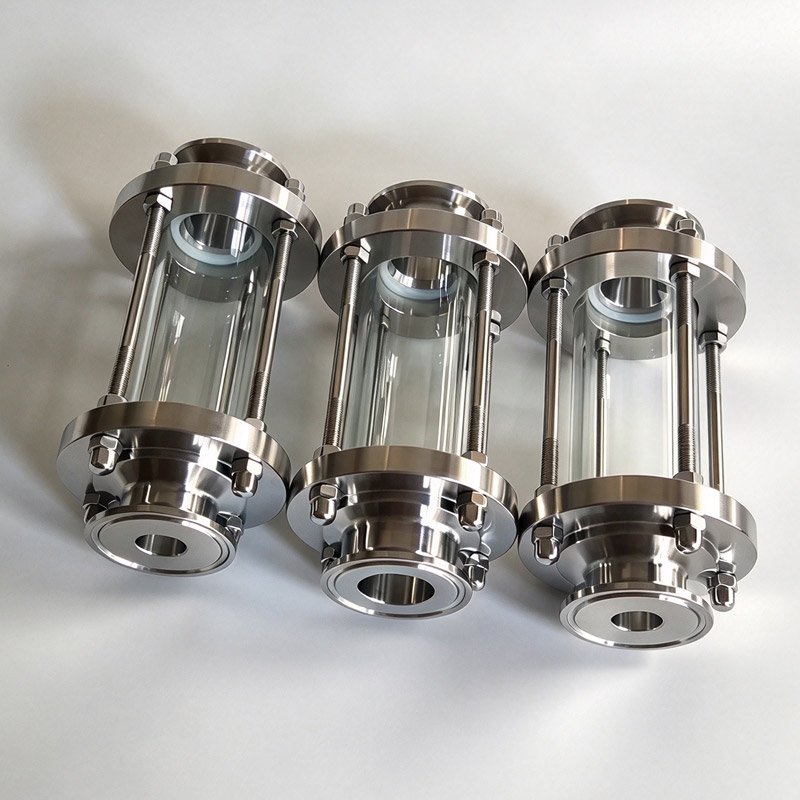
In hygienic processing systems, operators sometimes need to observe the condition of a liquid while it moves through a pipeline. A sanitary inline sight glass provides a viewing window that allows visual inspection without opening the process line.
Also known as a sanitary pipe sight glass or Tri-Clamp inline sight glass, this component can be used in suitable food processing, beverage production, dairy, pharmaceutical, and other hygienic process applications.
However, choosing the right sight glass involves more than selecting a stainless steel body and a transparent window. Connection dimensions, glass material, seals, installation conditions, and operating pressure and temperature must all be considered.
This guide explains how a sanitary inline sight glass works, where it is used, how it differs from a tank sight glass, and what buyers should confirm before purchasing.
What Is a Sanitary Inline Sight Glass?
A sanitary inline sight glass is a process component installed in a pipeline to provide visual access to the fluid inside.
A typical assembly consists of a stainless steel housing or supporting structure, a transparent viewing element, sealing components, and suitable end connections. The exact construction varies by design and manufacturer.
When installed at an appropriate point in a process line, the sight glass allows operators to observe visible characteristics such as:
- Fluid movement through the pipeline
- Product color and visual clarity
- Visible foam or bubbles
- Changes in the appearance of the process liquid
- Certain visible signs of residue or contamination
Visual observation can support routine process monitoring, but it cannot replace laboratory testing, validated quality-control procedures, or dedicated flow and contamination sensors.
The sight glass should be selected for the actual process conditions and installed according to the manufacturer’s instructions.
How Does a Tri-Clamp Inline Sight Glass Work?
A Tri-Clamp inline sight glass is designed to connect to compatible hygienic piping through clamp-style connections.
In a typical installation, the sight glass is positioned between matching pipe connections. Compatible gaskets and clamps secure the assembly and create the required seal.
Once installed, the transparent section allows operators to observe the process liquid as it passes through the viewing area.
Depending on the model and installation, the sight glass may be positioned horizontally or vertically. The permitted orientation should be confirmed for the specific product.
The clamp-style connection can also make disassembly more convenient for inspection, maintenance, or cleaning when the system design and operating procedure allow it.
Important: A Tri-Clamp connection alone does not guarantee hygienic performance. Correct dimensions, compatible gaskets, appropriate installation, and suitable cleaning procedures are also necessary.
Main Applications of Sanitary Inline Sight Glasses
1. Food Processing
Food processing lines may transport liquid ingredients, sauces, oils, syrups, or other process materials through hygienic pipelines.
An inline sight glass can provide a visual inspection point where observing product appearance or movement is useful.
The selected assembly must be compatible with the product, cleaning chemicals, operating conditions, and hygiene requirements of the application.
2. Beverage Production
In beverage production, sight glasses may be used at suitable points in liquid transfer and processing systems.
Operators may use the viewing window to observe liquid movement, visible bubbles, foam, or changes in appearance during transfer.
For brewing and other beverage applications, the material and seal selection should be evaluated against the actual liquid, cleaning procedure, and process conditions.
3. Dairy Processing
Dairy processing systems often require hygienic pipework and controlled cleaning procedures.
A sanitary inline sight glass can provide a convenient visual inspection point in a compatible pipeline.
Buyers should confirm that the design, product-contact materials, seals, and cleaning compatibility meet the requirements of the specific dairy process.
4. Pharmaceutical and Bioprocess Systems
Some pharmaceutical and bioprocess applications require visual access to liquids while maintaining strict control over contamination and cleanliness.
For these applications, buyers may need to evaluate material traceability, surface finish, gasket compatibility, cleanability, sterilization requirements, and applicable equipment standards.
A standard sanitary sight glass should not automatically be considered suitable for sterile or high-purity service. Suitability depends on the exact design, documentation, installation, and validated process requirements.
5. Fermentation and Liquid Culture Systems
Fermentation and liquid culture equipment may use transparent viewing components to help operators observe liquid movement or visible process changes at selected points.
A sight glass can be useful where visual monitoring supports the process, but it cannot independently confirm microbial purity, culture viability, or fermentation quality.
For sterile liquid culture applications, the complete assembly must be evaluated for the intended cleaning, sterilization, and contamination-control procedures.
Sanitary Inline Sight Glass vs. Tank Sight Glass
Although both products provide visual access to a process, they are designed for different installation locations.
Sanitary Inline Sight Glass
An inline sight glass is installed in a pipeline, hose connection, or another compatible process connection.
Its primary purpose is to allow operators to observe fluid moving through the process line.
It is generally considered when visual inspection of product transfer or pipeline conditions is required.
Tank Sight Glass
A tank sight glass is installed on a suitable vessel or tank opening to provide a view into the vessel.
Depending on the design and installation, it may help operators observe liquid level, foam, mixing behavior, or other visible conditions inside the tank.
Some tank applications require a dedicated sight glass assembly, protective cover, illumination, or other accessories.
Which One Should You Choose?
Choose an inline sight glass when the required viewing point is in the process pipeline.
Choose a tank sight glass when the objective is to observe the interior of a vessel.
The correct choice depends on the equipment layout, viewing purpose, pressure conditions, installation requirements, and cleaning procedure. These two product types should not be treated as interchangeable without checking their intended applications.
7 Factors to Check Before Buying a Sanitary Inline Sight Glass
1. Connection Type and Size
Confirm the required connection type and dimensions before ordering.
For Tri-Clamp models, check the applicable connection standard, tube outside diameter, ferrule dimensions, and matching clamp and gasket requirements.
Do not rely on nominal pipe size alone. Different standards and connection configurations may use different dimensions.
If the sight glass will replace an existing component, provide a drawing, photographs, or verified measurements to the supplier.
2. Stainless Steel Body Material
Confirm the material grade of the body and other relevant metal components.
Stainless steel 304 and 316L are used in different hygienic processing applications, but the appropriate grade depends on the product, corrosion conditions, cleaning chemicals, and process requirements.
Do not assume that every metal component in an assembly uses the same stainless steel grade unless this has been confirmed.
3. Glass Material and Construction
The viewing element is a critical part of the assembly.
Depending on the design, sight glasses may use borosilicate glass, tempered glass, or other specified transparent materials.
The selection should consider the required visibility, chemical compatibility, thermal conditions, mechanical protection, and the manufacturer’s permitted operating range.
Glass types should not be treated as interchangeable. Confirm the exact material and construction before use.
4. Gasket and Seal Material
The gasket or sealing material must be compatible with the process liquid, cleaning chemicals, operating temperature, and required hygiene conditions.
Depending on the design, seal options may include silicone, EPDM, FKM, or other materials.
Availability and suitability vary by model. Ask the supplier to confirm the exact gasket material and its compatibility with your application.
5. Operating Pressure and Temperature
Pressure and temperature limits depend on the complete sight glass assembly, including the glass, housing, seals, connection design, and size.
Do not apply one model’s pressure or temperature rating to another model.
Before installation, confirm the manufacturer’s limits for the exact configuration and consider the actual operating and cleaning conditions. Thermal shock and rapid temperature changes may also affect the suitability of the viewing element.
6. Installation Orientation and Space
Check whether the sight glass is intended for horizontal installation, vertical installation, or both.
Also consider the available installation space, the direction of flow, the required viewing angle, and access for inspection or maintenance.
A suitable viewing point should provide useful visibility without interfering with nearby equipment or routine cleaning procedures.
7. Cleaning, Maintenance, and Documentation
Confirm how the assembly is cleaned, inspected, and maintained.
Important questions include:
- Can the assembly be disassembled for inspection?
- Are replacement gaskets available?
- Can the viewing element be replaced if required?
- Is the assembly suitable for the specified CIP or sterilization procedure?
- Are dimensional drawings or material documentation required?
- Are specific hygienic or industry standards applicable?
CIP and sterilization compatibility must be confirmed for the exact model. Do not assume that every inline sight glass is suitable for every cleaning or sterilization method.
Common Mistakes When Selecting a Pipe Sight Glass
Several purchasing mistakes can lead to installation problems or an unsuitable component.
Choosing by connection size alone. A nominal size does not always establish compatibility. Verify the actual dimensions and connection standard.
Assuming all sight glasses have the same pressure rating. Ratings may vary with size, glass construction, seal selection, and assembly design.
Ignoring the gasket material. A gasket that is unsuitable for the process liquid or cleaning chemicals may compromise the installation.
Confusing an inline sight glass with a tank sight glass. Their installation locations and viewing purposes are different.
Assuming visual inspection confirms product quality. A sight glass supports observation but does not replace appropriate process measurements or quality testing.
Assuming sanitary construction guarantees sterile performance. Sterile applications require the complete assembly and operating procedure to meet the intended contamination-control requirements.
What Information Should You Provide When Requesting a Quote?
To help a supplier identify a suitable configuration, prepare the following information:
- Application: Food processing, beverage production, dairy, pharmaceutical processing, fermentation, or another use
- Installation location: Pipeline, hose connection, or vessel connection
- Connection type: Tri-Clamp or another specified connection
- Connection size: Nominal size and verified dimensions
- Body material: Required stainless steel grade, if specified
- Glass material: Required material or application requirements
- Seal material: Required material or compatibility conditions
- Operating conditions: Pressure, temperature, process liquid, and cleaning conditions
- Installation orientation: Horizontal, vertical, or another specified arrangement
- Quantity: Sample, replacement part, small batch, or project order
- Documentation: Drawings, material certificates, or other required records
Providing this information helps reduce specification misunderstandings and makes it easier to evaluate whether a proposed sight glass is suitable for the application.
Frequently Asked Questions
What is a sanitary inline sight glass used for?
It provides a viewing window in a compatible process pipeline so operators can observe fluid movement and visible product characteristics without opening the line.
What is a Tri-Clamp sight glass?
It is a sight glass assembly that uses compatible clamp-style end connections to connect to hygienic process piping. The connection dimensions, gasket, and clamp must match the installed system.
Can a sanitary inline sight glass be installed vertically?
Some models support both horizontal and vertical installation, while others may have specific installation requirements. Always confirm the permitted orientation for the exact model.
Is a stainless steel sight glass suitable for CIP cleaning?
Suitability depends on the assembly design, glass material, seals, cleaning chemicals, temperature, and operating procedure. Confirm CIP compatibility with the supplier before use.
What is the difference between 304 and 316L stainless steel sight glasses?
The main difference is the stainless steel grade and its properties under different corrosion conditions. The appropriate material depends on the process liquid, cleaning chemicals, and application requirements. Neither grade should be selected without considering the actual operating environment.
Does a sight glass measure flow rate?
A standard inline sight glass provides visual access to the process liquid, but it does not automatically measure flow rate. If quantitative flow measurement is required, a suitable flow meter or dedicated monitoring device may be necessary.
Conclusion
A sanitary inline sight glass provides a practical way to observe fluid movement and visible product conditions in compatible hygienic process pipelines.
To select the right assembly, evaluate the connection dimensions, stainless steel grade, glass construction, gasket material, pressure and temperature limits, installation orientation, and cleaning requirements.
For replacement parts and new process installations, confirming these details before ordering helps ensure that the sight glass matches the equipment and the intended application.
If you are planning a hygienic piping project or replacing an existing inline sight glass, contact Haoqintech with your connection dimensions, application, and operating requirements. Our team can review the specifications and discuss a suitable configuration for your project.