Planning a liquid mushroom spawn production system requires more than selecting fermentation tanks. The equipment configuration must be considered alongside sterilization, sterile air supply, temperature control, laboratory preparation, and the transfer of liquid culture to the cultivation process.
This project case study is based on a liquid spawn production proposal for oyster mushrooms, with a target of supporting the production of 20,000 cultivation bags per day. It illustrates how the proposed equipment configuration and supporting systems are organized around a production target.
The figures below are taken from the project proposal. They describe the proposed configuration rather than independently verified operating results.
1. Project Overview: A Liquid Spawn System for 20,000 Bags per Day
The project was designed around the liquid spawn requirements of an oyster mushroom cultivation operation.
Instead of treating the fermenter as an isolated piece of equipment, the proposal includes several connected parts of the production process:
- Liquid culture fermentation equipment
- Steam sterilization and temperature control
- Compressed air supply and sterile air filtration
- Laboratory equipment for culture preparation
- Supporting piping and liquid transfer arrangements
These components serve different functions but must work together as part of the overall production system.
When planning a similar project, the target number of cultivation bags is an important starting point. The mushroom species, inoculation volume per bag, fermentation cycle, and daily production schedule also need to be considered when determining the required equipment configuration.
2. Fermenter Configuration and Inoculation Parameters
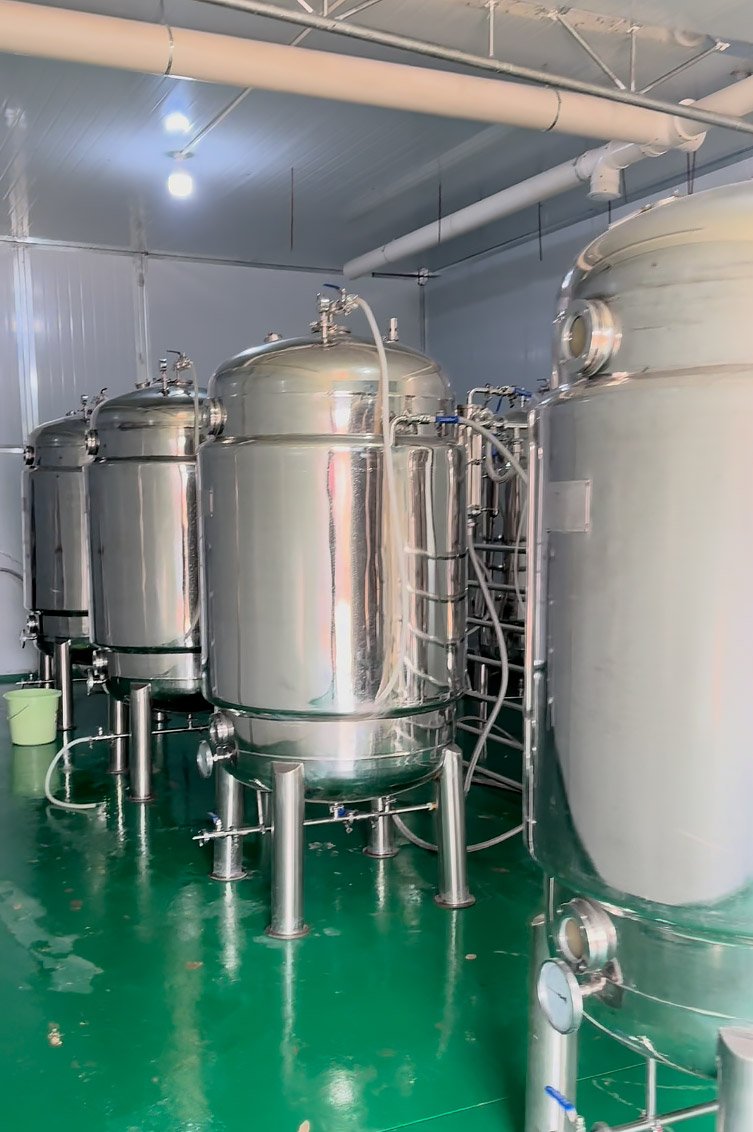
The equipment list in the proposal specifies seven 400 L fermenters, together with 304 stainless steel connecting piping and supporting laboratory equipment.
The proposal also states the following inoculation reference:
- Inoculation volume: 30 mL per cultivation bag
- Reference bag quantity: 11,000 bags per 400 L fermenter
These figures are presented as specified in the project document. The reference configuration should not, by itself, be interpreted as proof of a particular daily output under actual operating conditions.
The proposal also lists a filling coefficient of 70%–80%. The relationship between the stated inoculation quantity, the working liquid volume, and the actual production schedule should therefore be confirmed during detailed engineering.
For a liquid mushroom spawn project, fermenter selection should be considered together with the required batch volume, cultivation schedule, and the timing of downstream inoculation. The number of tanks alone does not establish the stable daily capacity of the entire line.
3. Sterilization and Temperature Control
Sterilization and temperature control are important parts of the proposed liquid spawn system.
The proposal describes in-place steam sterilization, a cooling jacket, and a temperature control system. These features form part of the equipment arrangement for preparing and managing the culture inside the fermenter.
The listed fermenter parameters include:
- Design pressure: 0.3 MPa
- Working pressure: below 0.1 MPa
- Tank material: 304 stainless steel
- Internal surface finish: Ra 0.4
- External surface finish: Ra 0.6
- Filling coefficient: 70%–80%
These are the specifications stated in the project document. Final equipment selection and operating procedures should follow the confirmed engineering design and the applicable equipment requirements.
When planning a complete system, it is important to consider how the fermenter, sterilization arrangement, cooling jacket, and temperature control equipment will be integrated into the intended production process.
4. Sterile Air Supply and Filtration
The proposal includes a compressed air system to supply filtered air to the fermentation equipment.
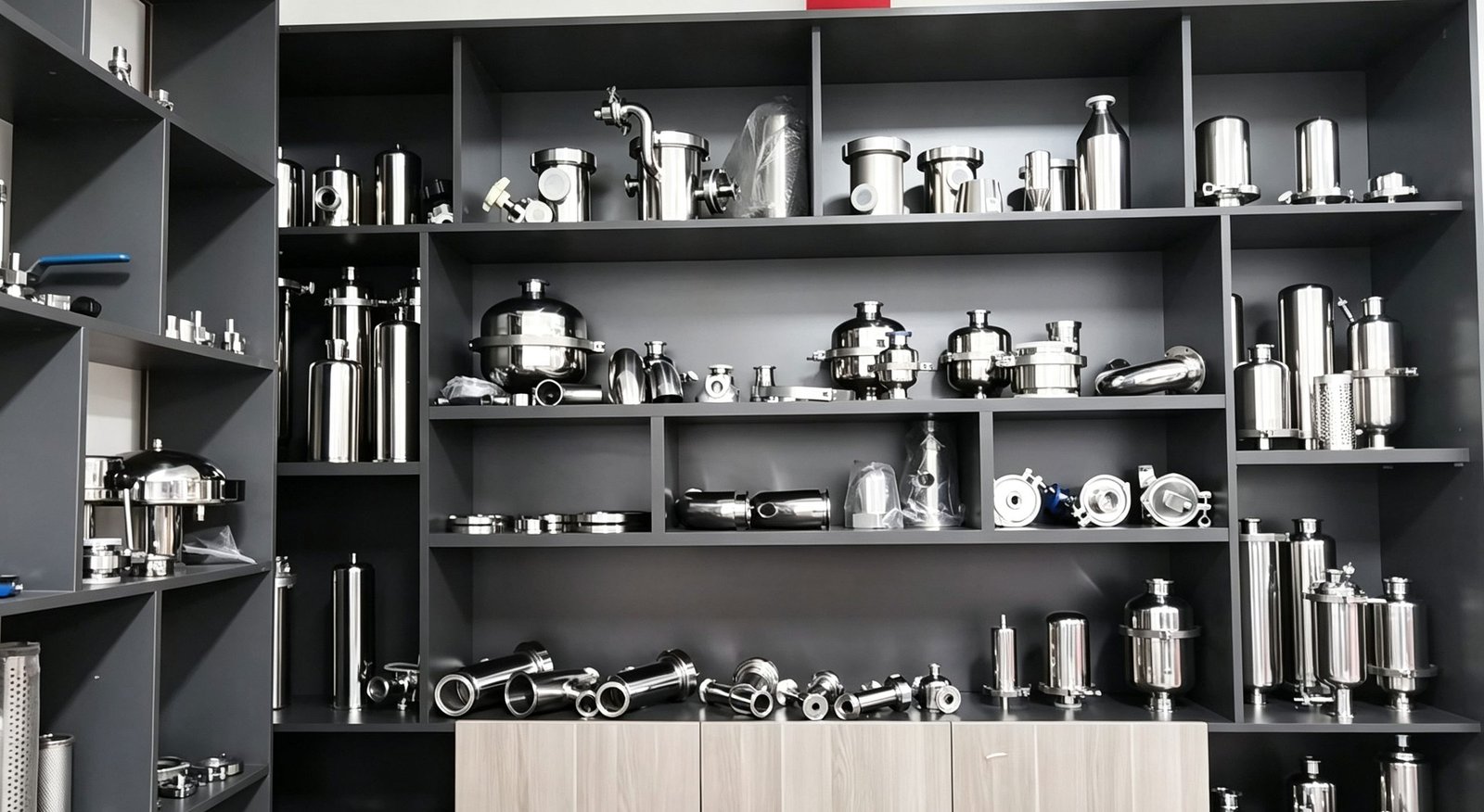
The listed configuration includes a screw air compressor, precision filters, adsorption and refrigerated drying equipment, and air filtration components.
The document specifies an air filter rating of 0.01 μm and a removal efficiency of 99.999%. These values are reproduced from the proposal and should be understood in the context of the specified filtration equipment.
Sterile air supply is not simply a matter of installing an individual filter. The air preparation and filtration components need to be considered as part of the complete system, alongside the fermenter and its connections.
During project planning, the air supply arrangement should be reviewed against the intended equipment configuration and operating requirements.
5. Laboratory Equipment and Supporting Components
The proposal includes laboratory equipment and culture preparation materials in addition to the fermentation tanks.
The listed items include:
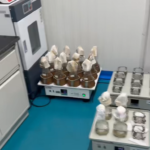
- An autoclave
- Culture flasks and test tubes
- Petri dishes
- A microscope
- Culture incubation equipment
- A shaking incubator
- Supporting laboratory materials
This equipment supports the preparation and handling of mushroom cultures before they are introduced into the fermentation process.
The laboratory setup should be considered together with the production equipment rather than as a separate purchasing decision. Its configuration depends on the intended culture preparation workflow and the requirements of the project.
A complete liquid mushroom spawn solution therefore involves more than the main tanks. The supporting equipment and the relationship between the laboratory and fermentation process also need to be planned.
6. Planning a Liquid Mushroom Spawn Production Line
A liquid mushroom spawn project should begin with a clear understanding of the intended production target and the conditions under which that target is expected to be achieved.
Before confirming a system configuration, project planners should review several key points:
Target production capacity
Define the required number of cultivation bags per day and the corresponding liquid spawn demand.
Fermenter configuration
Confirm the proposed tank quantity, nominal capacity, usable working volume, and batch schedule.
Sterilization and temperature control
Review the sterilization method, cooling arrangement, and temperature control requirements specified for the system.
Sterile air supply
Determine the required air preparation, drying, and filtration configuration based on the project design.
Laboratory equipment
Identify the equipment needed for culture preparation and the intended laboratory workflow.
Downstream inoculation
Consider how the liquid spawn will be transferred and supplied to the cultivation process, including the timing and volume required for daily operations.
Reviewing these elements together helps establish a more complete basis for equipment selection and project planning.
Discuss Your Liquid Mushroom Spawn Project
Haoqintech supports project planning for liquid mushroom spawn equipment and related process components. Equipment configuration can be discussed according to the intended production capacity, mushroom species, and the requirements of the cultivation operation.
If you are planning a new liquid mushroom spawn production line or considering an expansion of your existing operation, share your target daily output, mushroom species, and current production setup with our team.
We can then discuss the equipment configuration and supporting systems relevant to your project.
Contact Haoqintech to discuss your liquid mushroom spawn production project.