In hygienic process systems, keeping unwanted particles out of pipelines and downstream equipment is an important part of reliable operation.
A sanitary Y-strainer is a simple but useful component designed to help remove unwanted solid particles from process lines while maintaining a sanitary connection.
With stainless steel construction and Tri-Clamp connections, sanitary Y-strainers are commonly used in food, beverage, dairy, fermentation, and other hygienic processing applications.
But what exactly is a Y-strainer, and when should you use one?
What Is a Sanitary Y-Strainer?
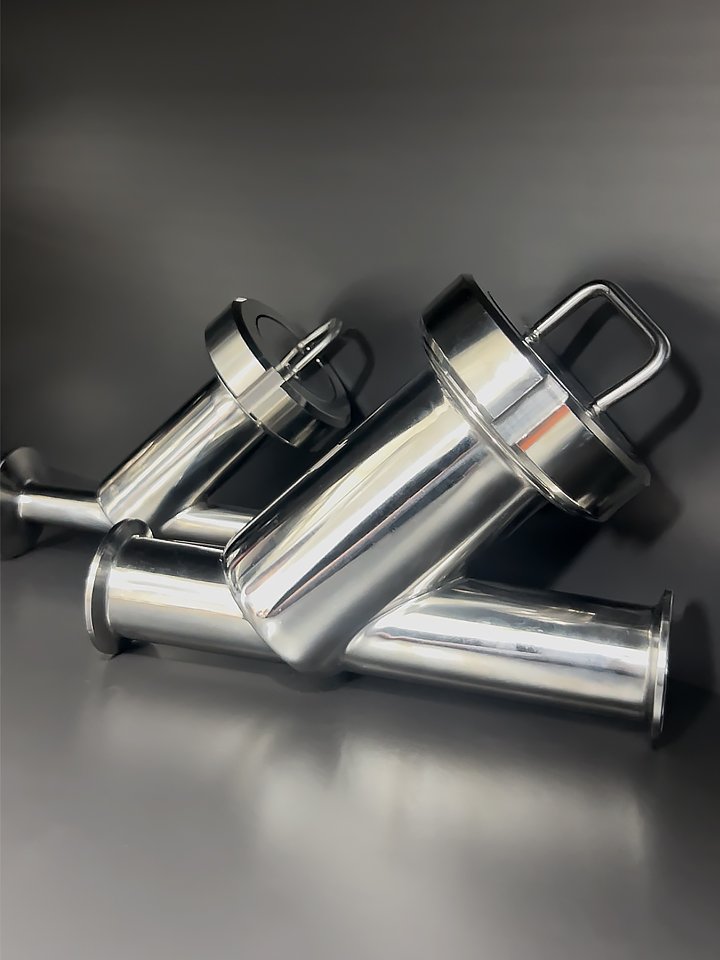
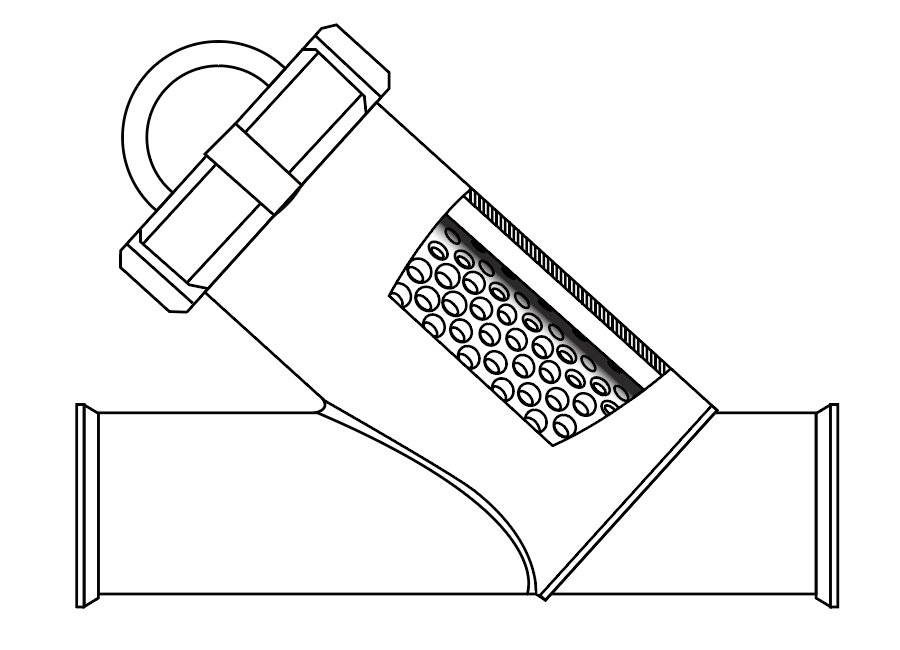
A sanitary Y-strainer is a pipeline straining device with a Y-shaped body and a removable filter screen.
As process fluid flows through the strainer, larger unwanted particles are retained by the screen while the filtered fluid continues through the pipeline.
The Y-shaped design provides a chamber where the straining element can be installed and removed for inspection and cleaning.
A typical sanitary Y-strainer may include:
- Stainless steel body
- Removable mesh screen
- Tri-Clamp sanitary connections
- Sanitary gasket
- Clamp
- Strainer chamber
The exact design, dimensions, mesh size, and connection specifications depend on the manufacturer and application.
How Does a Y-Strainer Work?
The operating principle is straightforward.
Process fluid enters the strainer and passes through the mesh screen.
Particles larger than the openings in the screen are retained, while the fluid passes through.
Over time, retained particles can accumulate on the screen. When this happens, the screen should be inspected and cleaned according to the operating requirements.
Because the straining element is removable, a sanitary Y-strainer can be relatively easy to maintain.
Why Use a Sanitary Y-Strainer?
1. Particle Protection
A Y-strainer can help remove unwanted larger particles from a process line.
This can reduce the possibility of debris reaching downstream components such as pumps, valves, filling equipment, or spray nozzles.
2. Simple Construction
Compared with more complex filtration systems, a Y-strainer generally has a relatively simple structure.
This makes inspection and routine maintenance straightforward.
3. Easy Disassembly
Tri-Clamp connections allow the strainer to be disconnected when inspection or cleaning is required.
This can be useful in hygienic systems where components may need to be regularly opened and cleaned.
4. Stainless Steel Construction
Stainless steel provides a durable material for many food, beverage, dairy, and general hygienic processing applications.
304 stainless steel is commonly used for general sanitary applications, while 316L may be considered when greater corrosion resistance is required.
Material selection should always be based on the actual process fluid, cleaning chemicals, temperature, and operating environment.
Where Are Sanitary Y-Strainers Used?
Sanitary Y-strainers can be used in a variety of process systems.
Food and Beverage Processing
They may be installed in liquid processing and transfer lines to help control unwanted particles.
Applications can include:
- Beverage processing
- Dairy processing
- Food ingredient transfer
- Brewing
- Liquid product pipelines
Fermentation Systems
Fermentation and liquid culture systems often include multiple pumps, valves, pipes, and transfer points.
A Y-strainer may be used in appropriate locations to help protect downstream equipment from larger particles.
The exact filtration or straining requirement depends on the process.
Water and Utility Lines
Sanitary strainers can also be used in water or utility lines where particle protection is required.
The material and mesh size should be selected according to the fluid and operating conditions.
Equipment Protection
One common purpose of a Y-strainer is protecting downstream equipment.
For example, a strainer installed upstream of a pump or valve can help reduce the amount of larger debris entering that equipment.
Y-Strainer vs. Filter
Although the terms are sometimes used interchangeably, a strainer and a filter are not necessarily the same thing.
A Y-strainer typically uses a mesh screen to remove relatively larger particles and protect equipment.
A filter may use a cartridge, membrane, or other filtration element for finer particle control or a specific filtration function.
Therefore, a Y-strainer is generally better suited to applications where straightforward particle screening is required, while a more specialized filter may be necessary when finer filtration is part of the process requirement.
The correct choice depends on the required filtration level, fluid characteristics, flow rate, pressure drop, and downstream equipment.
How to Choose a Sanitary Y-Strainer
Before selecting a Y-strainer, consider the following factors.
1. Pipe Size
The strainer connection should match the process piping.
Common sanitary connections include Tri-Clamp connections, but the exact connection specification should be confirmed before ordering.
2. Mesh Size
Mesh size determines the approximate size of particles that can be retained.
Choose the mesh according to the actual process requirement rather than simply selecting the finest available screen.
A finer mesh may increase flow resistance and may require more frequent cleaning.
3. Material
304 stainless steel is suitable for many general hygienic applications.
316L stainless steel may be considered for more demanding corrosion environments.
4. Flow Rate
The strainer should be suitable for the required process flow.
As particles accumulate on the screen, pressure drop may increase. Regular inspection and cleaning can therefore be important.
5. Temperature and Pressure
Check the manufacturer’s specifications for the maximum allowable operating pressure and temperature.
The complete assembly, including the housing, screen, gasket, and clamp, should be suitable for the actual process conditions.
6. Gasket Material
The gasket should be compatible with:
- Process fluid
- Operating temperature
- Cleaning chemicals
- Operating pressure
- Cleaning procedure
Proper gasket selection is an important part of a sanitary connection.
Cleaning and Maintenance
A sanitary Y-strainer is only effective when it is properly maintained.
A typical maintenance procedure may include:
- Stop or isolate the relevant process line.
- Release pressure according to the system procedure.
- Remove the clamp and open the strainer.
- Remove and inspect the mesh screen.
- Clean the screen according to the process requirements.
- Inspect the gasket and replace it if necessary.
- Reassemble the strainer correctly.
- Check the connection before restarting the process.
The exact procedure should follow the equipment manufacturer’s instructions and the site’s safety and cleaning procedures.
Why Tri-Clamp Connections Are Useful
Tri-Clamp connections are widely used in hygienic process systems because they provide a relatively simple way to connect and disconnect components.
A typical connection consists of two ferrules, a gasket, and a clamp.
For a Y-strainer, this can make access to the straining element more convenient for inspection and cleaning.
However, hygienic performance depends on the complete connection, including proper gasket selection, correct assembly, surface condition, and appropriate cleaning procedures.
Haoqintech Sanitary Y-Strainers
Haoqintech supplies stainless steel sanitary filtration and straining components for hygienic process systems.
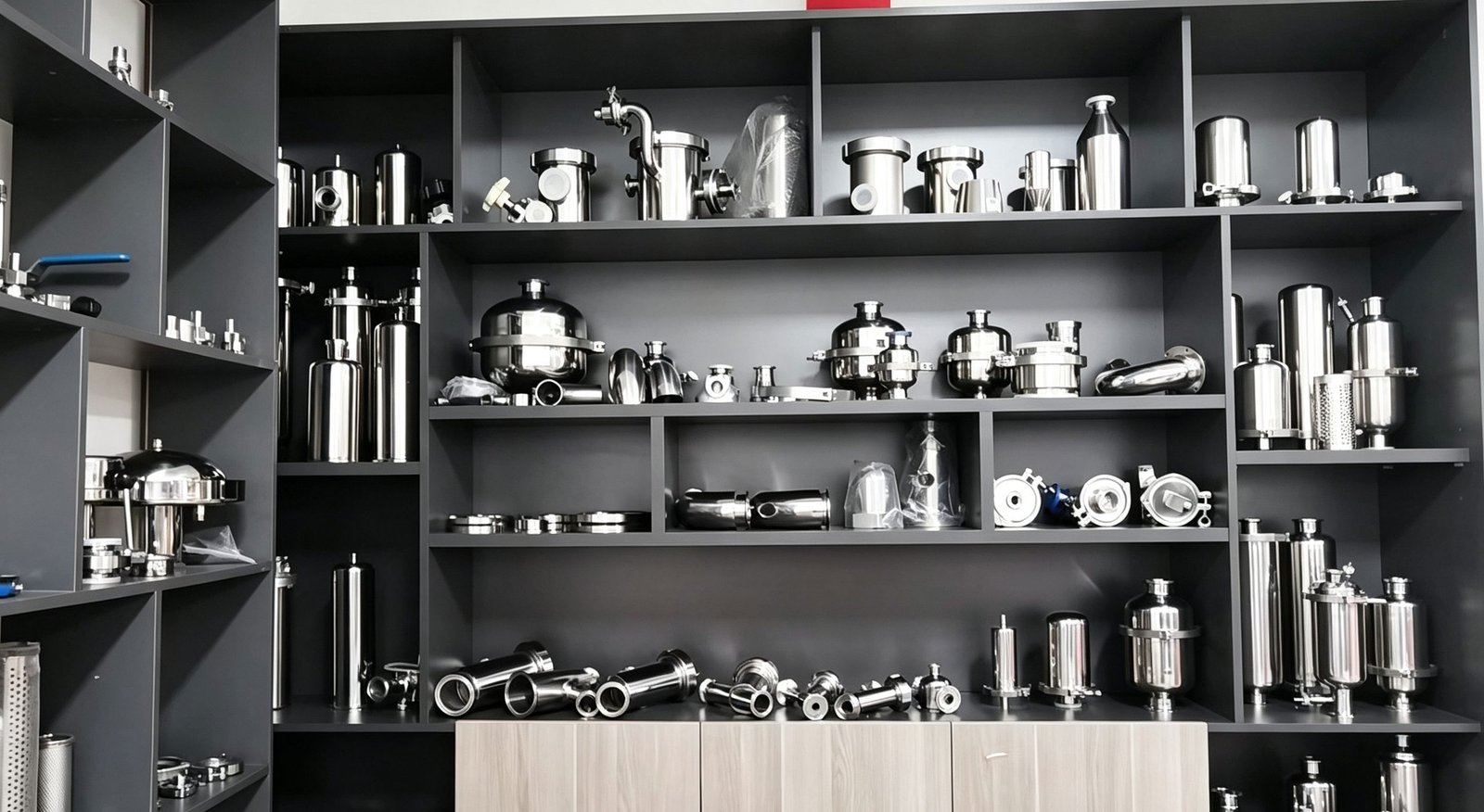
Its product range includes SS304 sanitary Y-strainers, Tri-Clamp filters, sanitary fittings, valves, tank-cleaning components, and other stainless steel process components.
For example, the SS304 sanitary Y-strainer is designed for particle screening in sanitary process pipelines and uses a removable mesh screen for cleaning and maintenance.
The appropriate configuration should be selected according to the pipe size, mesh requirement, process fluid, flow rate, pressure, temperature, and cleaning conditions.
Final Thoughts
A sanitary Tri-Clamp Y-strainer is a simple and practical component for particle screening and downstream equipment protection.
It can be useful when a process requires:
- Removal of larger unwanted particles
- Protection of downstream equipment
- A removable and cleanable straining element
- Sanitary stainless steel construction
- Convenient Tri-Clamp connections
However, a Y-strainer is not the right solution for every filtration requirement.
If finer filtration or a specific filtration performance is required, a sanitary cartridge filter or another specialized filtration system may be more appropriate.
The best choice is always based on the actual process requirements, not simply the name of the component.